Setoeolis inconspicua (Baba, 1938)
Description
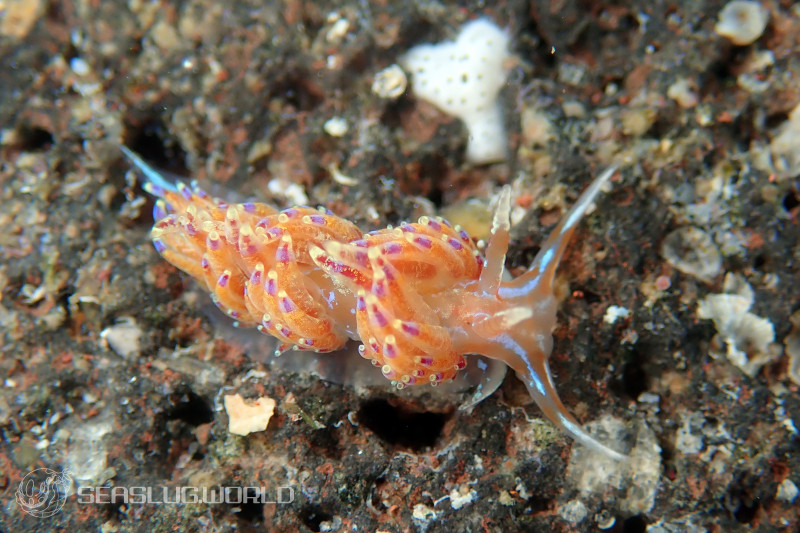
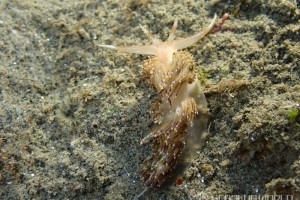
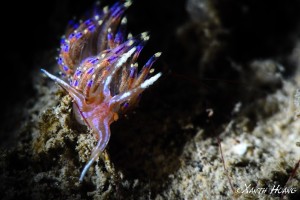
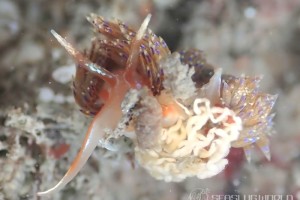
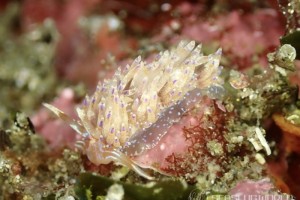
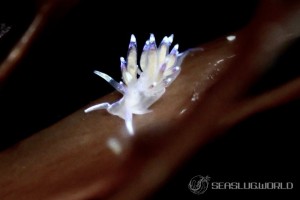
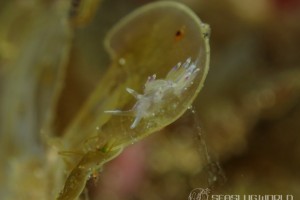
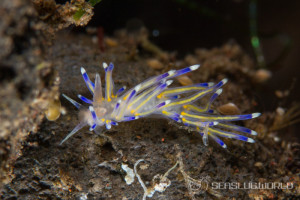
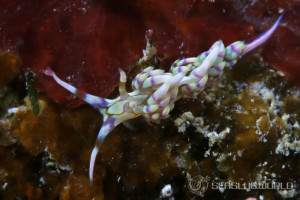
Body slender, typically aeolidiform, 25 mm in length. The oral tentacles are slender and simple. The rhinophores are also slender but irregularly wrinkled almost throughout their length (appearing annulate in preserved specimens). The branchial papillae are long and fusiform, arranged on horseshoe-shaped bases in 8 groups: about 55 in the 1st group, 45 in the 2nd, 15 in the 3rd, 14 in the 4th, 9 in the 5th, and 5-6 in the remaining groups. The outer papillae are short, the innermost largest. The 1st group is widely separated from the rest; succeeding groups are close together and intervals narrow toward the tail. The foot is bilabiate at the front edge, the lateral angles produced tentaculiform.The head and back are pale orange-yellow, with an opaque white line along each oral tentacle. The branchial papillae carry a yellowish-white apex with a chrome-yellow band below it; the inner vein is dark brown, turning to violet toward the apex. The rest of the body is translucent fleshy white.
Distribution
Type locality: Seto, Kii.Etymology
The specific epithet inconspicua is the Latin adjective "not conspicuous, unobtrusive" — a descriptive naming after the unobtrusive overall appearance. The genus name Setoeolis, established later for this species as the type of a monotypic genus, combines "Seto" (the type locality) with Eolis.Remarks
Originally described as Cuthona (Hervia) inconspicua; later moved to the new monotypic genus Setoeolis.References
A Kindle field guide by the site author

Kimoto N. (2026). Sea Slugs of Japan & the Indo-Pacific, 2nd Edition.
Kindle Edition
View on Amazon PR (Amazon Associates)Seasonality
Shooting Locations
Loading shooting locations...
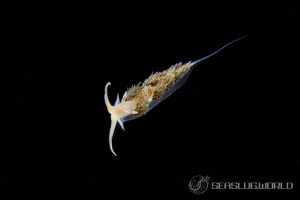
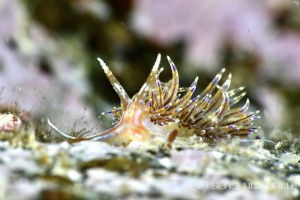
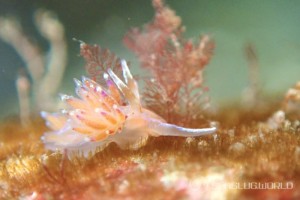
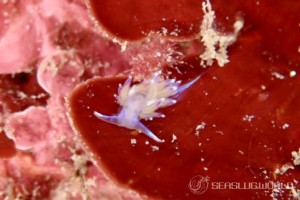
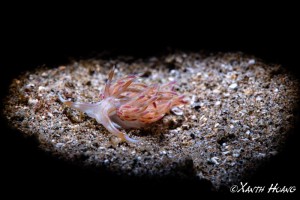
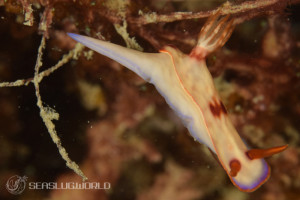
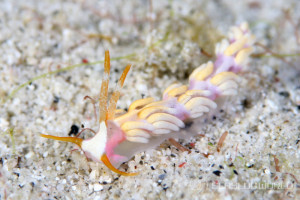
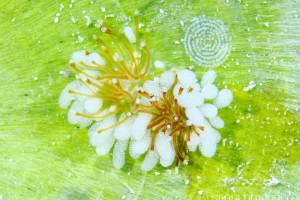
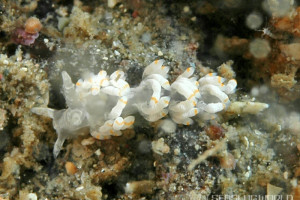
Photos of Setoeolis inconspicua







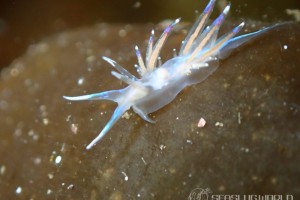

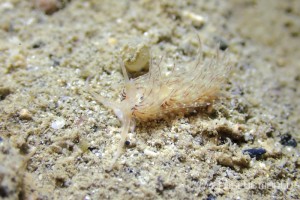
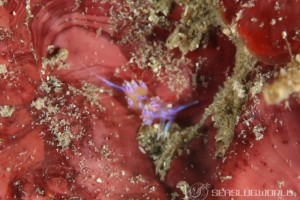

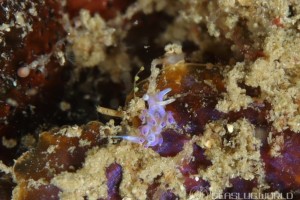
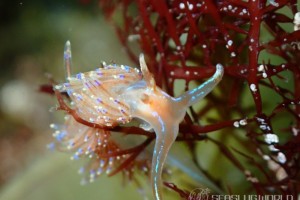
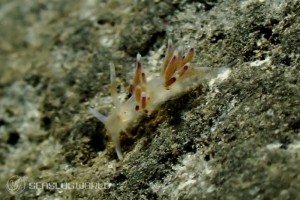

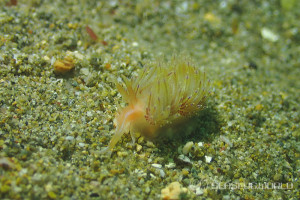

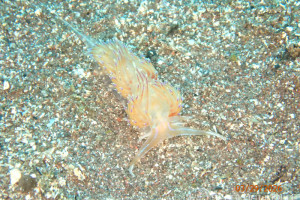

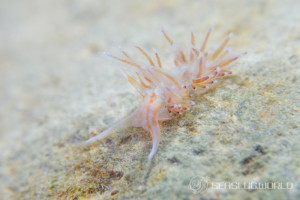
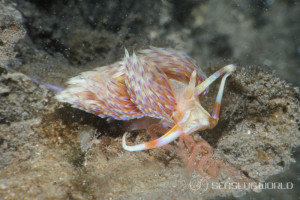

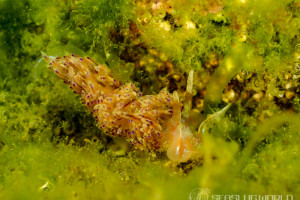

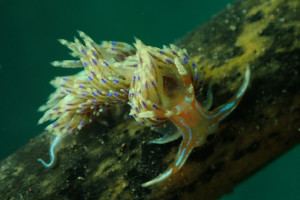

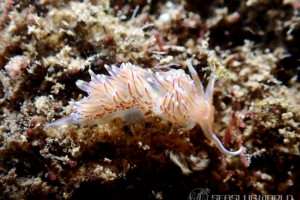

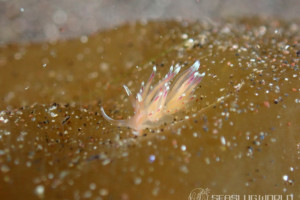
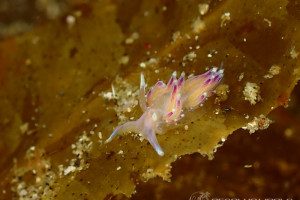

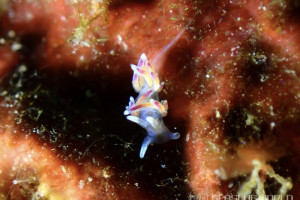

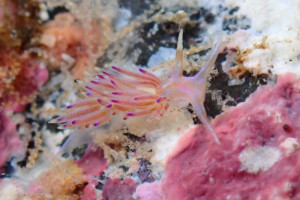

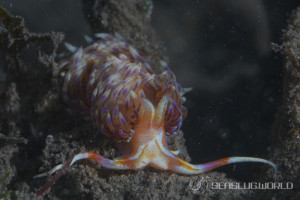

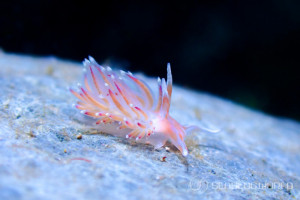

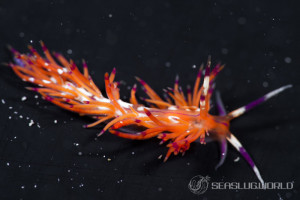
Similar Colors Nudibranchs

Academic Database
Sea slug observation data is available in international marine biodiversity databases.