Tergiposacca longicerata Cella, Carmona, Ekimova, Chichvarkhin, Schepetov & Gosliner, 2016
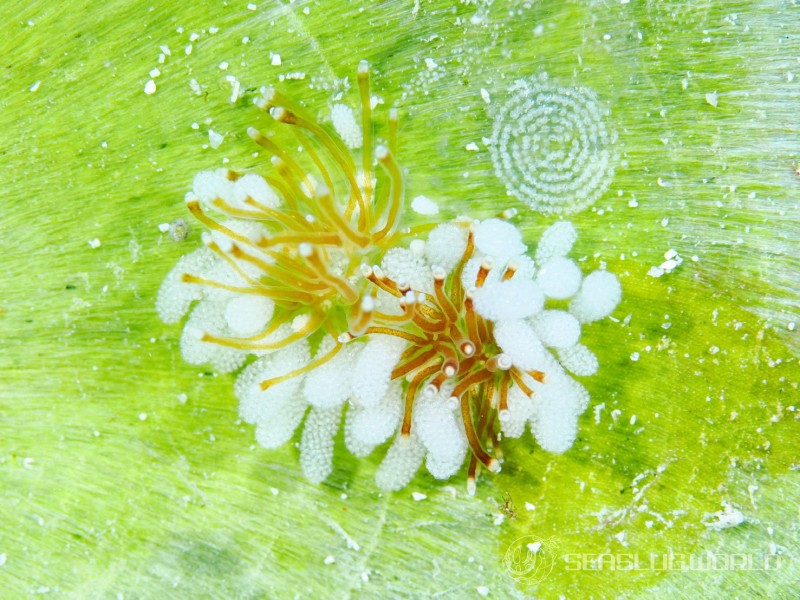
- Location
- Dorodoro Park II, Miyakojima, Okinawa, Japan
- Date
- 2024/06/30
- Length
- 4mm
- Depth
- 20.0m
- Water temperature
- 28.0℃
Description
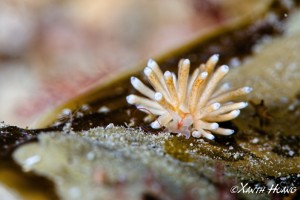
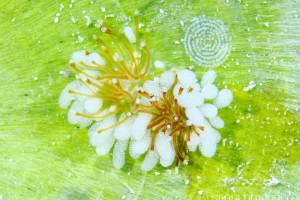
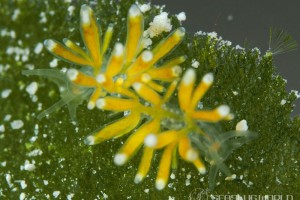
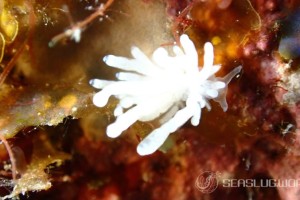
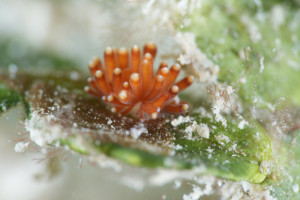
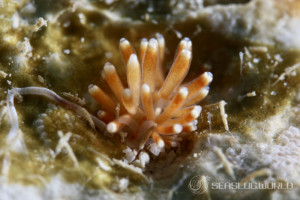
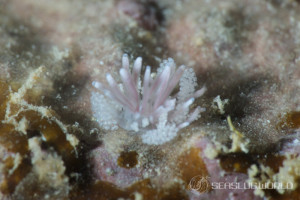
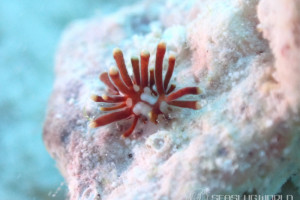
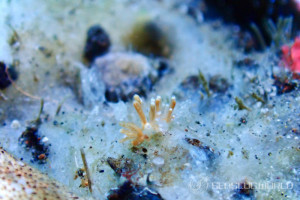
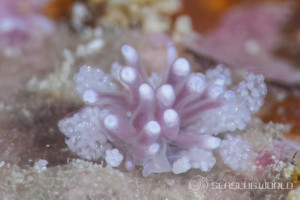
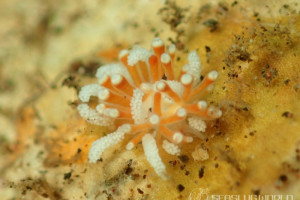
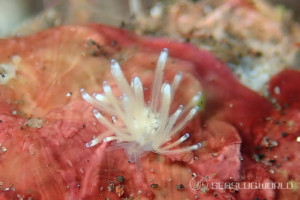
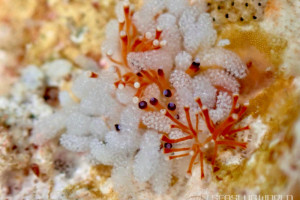
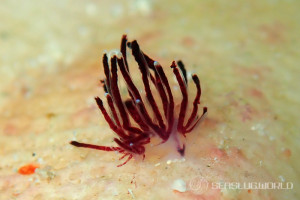
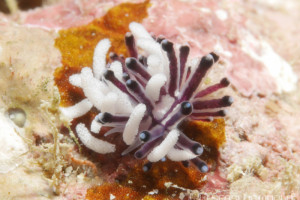
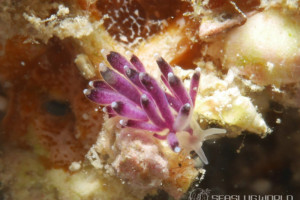
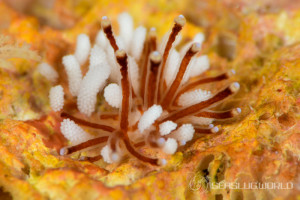
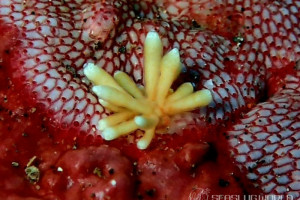
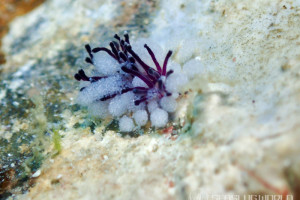
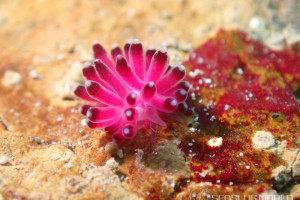
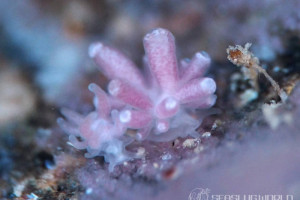
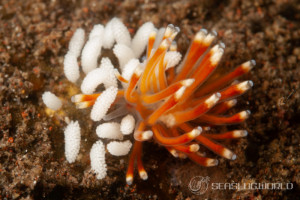
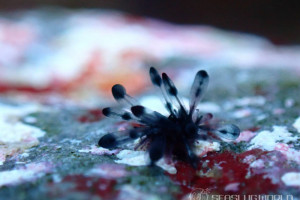
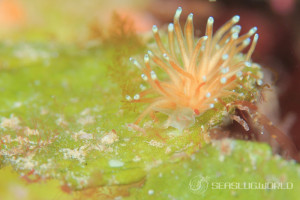
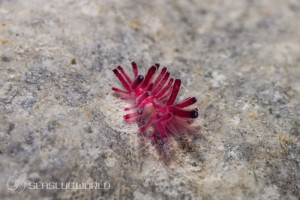
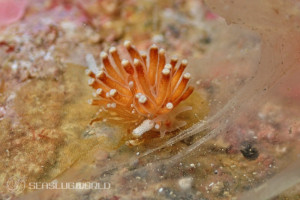
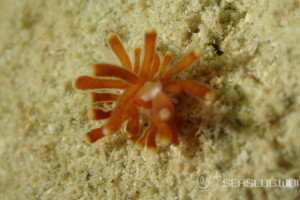
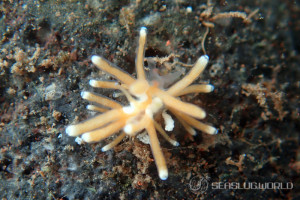
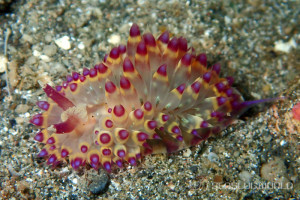
Body elongate, small, and translucent, with rounded foot corners. Some specimens carry orange or burgundy pigmentation on the dorsum; the reddish-orange jaws are visible through the body wall. Rhinophores and oral tentacles translucent and smooth; rhinophores longer than the conical oral tentacles. Cerata long and cylindrical with nearly uniform diameter, extending from behind the rhinophores to the tail; the ceratal epithelium is translucent, allowing the digestive-gland branches to be seen. Digestive-gland colour varies greatly (burgundy to pale grey, yellow or orange) depending on diet. The upper tenth of the ceras bears a subapical white band that may be swollen; cnidosacs white. Cerata are arranged in three elevated arches on each side: anterior and middle arches with 5–12 cerata, posterior arch with 4–10. Reaches 15 mm in length.Distribution
Type locality Maricaban Island, Tingloy, Batangas, Philippines. Known from Papua New Guinea, the Philippines, Japan (Okinawa) and Indonesia. Commonly found under rocks in shallow water (2–5 m).Etymology
The generic name Tergiposacca alludes to the resemblance to Tergipes combined with the saccate (grape-like) egg mass that characterises this genus. The specific epithet longicerata refers to the elongate cerata, also a diagnostic feature of the species (verbatim from the original description).Remarks
Formerly listed under Tergipes. Cella et al. 2016 erected Tergiposacca as a new genus in their phylogenetic revision of Tergipedidae, designating the present species as type species. The "sacca" element of the genus name refers to the large white sac-shaped (grape-like) egg mass. The Japanese name "Komori-mino-umiushi" ("brooding aeolid") refers to the egg-mass protection behaviour.References
Featured in this book
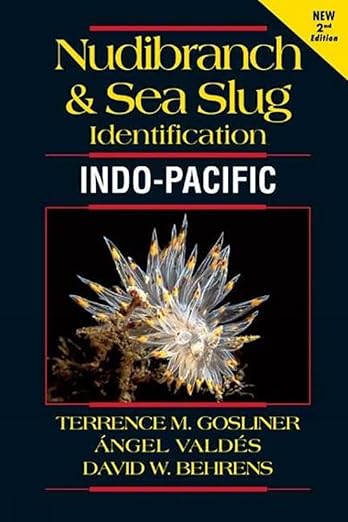
Terrence Gosliner, Ángel Valdés and David Behrens. (2018). Nudibranch and Sea Slug Identification Indo-Pacific 2nd Edition. New World Pubns Inc.
New World Publications
This species, Tergiposacca longicerata, is included in the book.
View on Amazon PR (Amazon Associates)Seasonality
Shooting Locations
Loading shooting locations...
Photos of Tergiposacca longicerata
Tag:


















Same Genus Nudibranchs
Similar Colors Nudibranchs
Academic Database
Sea slug observation data is available in international marine biodiversity databases.