Tritonia festiva (Stearns, 1873)
Description
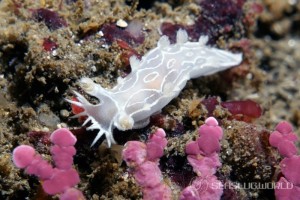
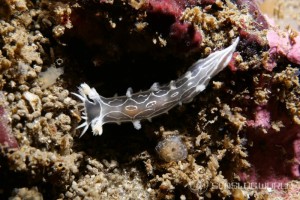
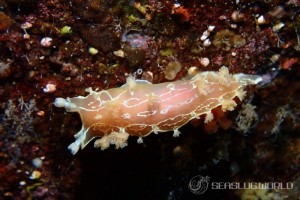
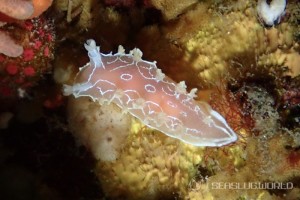
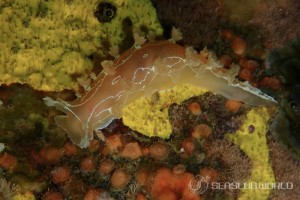
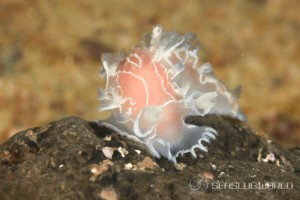
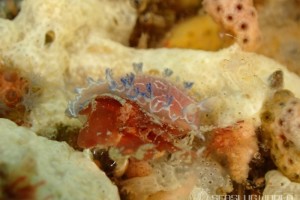
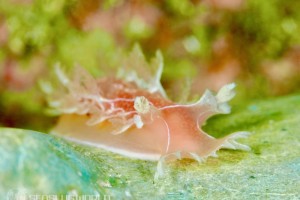
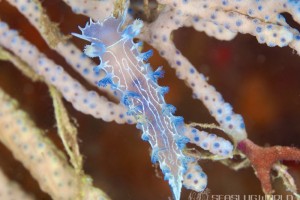
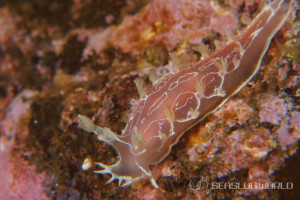
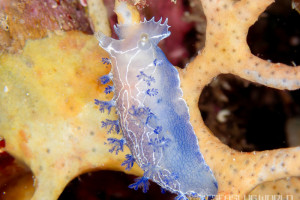
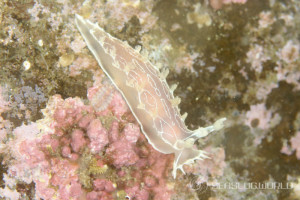
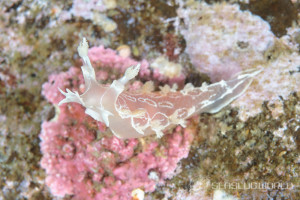
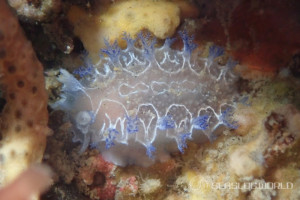
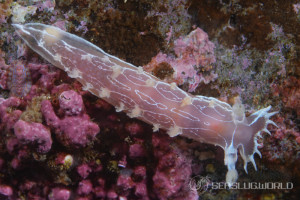
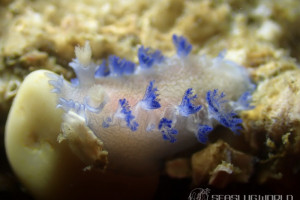
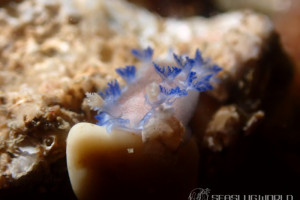
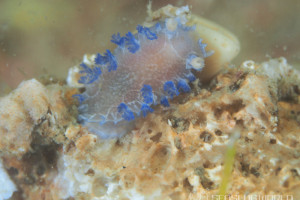
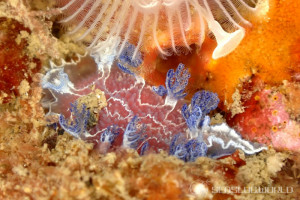
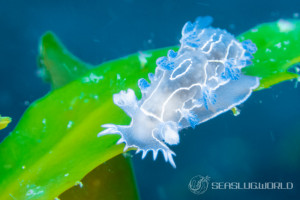
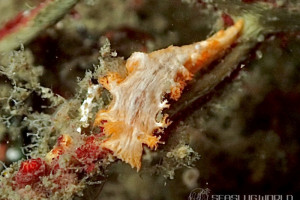
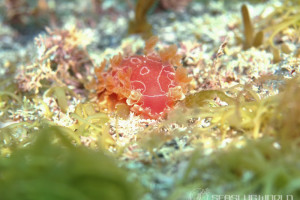
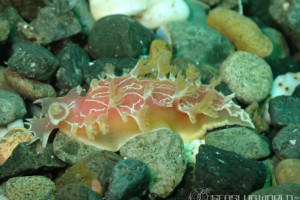
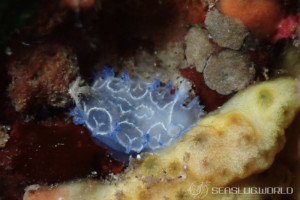
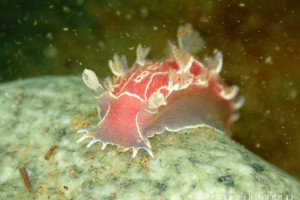
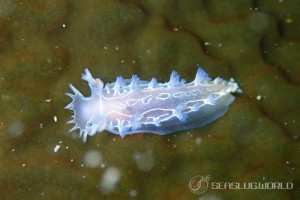
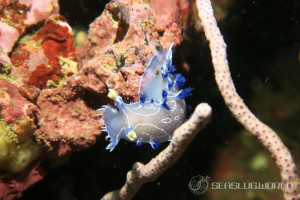
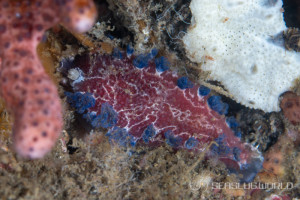
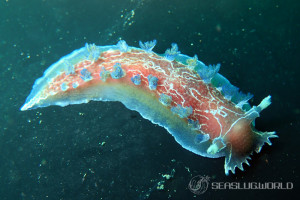
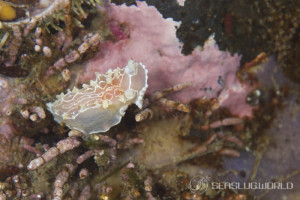
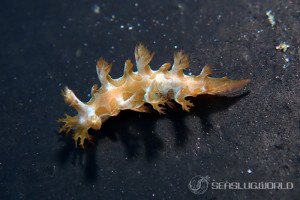
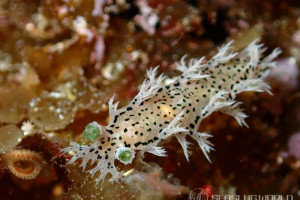
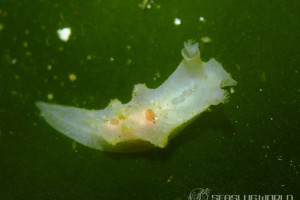
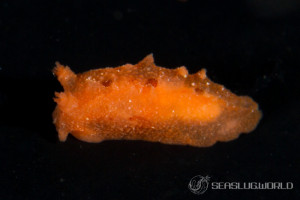
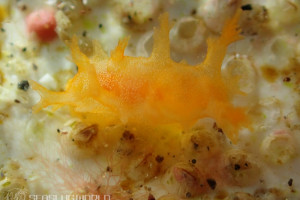
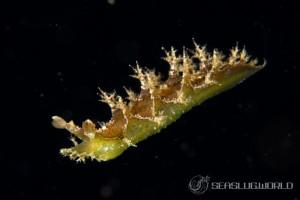
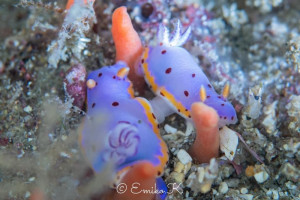
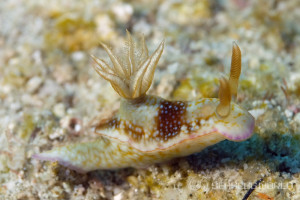
The body shows striking colour polymorphism, ranging from translucent white through pale pink, orange, yellow and burnt sienna to brown. Most specimens carry a white reticulate or diamond-shaped pattern on the dorsum, which is the source of the North American common name "diamondback tritonia". Japanese material from Muroran reported by the 1957 study is a translucent white form in which the reddish viscera show through.Branching secondary gill plumes line both sides of the mantle margin. The frontal veil bears a row of finger-like processes along its anterior edge. The rhinophores carry a branched club that closely resembles the secondary gills, and small papillae are scattered on the back.
Body length varies with locality: intertidal animals are typically about 35 mm, subtidal individuals exceed 50 mm, and Puget Sound specimens reportedly reach 100 mm. The Muroran specimen of the 1957 study reached 55 mm.
Distribution
Widespread in the cold-temperate North Pacific. On the eastern Pacific coast it ranges from south-central Alaska to northern Baja California, Mexico; on the western Pacific side it is recorded from Japan and Korea. The first Japanese record is that of the 1957 study, based on a specimen from Muroran, Hokkaido, for which he proposed the Japanese name "Shiro-hokuyô-umiushi".Etymology
The specific epithet festiva is the feminine form of Latin festivus (festive, gay, showy), in reference to the colourful reticulate markings on the dorsum. Stearns 1873 described the species from San Francisco Bay, California, as the type species of his then-new genus Lateribranchiaea.Remarks
The species feeds on octocorals, taking the polyps of soft corals (Alcyonium, Gersemia), sea pens (Ptilosarcus gurneyi and others) and gorgonians. The frontal veil is used to detect prey before the polyps can retract.The original combination is Lateribranchiaea festiva Stearns, 1873, later transferred to Tritonia. Tritonia reticulata Bergh, 1882 and Sphaerostoma undulata O'Donoghue, 1924 are treated as junior synonyms; the variety name muroranica applied by the 1957 study to the Muroran specimen also falls into the synonymy of this species.
References
- Duvaucelia (Duvaucelia) undulata O'Donoghue, var. muroranica Baba Shiro-hokuy6- umiushi (n. n.), Baba, K. 1957. A revised list of the species of Opisthobranchia from the northern part of Japan, with some additional descriptions. J. Fac. Sci., Hokkaido Univ.,ser. 6, Zool. 13(1-4):8-14.
- Marcus E. (1964). Additions to the nudibranch fauna of the east Pacific and the Gulf of California. Transactions of the San Diego Society of Natural History. 13: 377-396. https://doi.org/10.5962/bhl.part.9602
- 高岡生物研究会. (2002). 日本海のウミウシ. 第2版.
- Tritonia festiva, Behrens D.W., Hermosillo A., Fletcher K. & Jensen G.C. (2022). Nudibranchs & Sea Slugs of the Eastern Pacific. Molamarine.
Featured in this book
Behrens D.W., Hermosillo A., Fletcher K. & Jensen G.C. (2022). Nudibranchs & Sea Slugs of the Eastern Pacific. Molamarine.
Molamarine
This species, Tritonia festiva, is included in the book.
View on Amazon PR (Amazon Associates)Seasonality
Shooting Locations
Loading shooting locations...
Photos of Tritonia festiva




















Same Genus Nudibranchs

Similar Colors Nudibranchs

Academic Database
Sea slug observation data is available in international marine biodiversity databases.