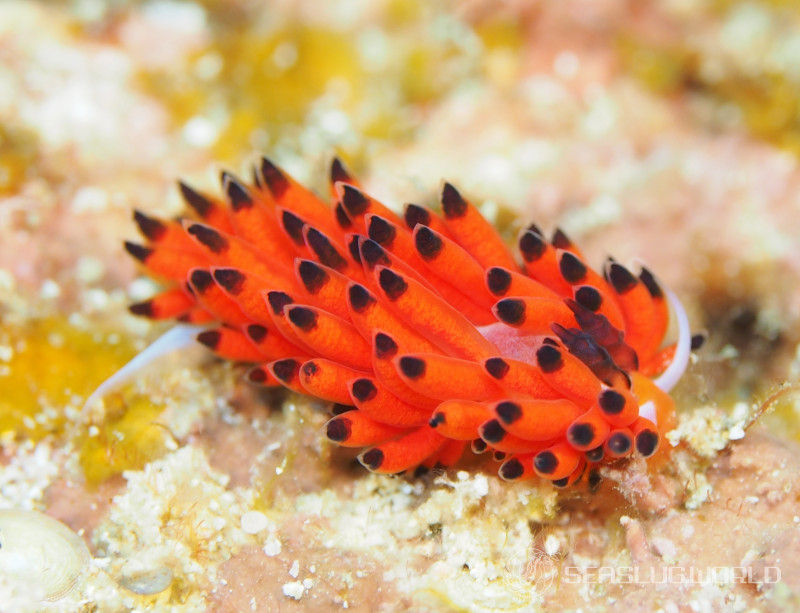
Favorinus tsuruganus Baba & Abe, 1964
- Location
- Shiratori Kindergarten, Miyakojima, Okinawa, Japan
- Date
- 2018/01/04
- Length
- 30mm
- Depth
- 14.0m
- Water temperature
- 22.7℃
Description
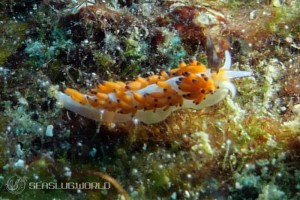
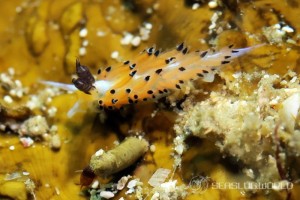
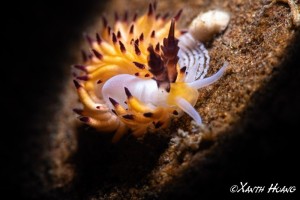
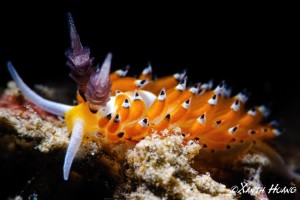
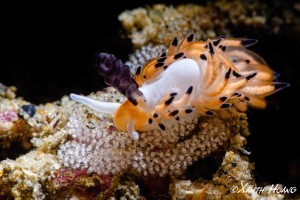
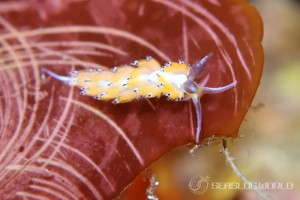
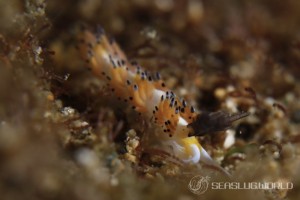
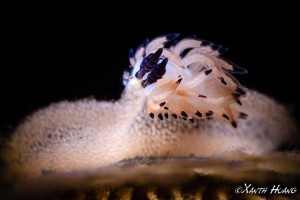
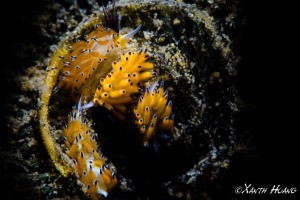
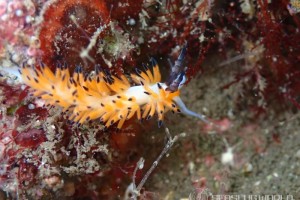
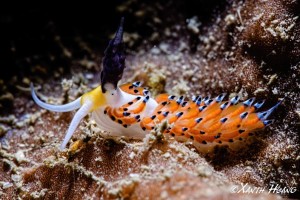
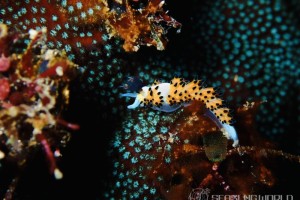
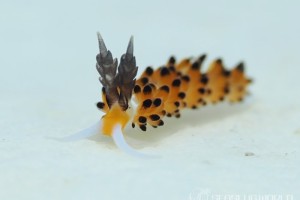
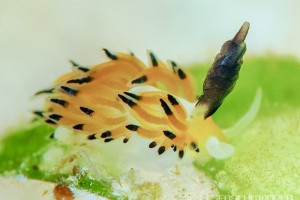
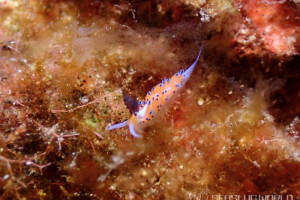
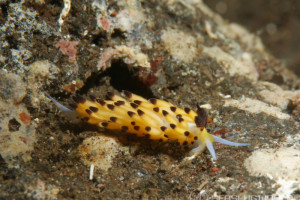
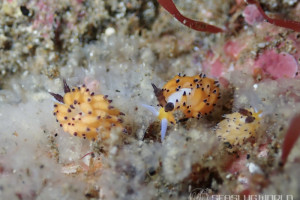
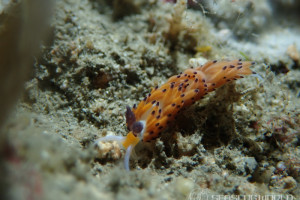
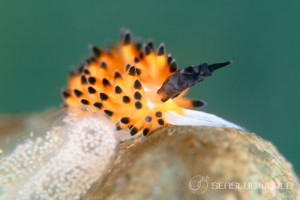
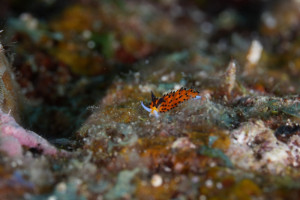
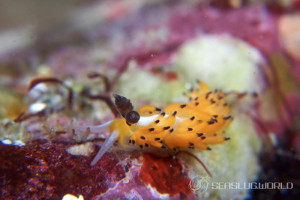
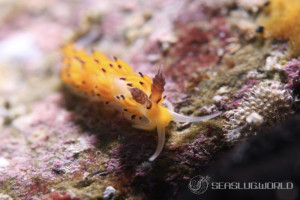
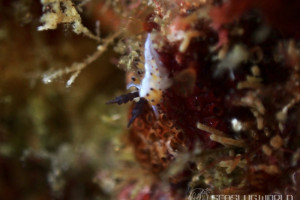
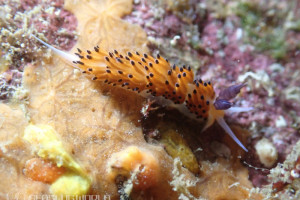
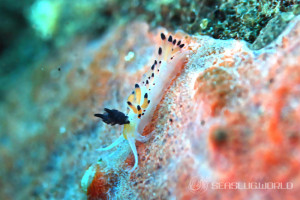
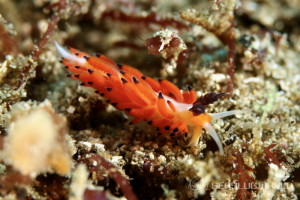
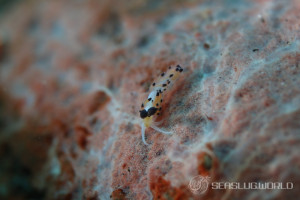
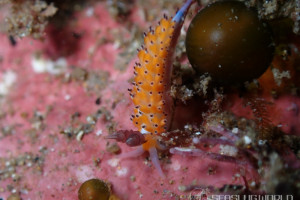
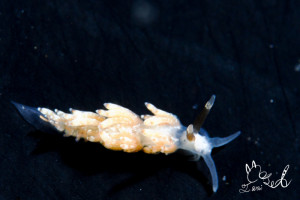
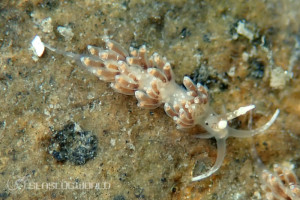
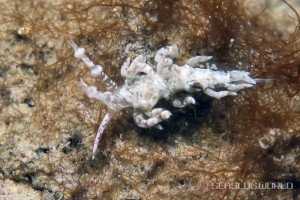
A small aeolid nudibranch, 15 mm long in the holotype and reaching up to about 30 mm. The body is almost colourless and translucent, with only a faint yellowish tinge over the head. The most distinctive feature lies in the rhinophores, which are entirely deep black and bear two (occasionally three) cup-shaped or collar-like swellings near the middle of their length. The cephalic tentacles are exceedingly long and slender, longer than the rhinophores. The cerata are elongate-fusiform; the liver diverticulum within each ceras is bright orange-yellow, and the outer side of each ceras carries a conspicuous black mark near the tip. The foot-corners are tentaculiform, and the tail is long and tapering. The jaw-edge is armed along its entire length with a row of pointed denticles followed by 3-4 rows of much smaller ones. The radular formula is 16 x 0.1.0; the central tooth is typically V-shaped and lacks lateral denticles.Distribution
The type locality is the rocky shore of Mizushima in Tsuruga Bay, on the Japan Sea coast of Honshu, Fukui Prefecture. Beyond Japan the species has been reported from the Red Sea, Reunion Island, Indonesia, the Philippines, Papua New Guinea, New Caledonia, eastern Australia (south to about Sydney), and New Zealand, indicating a wide Indo-West Pacific range.Etymology
The specific epithet tsuruganus means "of Tsuruga," referring to Tsuruga Bay, the type locality. The Japanese name "Tsuruga-chigo-minoumiushi" similarly derives from this place name.Remarks
Like other members of the genus, F. tsuruganus is a specialised egg-predator that feeds on the spawn of other opisthobranchs, including Hexabranchus sanguineus and species of Goniodoris. Many congeners take on the colour of the eggs they have most recently consumed, but F. tsuruganus is unusual within the genus in retaining a stable orange-yellow and black-tipped ceratal colouration regardless of diet. The original description was published by Kikutaro Baba while at Osaka Gakugei University, jointly with Takeo Abe, biology master at Takaoka Senior High School in Toyama Prefecture; Abe and the schools biology club carried out long-running summer field surveys of opisthobranchs along the central Japan Sea coast and supplied many of the specimens on which Babas Japan-Sea Aeolidacea papers were based.References
A Kindle field guide by the site author
Kimoto N. (2026). Sea Slugs of Japan & the Indo-Pacific, 2nd Edition.
Kindle Edition
View on Amazon PR (Amazon Associates)Seasonality
Shooting Locations
Loading shooting locations...
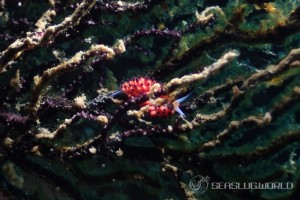
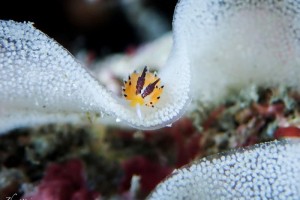
Photos of Favorinus tsuruganus
Tag:














Same Genus Nudibranchs
Similar Colors Nudibranchs
Academic Database
Sea slug observation data is available in international marine biodiversity databases.