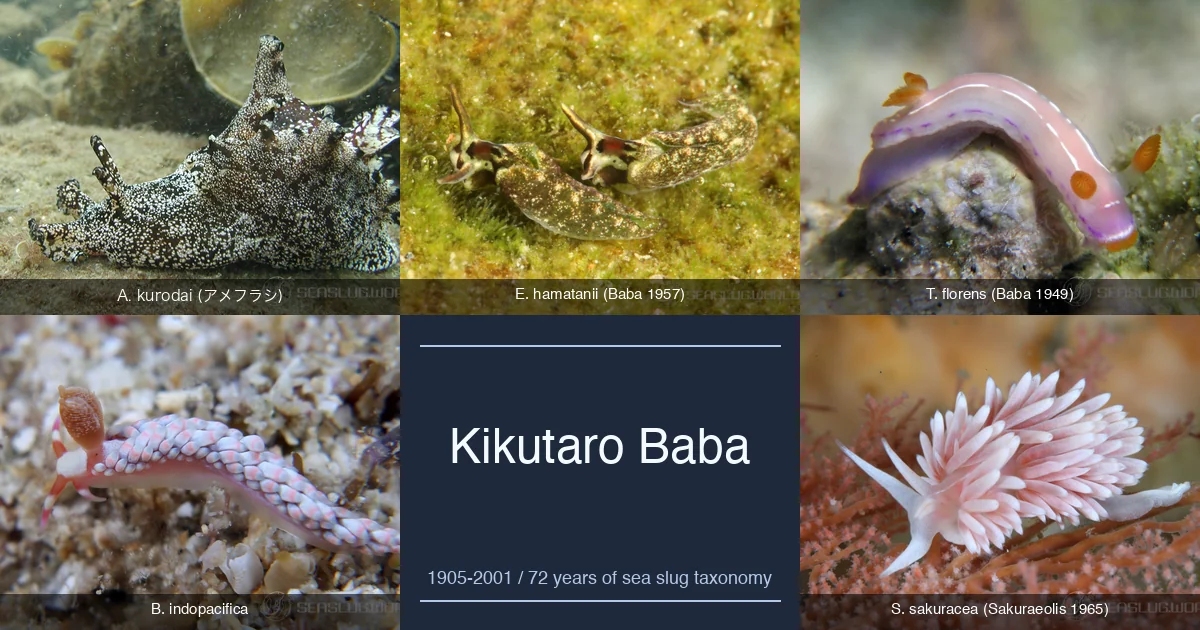
Kikutaro Baba (1905-2001) — the 72 years that built Japanese sea slug taxonomy
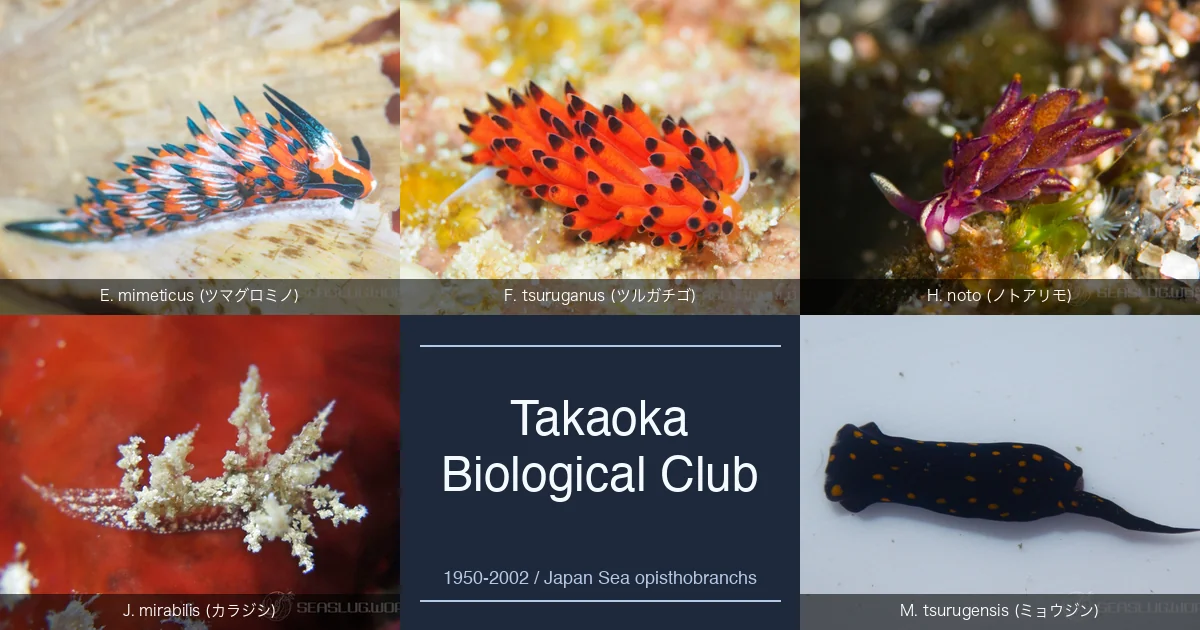
Japanese sea slug taxonomy effectively starts with Dr. Kikutaro Baba (1905-2001). From his first paper in 1928 to his last single-author paper in 2000 — 72 years — Baba left behind more than 240 scientific papers and 12 books, established 20 new genera and 1 new family. This site has 1,178 species registered with binomial scientific names (excluding entries identified only to genus level); 165 of those carry Baba as author.
This article traces Baba's life and work in chronological + work-by-work order.
Profile — 1905-2001
Born 1905, died 2001 at age 96. From early in his career he was attached to the Amakusa Marine Biological Laboratory (Tomioka, Kumamoto Prefecture, then under Kyushu Imperial University), where he carried out his initial work on opisthobranchs. After the war he held a professorship at Osaka Gakugei University (now Osaka Kyoiku University).
His main field was the taxonomy of marine opisthobranchs (sea slugs), but he also described new species in Solenogastres (aplacophorans) from Amakusa, so his actual scope went beyond Opisthobranchia. In his later years he co-authored extensively with his student Iwao Hamatani, and papers under Baba's name continued for several years after his death (see below).
72 years of activity
The most striking thing about Baba's career is its sheer length.
- First paper — 1928 (age 23)
- First new species — 1930 (age 25), the aeolid Anteaeolidiella takanosimensis
- First new genus — 1930 (age 25), Okadaia
- First new family — 1931 (age 26), Okadaiidae
- Postwar magnum opus — 1949 (age 44), Opisthobranchia of Sagami Bay (Iwanami Shoten)
- Supplement — 1955 (age 50)
- Last single-author paper — 2000 (age 95)
- Last co-authored paper — 2004, Aplysia extraordinaria with Hamatani
Working continuously as a taxonomist from age 23 to 95 puts Baba at the long end of the distribution among Japanese animal taxonomists.
1937 "Opisthobranchia of Japan" (I) and (II) — the 32-year-old's catalogue
Baba's career-defining early work is the two-part "Opisthobranchia of Japan" published in 1937 in the Journal of the Department of Agriculture, Kyushu Imperial University. Volume I covers cephalaspideans, sacoglossans, and pleurobranchs; Volume II covers the nudibranchs (including aeolids). Together they form a catalogue of Japanese opisthobranchs.
Volume II alone contains 11 new species, 2 new subspecies, and 2 replacement names. Listed below in the original generic combinations as Baba published them in 1937:
- Tethys kurodai (now Aplysia kurodai)
- Cadlina japonica
- Euphurus ornatus (now Limacia ornata)
- Noumea nivalis (now Verconia nivalis)
- Cuthona ornata (now Tenellia ornata)
- Favorinus pacificus
- Cadlina sagamiensis (now Showajidaia sagamiensis)
- Polycera fujitai
- Cuthona (Hervia) emurai (now Hermissenda emurai)
- Stiliger berghi
- Okenia barnardi (now Ceratodoris barnardi)
Many of the genus combinations have been revised since — Glossodoris species have been split among Hypselodoris, Goniobranchus, and Thorunna; Tethys kurodai is now placed in Aplysia; and so on. By age 32 Baba had already established the core set of Japanese opisthobranch Latin names through these two papers.
Of those, Aplysia kurodai — a large sea hare common on Japanese rocky shores and tide pools — is the most widely recognized. The Japanese vernacular name "アメフラシ" predates Baba, but it was Baba in 1937 who attached the binomial Aplysia kurodai to that animal.
1949 Opisthobranchia of Sagami Bay — the imperial monograph
In 1949, Iwanami Shoten published Baba's Opisthobranchia of Sagami Bay. The cover bears the line "Edited by the Biological Laboratory of the Imperial Household", and the English subtitle reads "Collected by His Majesty the Emperor of Japan, described by Kikutaro Baba". The collector was Emperor Showa, who made it his routine during stays at the Hayama Imperial Villa to dredge marine fauna across Sagami Bay.
The team:
- Collection — Emperor Showa (offshore Enoshima to Jogashima, depths exceeding 300 m)
- Plates — Hiroo Sanada and Shiro Kato of the Biological Laboratory
- Editor-in-chief — Hirotaro Hattori
- Descriptions — Baba alone
This was one of the early publications of the Imperial Biological Laboratory as the responsible editor, and Baba alone was entrusted with the descriptive text.
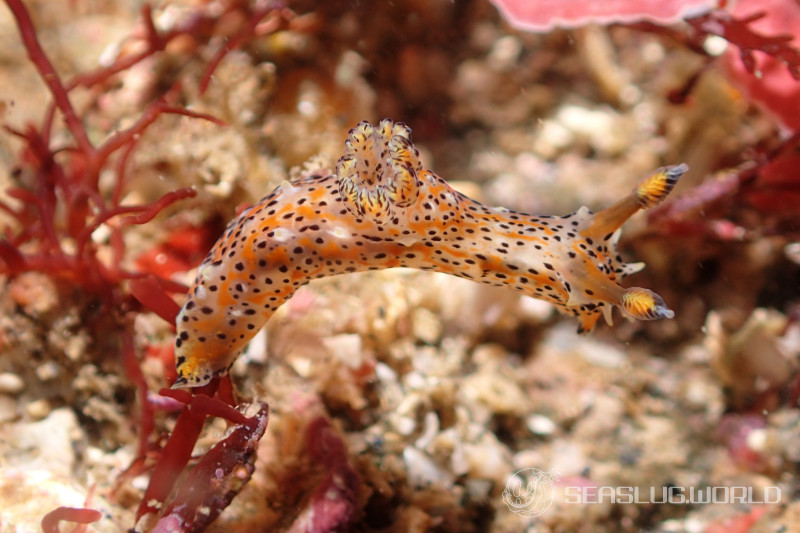
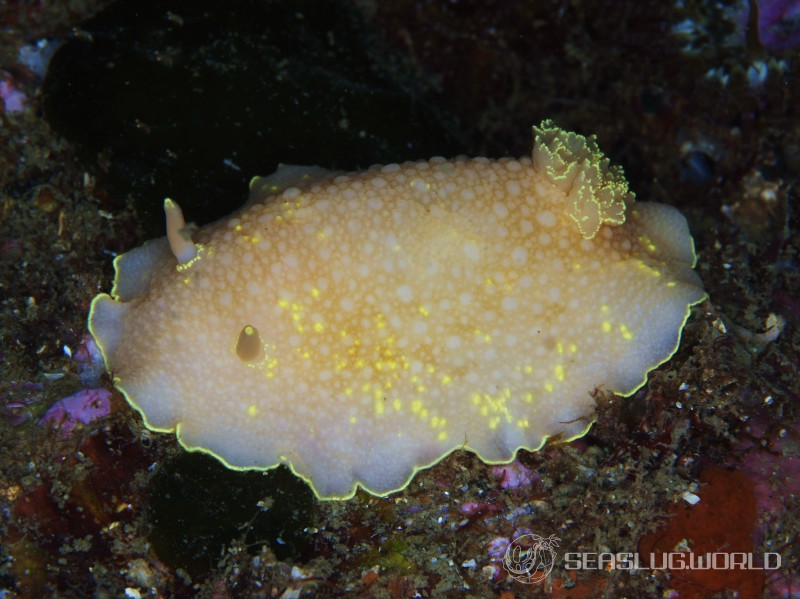
The monograph contains descriptions of a great many Japanese opisthobranchs — more than 40 species registered on this site carry "Baba, 1949" as their authority. A sample, in the original generic combinations Baba used in 1949 (with the modern combination noted where it has changed):
- Glossodoris maritima (now Hypselodoris maritima)
- Glossodoris placida (now Hypselodoris placida)
- Glossodoris sagamiensis (now Hypselodoris sagamiensis)
- Glossodoris florens (now Thorunna florens)
- Ceratosoma bicolor
- Doto purpurea
- Madrella gloriosa
- Halgerda rubicunda (now Sclerodoris rubicunda)
- Stiliger (Ercolania) smaragdinus (now Sacoproteus smaragdinus)
- Elysia splendens (now Thuridilla splendens)
- Hervia serrata (now Phyllodesmium serratum)
- Crimora lutea
- Okenia echinata
- Eubranchopsis virginalis
Within the volume, Baba states that his classification follows "primarily Odhner (1934-1939)" — i.e. the work is organised by applying the Riksmuseum (Stockholm) tradition of Nils Odhner to the Japanese fauna.
1955 Opisthobranchia of Sagami Bay (Supplement)
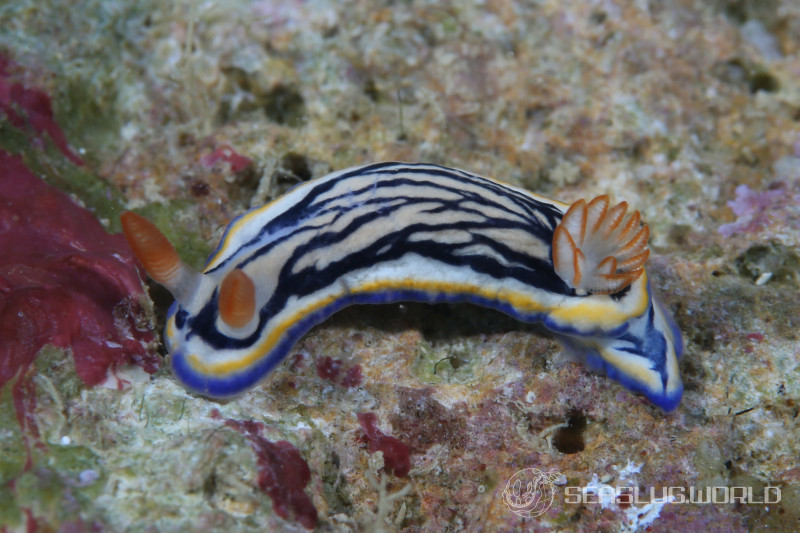
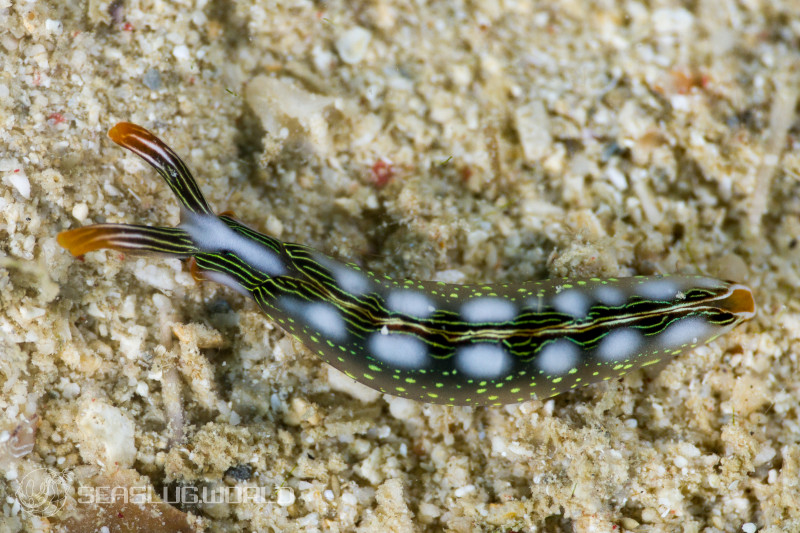
Iwanami Shoten followed up with a Supplement in 1955 — 13 new species, 6 first records for Japan, and 11 first records for Sagami Bay, totalling 37 species. The main volume and the supplement together substantially expanded the Sagami Bay record by Baba's 50th year, but this was hardly the end: his species descriptions continued for another four decades.
20 new genera and 1 new family
Baba's work goes beyond describing new species. As a builder of higher-level groups, he established 20 genera and 1 family across his career.
Most striking is the very start: Okadaia at age 25 (1930) and Okadaiidae at age 26 (1931). From his earliest career years, Baba was on the side of building the framework, not just adding to it. The 1949 Sagami Bay monograph alone introduces six new genera, restructuring the classification of Japanese opisthobranchs.
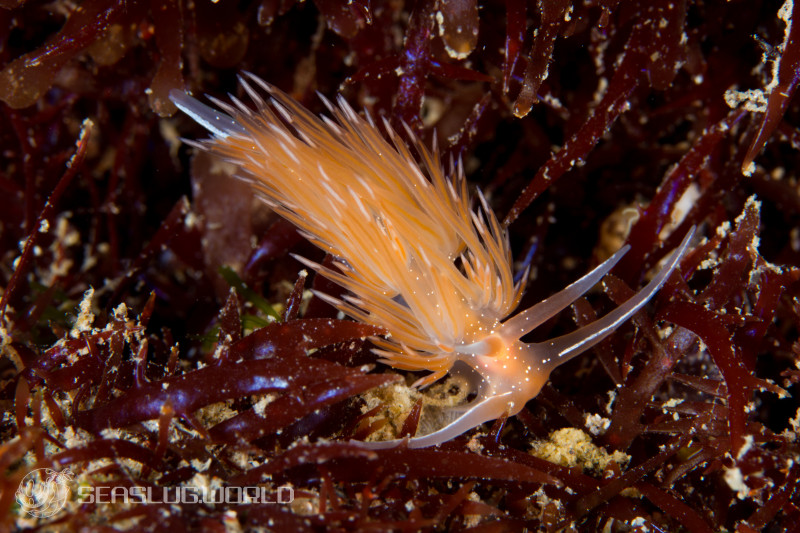
In 1965 (age 60) he proposed three genera at once — Sakuraeolis (sakura, cherry), Setoeolis (Seto, the Inland Sea), and Shinanoeolis (Shinano, an old province name) — Latinising Japanese roots into genus names. Sakuraeolis and Setoeolis remain in current use in aeolid classification; Shinanoeolis has since been subsumed (its type species, originally Cuthona emurai, is now placed in Hermissenda).
41 years with Iwao Hamatani
The second half of Baba's research life is inseparable from his student Iwao Hamatani (the kanji 濱 in his name is the older form).
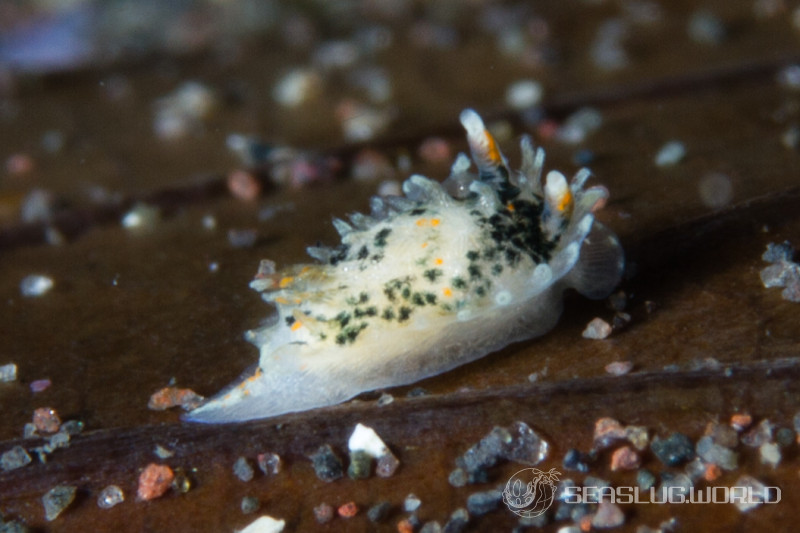
- 1957 — Baba names Elysia hamatanii after Hamatani (then in his early 30s)
- 1961 — Hamatani, then a high-school teacher in Sennan, names Okenia babai after Baba based on specimens from Tan'no, Osaka Bay; the acknowledgment in the original paper notes that "Dr. Baba of Osaka Gakugei University encouraged me to study these specimens, and generously let me use his collection of reprints"
- 1976 — Hamatani names Cyerce kikutarobabai after Baba's 70th birthday — note that the species epithet incorporates both the surname and the given name "Kikutaro"
- 1995 onward — Joint papers between Baba and Hamatani increase as Baba ages, with discussions and observations continuing in the lab
- 2002 — One year after Baba's death, Hamatani publishes the obituary issue "Malacological Contributions of Dr. Kikutaro Baba (1905-2001)" in Venus 61(1-2): 97-110, listing Baba's 240+ papers, books, and supraspecific taxa — a primary reference for tracing Baba's work
- 2004 — Hamatani co-authors Aplysia extraordinaria with Baba, the last paper to bear Baba's name
The collaboration that began in 1957 and continued through 2004 spans nearly half a century of Japanese sea slug research.
After Baba — three genera bear his name
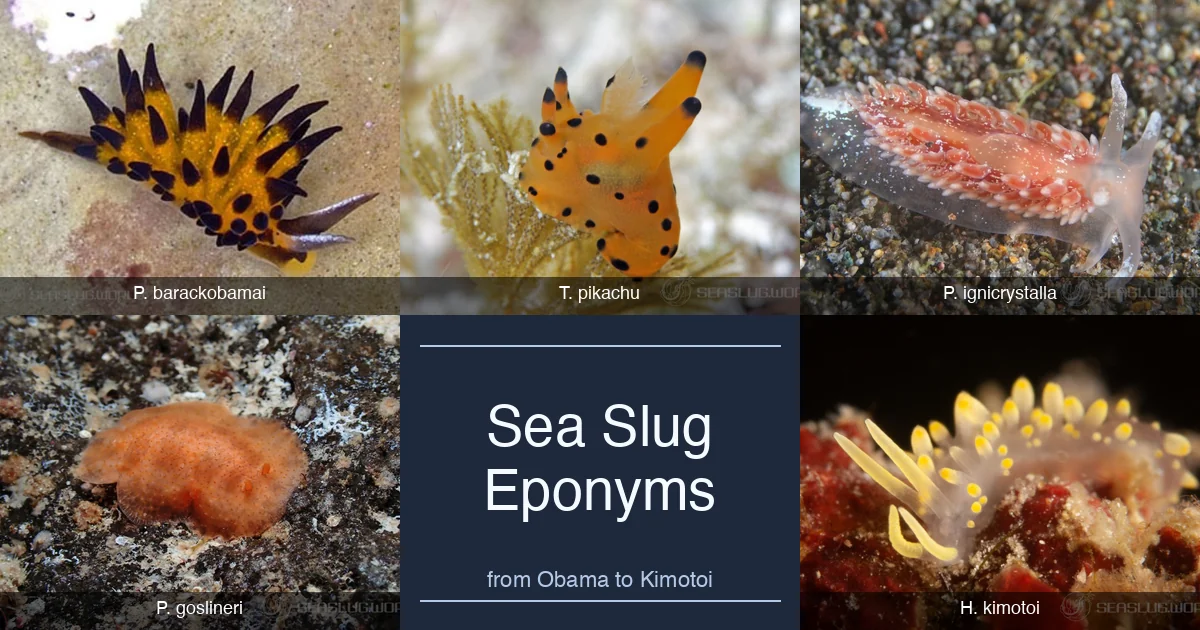
Genus-level names commemorating Baba have been proposed three times independently in the latter half of the 20th century:
- Babaiella Risso-Dominguez, 1964 — type species Babaiella serrata (= now Phyllodesmium serratum, Baba 1949). Synonymized with Phyllodesmium Ehrenberg, 1831 by Rudman in 1981, and is no longer in use
- Babaina Odhner in Franc, 1968 — a chromodorid genus erected with Baba's florens (1949) as type. Subsequently merged into Thorunna Bergh, 1878; Babaina Odhner is no longer a valid name
- Babaina Roller, 1972 → Babakina Roller, 1973 — Richard A. Roller of Arkansas erected a new aeolid genus Babaina in tribute to Baba's body of work. The following year it became clear that Odhner had independently proposed Babaina in 1968; under ICZN rules the later one was invalid. Roller swapped the "i" for "k" and reissued the name as Babakina, which remains in current use
Of the three, Babaiella was absorbed into Phyllodesmium and Babaina Odhner into Thorunna; only Babakina remains in current use. This site has Babakina indopacifica (Gosliner et al., 2007) and Babakina festiva (Roller, 1972) registered.
That Baba's surname was independently chosen for three genus names within a decade of one another gives some sense of how widely his work circulated in late-20th-century opisthobranch research.
Closing
The names Baba assigned are still in active use. WoRMS, this site, and printed Japanese sea slug field guides all carry "Baba, 1937", "Baba, 1949", "(Baba, 1965)" in the author column. The Latin names he set are referenced daily in 21st-century identification work — aquarium signage, dive magazines, taxonomic papers.
When you see Aplysia kurodai in a tide pool or on an aquarium label, the Latin name is already there. The description a 32-year-old researcher wrote in 1937 is still what places that animal in the world.
Enjoyed this post? You can tip the author directly —
Tip this post