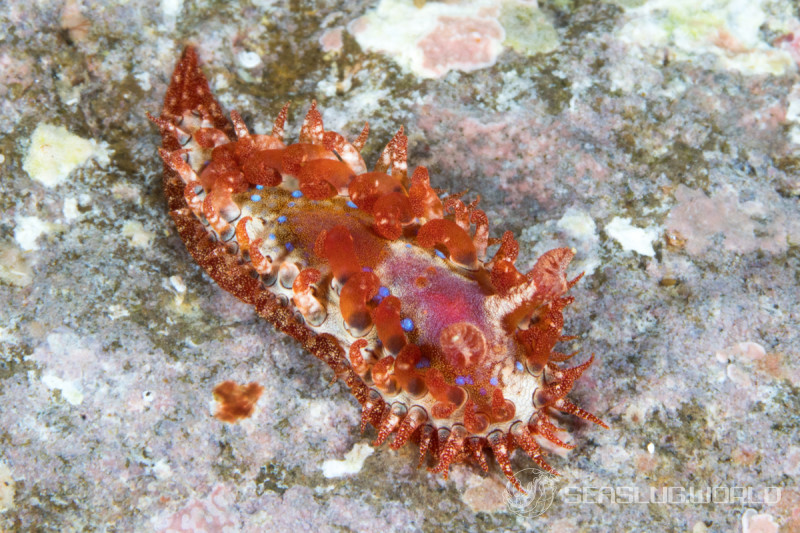
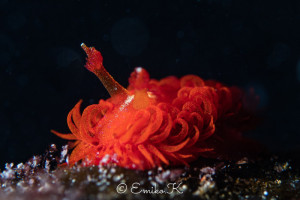
Madrella gloriosa Baba, 1949
- Location
- Otchogahama, Hachijo Island, Tokyo, Japan
- Date
- 2019/05/05
- Length
- 16mm
- Depth
- 8.0m
- Water temperature
- 20.0℃
Description
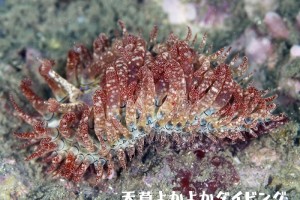
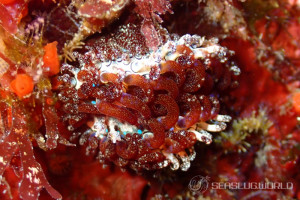
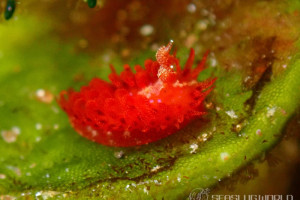
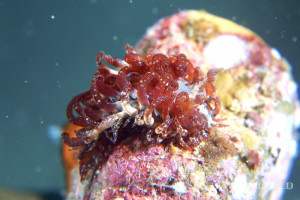
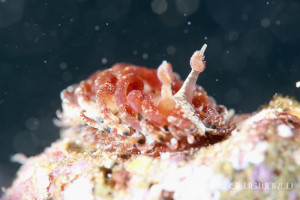
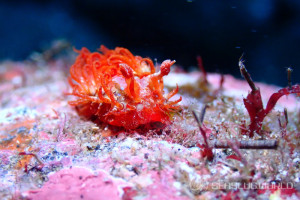
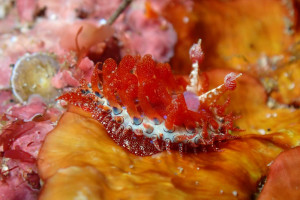
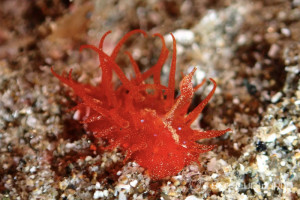
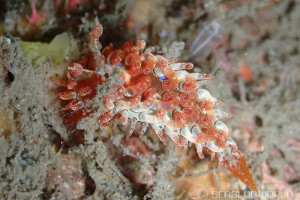
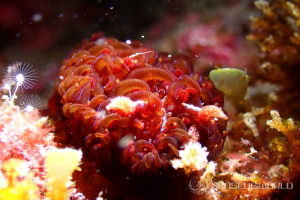
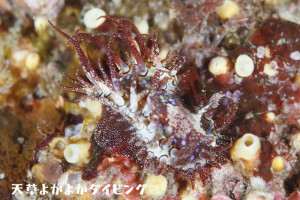
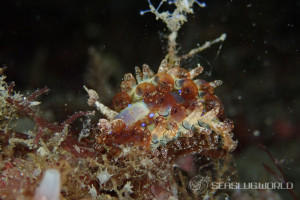
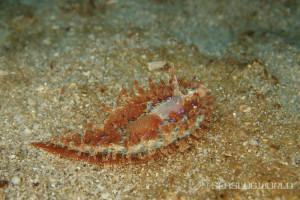
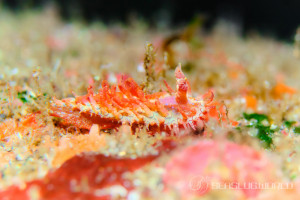
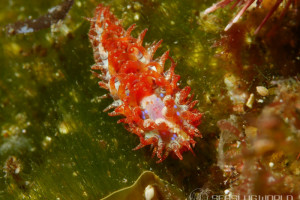
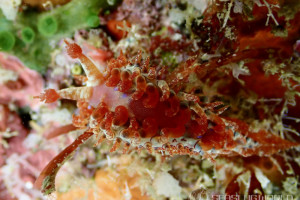
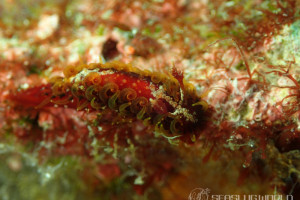
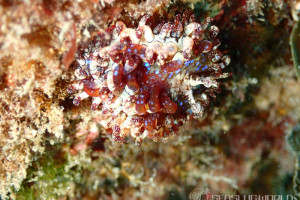
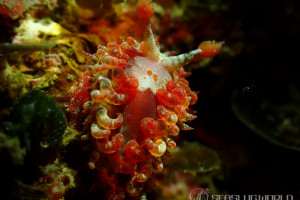
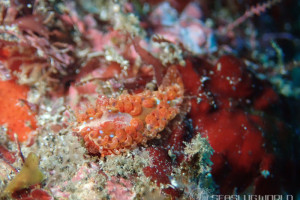
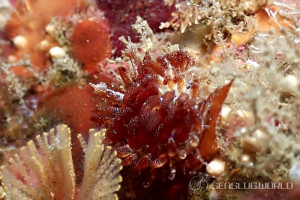
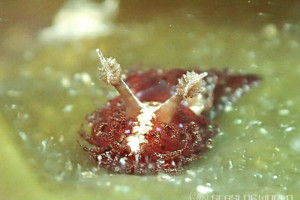
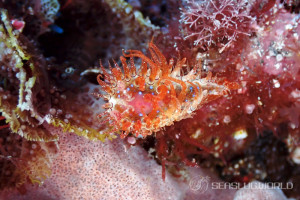
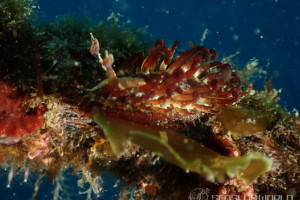
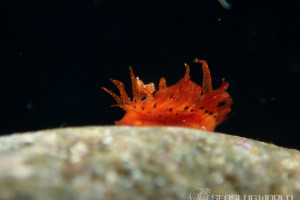
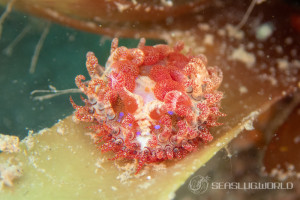
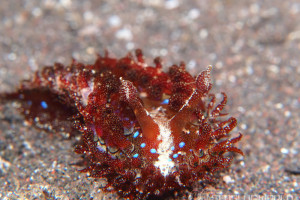
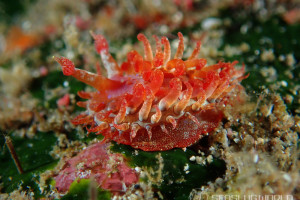
A small Madrellidae, body length about 2 cm. The shape and arrangement of the cerata are identical to those of the related Madrella sanguinea. The dorsum is almost smooth, bearing only about 15 small granules. Two diagnostic features of the species: (1) the tail ridge is not a single ridge but bears cerata continuous with those of the dorsal margin; (2) the body anus opens at the very posterior end of the mantle, displaced to the right side. Body colour orange-red as in Madrella sanguinea, with many white fine dots scattered on the dorsum and body sides. Jaw plate as in Madrella sanguinea. Radula formula 40×1.1.1.1; tooth shape identical. The central tooth bears 10-15 denticles on each side of the median cusp; the lateral teeth bear 10-15 denticles on the inner edge; the rest of the laterals are smooth.Distribution
Type locality is off Hayaki, Sajima Island, Sagami Bay (16 m depth, on a seaweed-and-mud substrate, July 1939, single specimen). The original description (Baba, 1949) records the species only from the type locality.Etymology
The specific epithet gloriosa is Latin for glorious or splendid. The original description does not give an explicit etymology paragraph; the descriptive sense reflects the splendour suggested by the Japanese name "Hana-shōjō-umiushi" (flowery shōjō sea slug).Remarks
Madrella species are generally bryozoan-feeders (Madrella sanguinea was observed on red bryozoan colonies); diet is not stated for this species in Baba 1949, but the holotype was collected on a substrate with seaweed and mud. Distinguished from Madrella sanguinea (Angas) by (1) the almost smooth dorsum (about 15 small granules only) versus tuberculate, (2) cerata continuing onto the tail ridge rather than a single tail ridge, and (3) the anus displaced to the right side of the posterior mantle margin.References
A Kindle field guide by the site author
Kimoto N. (2026). Sea Slugs of Japan & the Indo-Pacific, 2nd Edition.
Kindle Edition
View on Amazon PR (Amazon Associates)Seasonality
Shooting Locations
Loading shooting locations...
Photos of Madrella gloriosa
Tag:























Same Genus Nudibranchs

Similar Colors Nudibranchs

Academic Database
Sea slug observation data is available in international marine biodiversity databases.