Madrella sanguinea (Angas, 1864)
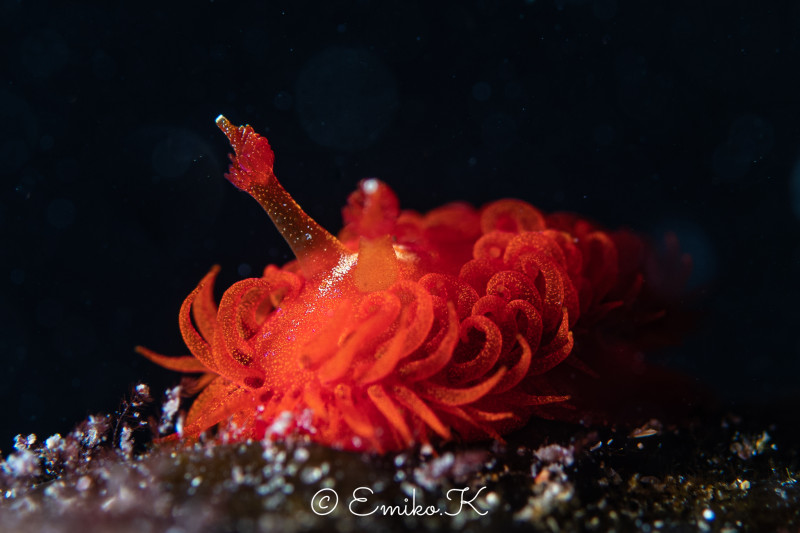
- Location
- Chowder Bay, New South Wales, Australia
- Date
- 2020/06/28
- Length
- 15mm
- Depth
- 5.0m
- Water temperature
- 17.0℃
Description
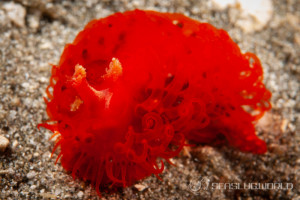
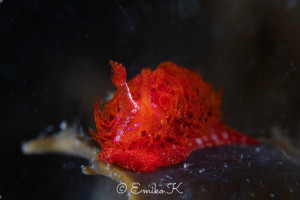
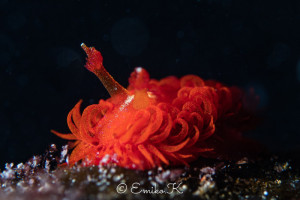
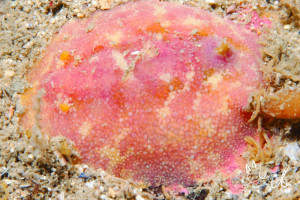
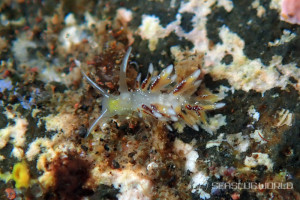
A medium-sized arminoid reaching about 50 mm, with an oval, fairly thick body whose dorsum is densely covered with conical to wart-like tubercles. Ground colour is a bright to deep blood-red — the source of the specific epithet sanguinea ("blood-red") — with tubercle tips tinged yellow or orange.The rhinophores are red and lamellate. The species lacks a typical dorid gill plume; instead the dorsum bears extensive secondary branchial structures (caryophyllidia-like papillae) closely resembling those of Madrella ferruginosa. The two are externally near-identical and are distinguished mainly by colour and size: M. sanguinea is decidedly darker red and larger.
Distribution
Type locality: Port Jackson (Sydney Harbour), New South Wales, Australia (Angas, 1864). Recorded from the eastern coast of Australia (New South Wales, Queensland), northern New Zealand and adjacent temperate-subtropical western Pacific waters. It inhabits the lower intertidal and shallow subtidal of rocky reefs.Etymology
The specific epithet sanguinea is the feminine of Latin sanguineus ("of blood, blood-red"), in reference to the species' striking red ground colour.Remarks
Originally described in 1864 by Angas from Port Jackson material. The genus Madrella was erected by Alder & Hancock in April 1864 with the Indian M. ferruginosa as type species; under the ICZN priority rule the genus name Madrella Alder & Hancock has nomenclatural precedence even though Angas's species was named in January of the same year. Apart from colour and adult size, M. sanguinea is morphologically near-identical to the type species, and species-level validity rests largely on geographic and pigmentation differences. Members of the genus are known sponge-feeders.References
- Madrella sanguinea, Alder J. & Hancock A. (1863). On a new genus and some new species of mollusks from the Pacific Ocean, in the collection of Hugh Cuming, Esq. Proceedings of the Zoological Society of London. 31: 105-109.
- Madrella sanguinea (Angas, 1864) — original description (Port Jackson), Angas G.F. (1864). Description d'espèces nouvelles appartenant à plusieurs genres de Mollusques Nudibranches des environs de Port-Jackson (Nouvelle-Galles du Sud), accompagnée de dessins faits d'après nature. Journal de Conchyliologie, 12(1): 43-70, pl. IV.
A Kindle field guide by the site author
Kimoto N. (2026). Sea Slugs of Japan & the Indo-Pacific, 2nd Edition.
Kindle Edition
View on Amazon PR (Amazon Associates)Seasonality
Shooting Locations
Loading shooting locations...
Photos of Madrella sanguinea


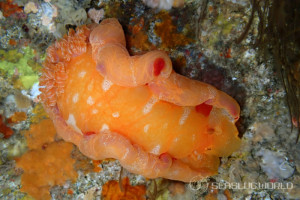
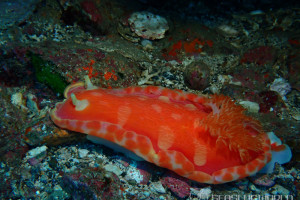
Same Genus Nudibranchs

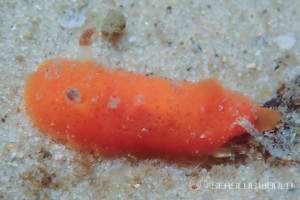
Similar Colors Nudibranchs
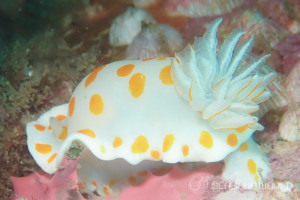
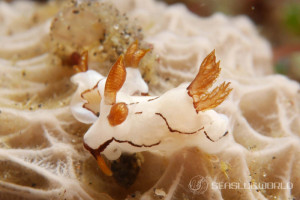
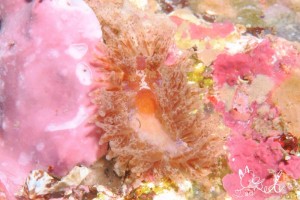
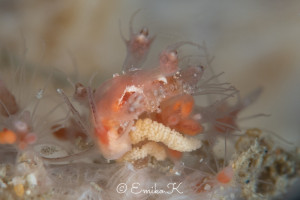
Academic Database
Sea slug observation data is available in international marine biodiversity databases.