Limacia ornata (Baba, 1937)
Description
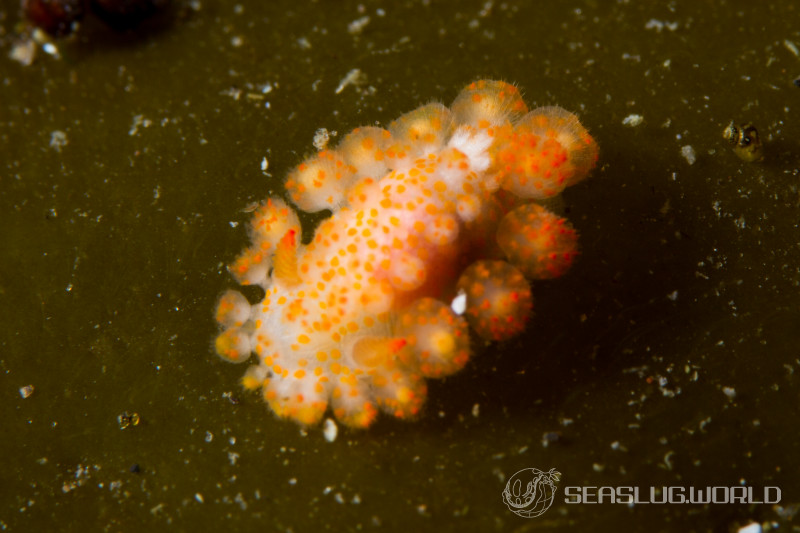
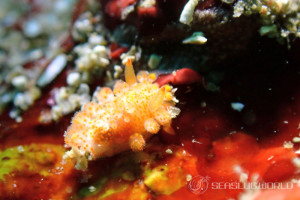
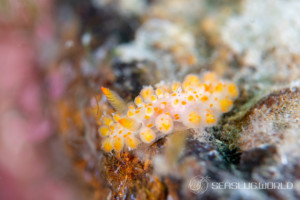
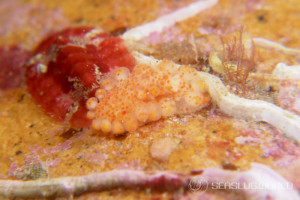
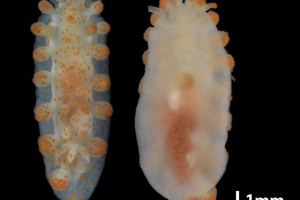
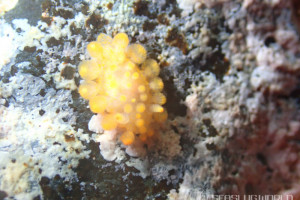
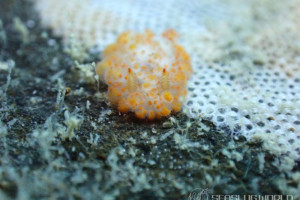
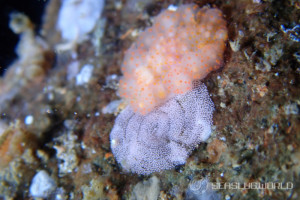
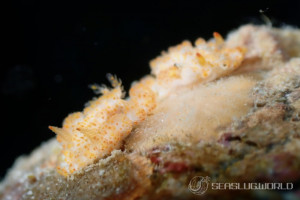
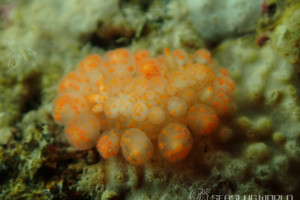
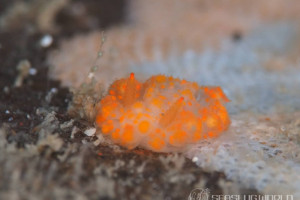
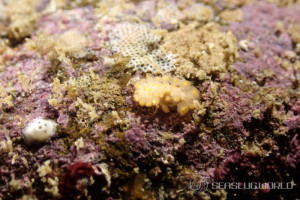
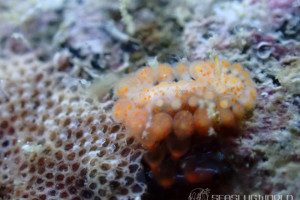
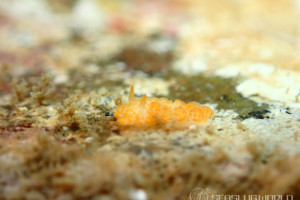
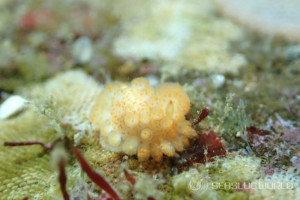
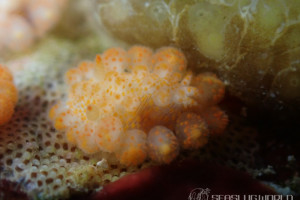
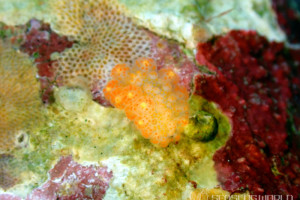
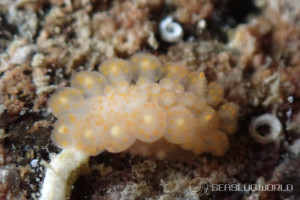
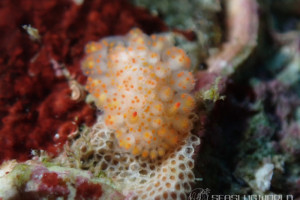
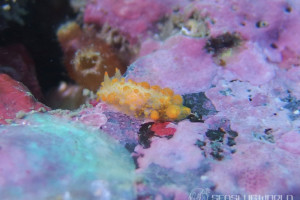
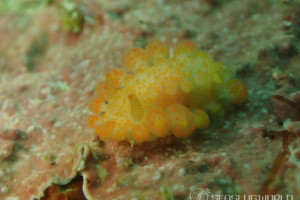
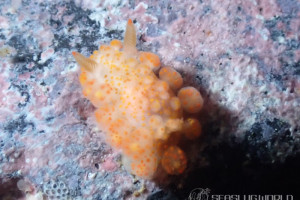
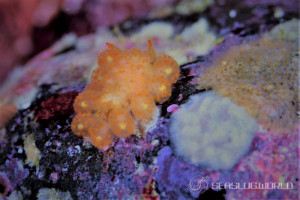
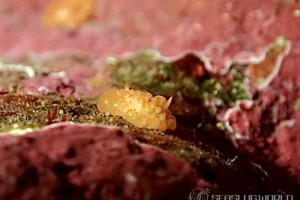
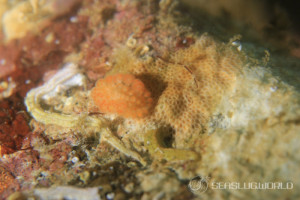
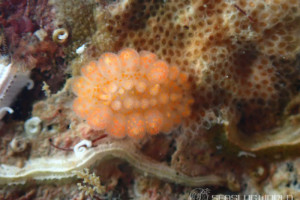
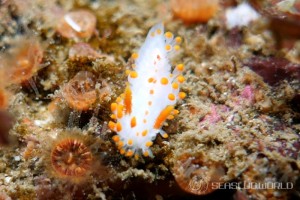
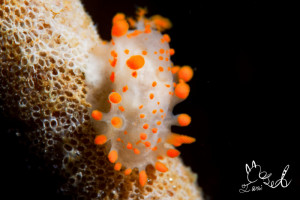
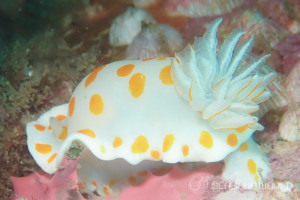
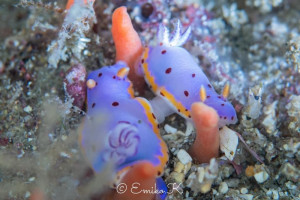
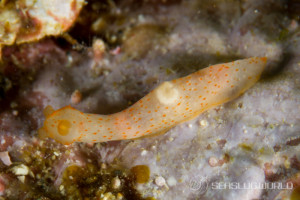
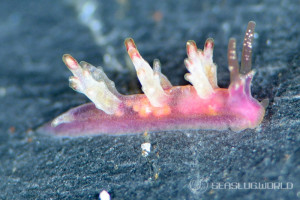
A small polycerid about 10 mm long in life, of limaciform habit. The back is smooth save for about a dozen small, blunt tubercles in rather regular rows. It is marked off from the sides by a series of seven processes, each consisting of an ovoid body on a short stalk. Rhinophores are perfoliate and retractile within low sheaths with an entire margin. The non-retractile branchiae, 3-4 in number, are simply pinnate and lie closely in front of the anus. The margin of the head veil bears 4-5 processes similar in shape to those along the edge of the body, but bearing small granules towards the top. Oral tentacles canaliculiform; the anterior edge of the foot is abruptly truncated. The general body colour is yellowish-white, beautifully ornamented with tiny orange spots. The rhinophores are dull yellow tipped with vermilion.Distribution
Type localities: Tateyama and Seto, Kii (Japan).Etymology
The specific epithet ornatus (Latin: "ornamented, adorned") is a descriptive reference to the striking orange-spot ornamentation of the dorsum.Remarks
Originally placed in Euphurus (= Triopa); later transferred to Limacia.References
- Limacia ornata, MacFarland F.M. (1905). A preliminary account of the Dorididae of Monterey Bay, California. Proceedings of the Biological Society of Washington. 18: 35-54.
- Euphurus ornatus nov. sp., Baba K. (1937). Opisthobranchia Of Japan (II). Journal of the Faculty of Agriculture, Kyushu University. 5(7): 289-344. https://doi.org/10.5109/22586
- カンザシウミウシ(新稱), 馬場菊太郎 & 濱谷巌. (1952). 紀州産後鰓類目録. 南紀生物. Supplement 1: 1-11.
A Kindle field guide by the site author
Kimoto N. (2026). Sea Slugs of Japan & the Indo-Pacific, 2nd Edition.
Kindle Edition
View on Amazon PR (Amazon Associates)Seasonality
Shooting Locations
Loading shooting locations...
Photos of Limacia ornata
Tag:






















Same Genus Nudibranchs

Similar Colors Nudibranchs
Academic Database
Sea slug observation data is available in international marine biodiversity databases.