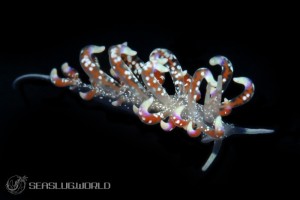
Phyllodesmium serratum (Baba, 1949)
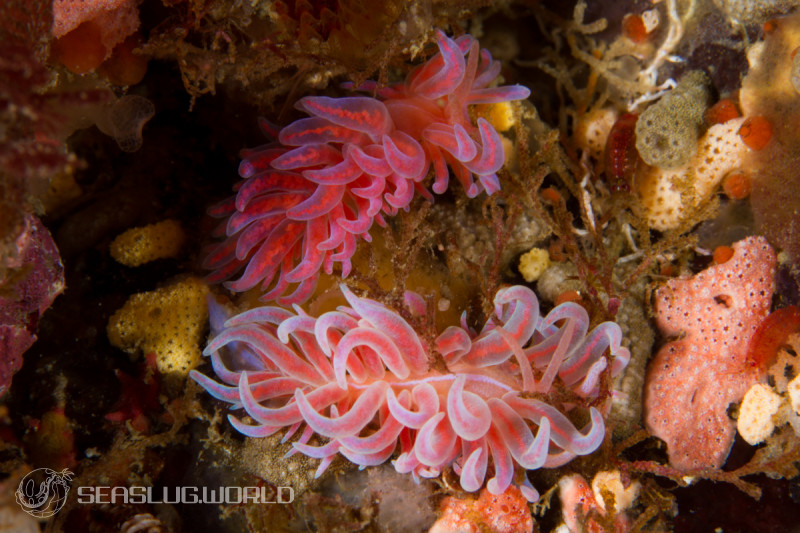
- Location
- Futou beach, Tago, Futou, Dougashima, Shizuoka, Japan
- Date
- 2016/03/04
- Length
- 12mm
- Depth
- 5.0m
- Water temperature
- 15.0℃
Description
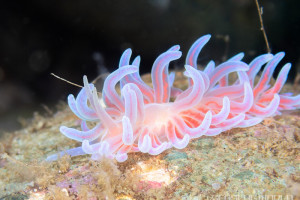
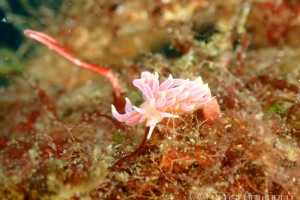
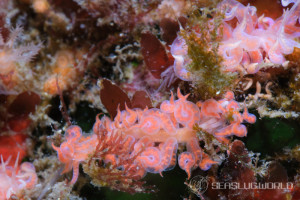
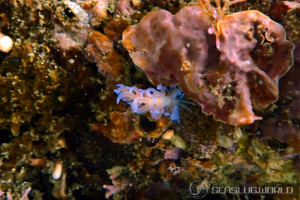
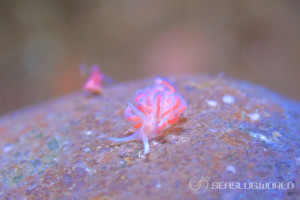
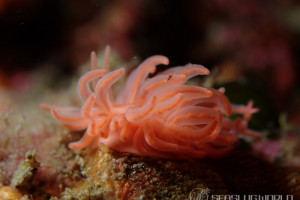
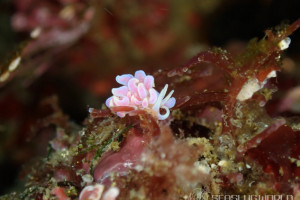
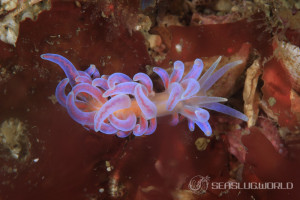
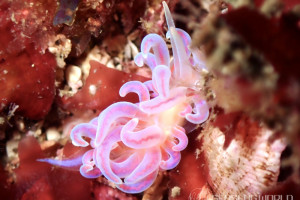
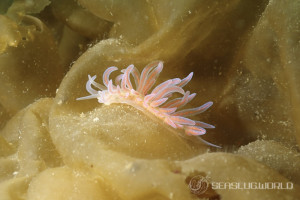
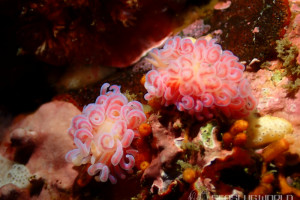
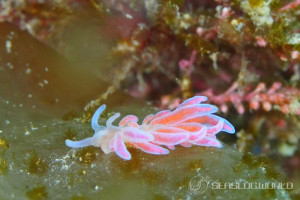
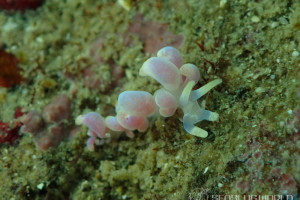
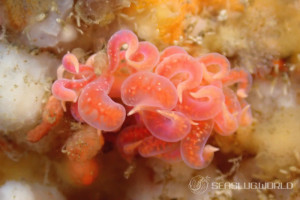
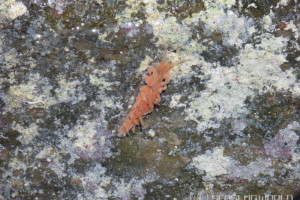
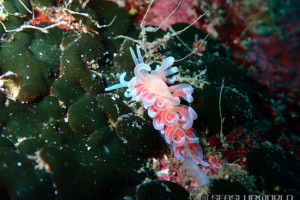
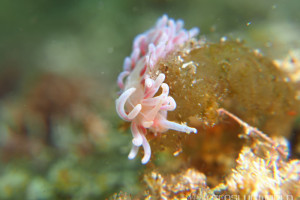
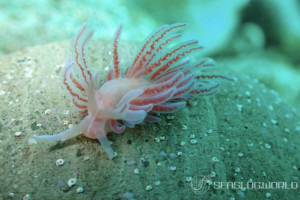
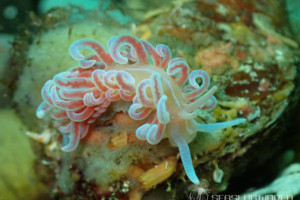
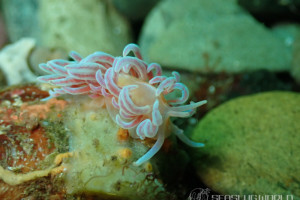
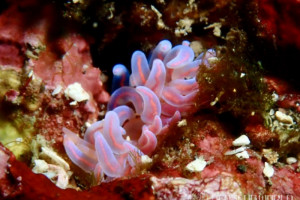
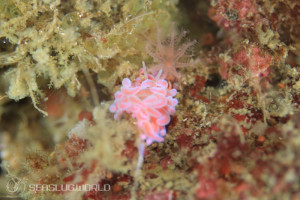
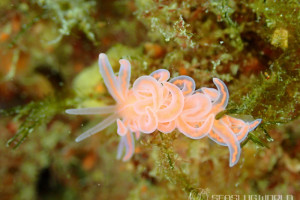
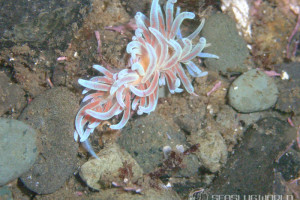
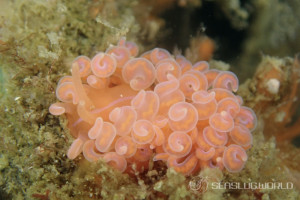
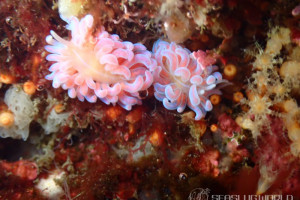
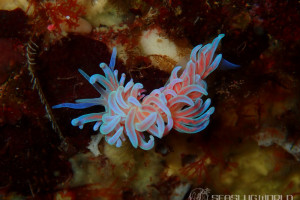
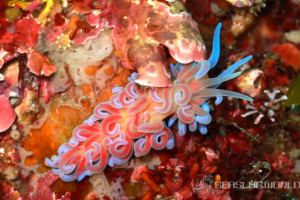
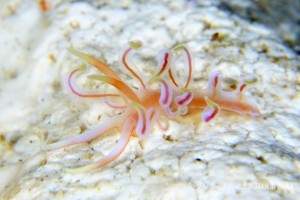
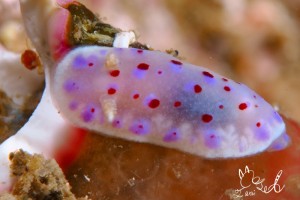
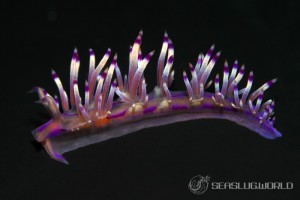
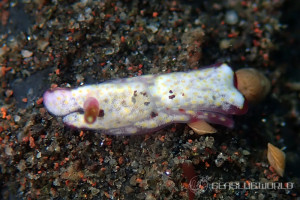
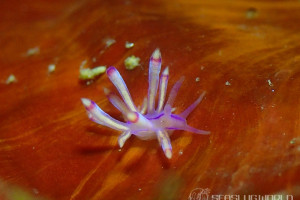
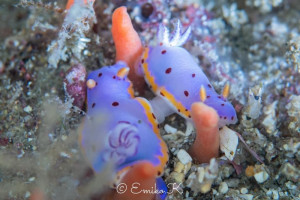
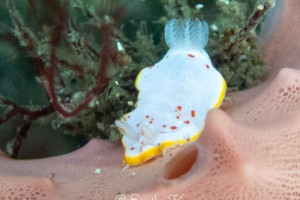
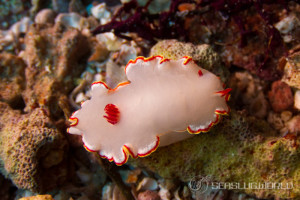
A small Aeolidacea, body length 2-4 cm. The rhinophores are simple. Cerata in 6-8 groups per side: 1st group 12 cerata, 2nd 10, 3rd-5th 8 each, 6th onward gradually fewer. The anterior groups are mounted on horseshoe ridges; the posteriormost is in oblique rows. The genital orifice opens below the anterior limb of the first right horseshoe; anus and nephroproct in normal positions. Anterior foot corners tentaculiform. Ground colour yellow-white; the cerata are pale pink with a yellow central vein. The masticatory edge of the jaw plate bears only a single row of 7-8 denticles. Radula formula 14-18×0.1.0. The central tooth is V-shaped with a long, large median cusp flanked by many denticles (16-23) on each side. Some specimens are aberrant, with the two rhinophores fused into a single one.Distribution
Type locality is Hayama-Najima-Hiraiwa, Sagami Bay (intertidal, April 1939, 2 specimens) and Hayama-Najima Tego-iwa Wari-tori, Sagami Bay (13 m depth, September 1940, 4 specimens, 1 of which is the aberrant single-rhinophore specimen). The original description (Baba, 1949) records the species only from the Najima area in Hayama, Sagami Bay.Etymology
The specific epithet serrata is Latin for serrate or saw-toothed. The original description does not give an explicit etymology paragraph; the descriptive sense reflects either the denticulate jaw-plate margin or the many denticles flanking the central tooth. The Japanese name "Sagami-mino-umiushi" (Sagami aeolid) reflects the Sagami origin.Remarks
Originally described as Hervia serrata and later transferred to Phyllodesmium. The V-shaped central tooth with many denticles distinguishes the species from its congeners Hervia lineata, Hervia ceylonica, Hervia japonica, and Hervia affinis.References
- Phyllodesmium serratum (Baba, 1949), Baba K. (1949). Opisthobranchia of Sagami Bay collected by His Majesty the Emperor of Japan (相模湾産後鰓類図譜). Iwanami Shoten, Tokyo. 4+2+194+7 pp., pls. 1-50.
- Phyllodesmium serratum, Rudman W.B. (1981). The anatomy and biology of alcyonarian-feeding aeolid opisthobranch molluscs and their development of symbiosis with zooxanthellae. Zoological Journal of the Linnean Society. 72(3): 219-262. https://doi.org/10.1111/j.1096-3642.1981.tb01571.x
- 高岡生物研究会. (2002). 日本海のウミウシ. 第2版.
A Kindle field guide by the site author
Kimoto N. (2026). Sea Slugs of Japan & the Indo-Pacific, 2nd Edition.
Kindle Edition
View on Amazon PR (Amazon Associates)Seasonality
Shooting Locations
Loading shooting locations...
Photos of Phyllodesmium serratum
Tag:

























Same Genus Nudibranchs

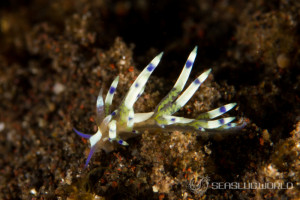
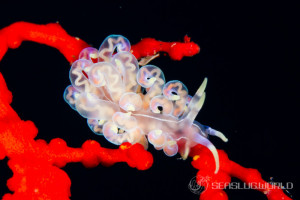
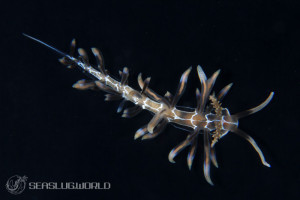
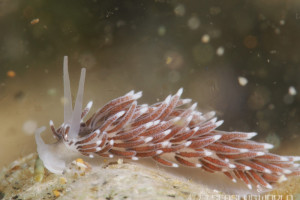
Similar Colors Nudibranchs



Academic Database
Sea slug observation data is available in international marine biodiversity databases.