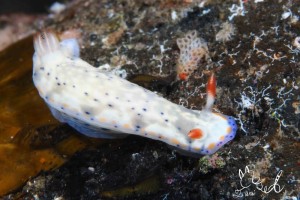
Hypselodoris placida (Baba, 1949)
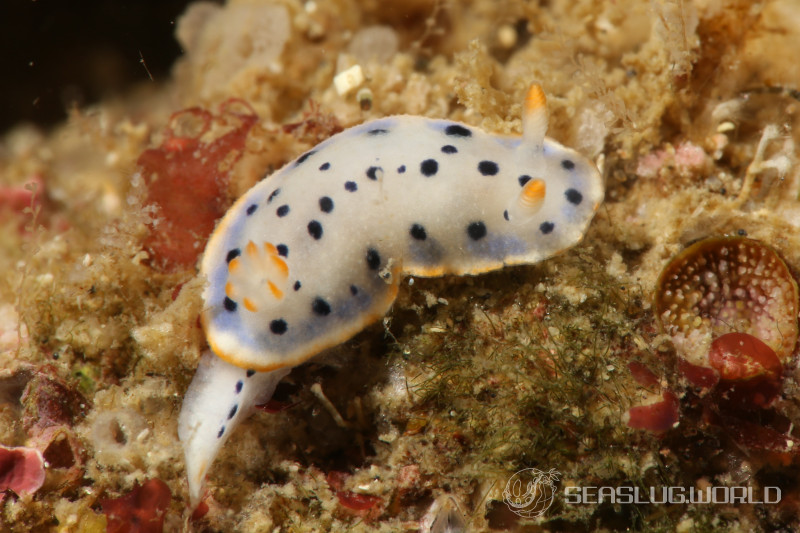
- Location
- Gontarou Rock, Hayama, Kanagawa, Japan
- Date
- 2015/07/30
- Length
- 10mm
- Depth
- 6.0m
- Water temperature
- 22.0℃
Description
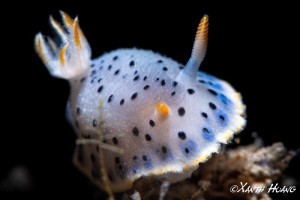
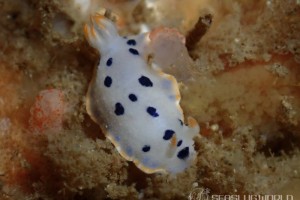
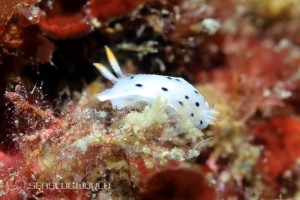
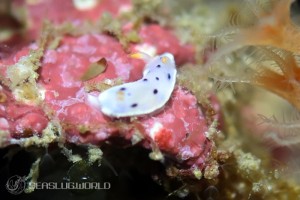
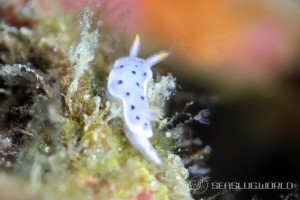
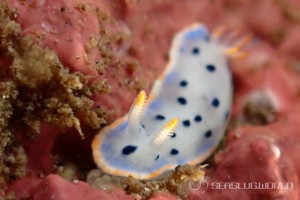
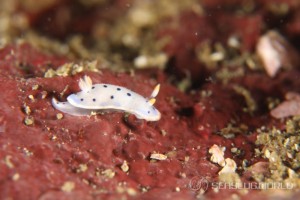
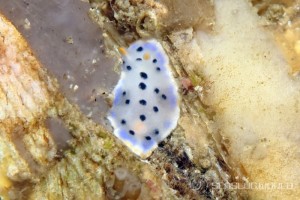
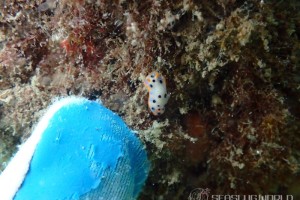
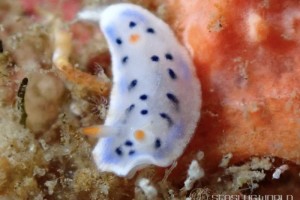
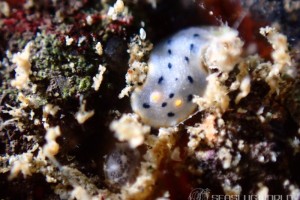
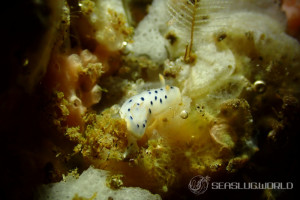
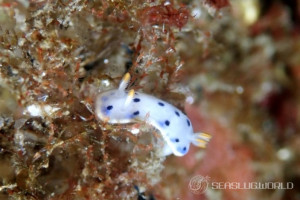
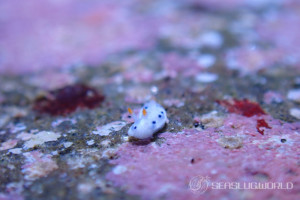
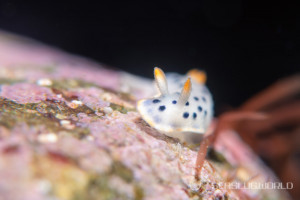
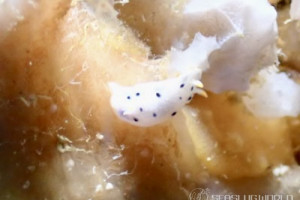
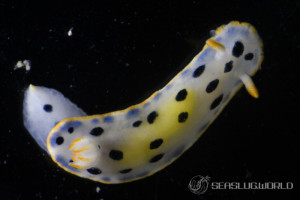
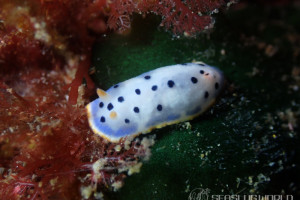
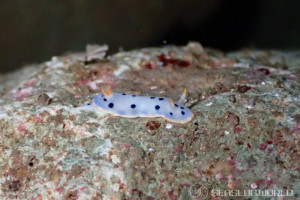
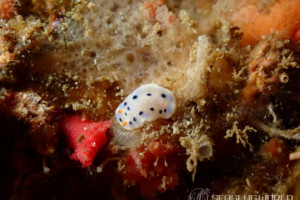
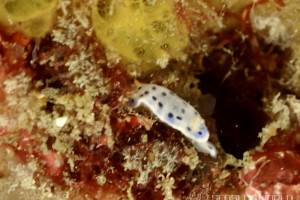
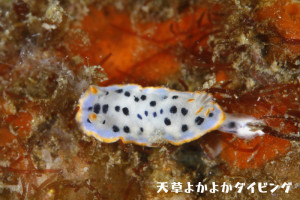
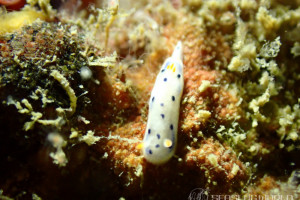
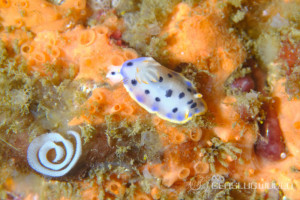
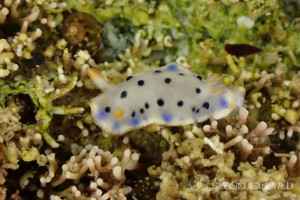
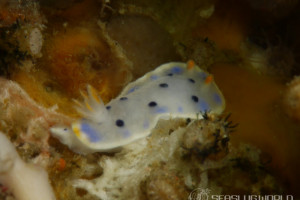
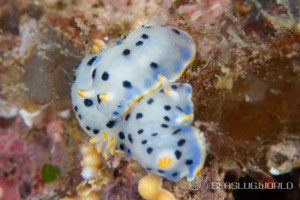
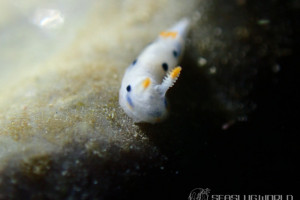
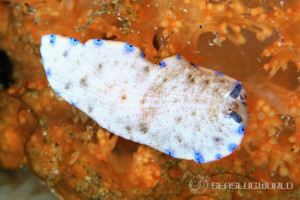
A small Chromodorididae, body length about 2 cm. The entire dorsum is covered by fine granules, and the posterior ventral mantle margin bears 7-10 small tubercles. Ground colour white, with 14-20 deep-blue small spots scattered on the central dorsum. Along the mantle margin, double rows of small spots are present: yellow outer row, blue inner row. Rhinophores yellow; gill leaves white with the tips tinged orange. A few deep-blue spots may occur on the dorsal midline of the tail in some specimens. The ventral surface has no markings. Radula formula 47×40-50.0.40-50 to 52×48-50.0.48-50. Lateral tooth shape resembles that of the related Hypselodoris maritima: the first lateral has three cusps, the second and following laterals each have two cusps.Distribution
Type locality is Hayama-Najima-Hiraiwa, Sagami Bay (intertidal, August 1939, 2 specimens) and Hayama-Najima-Degoshima, Sagami Bay (10 m depth, July 1940). The original description (Baba, 1949) records the species only from Sagami Bay.Etymology
The specific epithet placida is Latin for calm or placid. The original description does not give an explicit etymology paragraph. The Japanese name "Usu-iro-umiushi" (pale-colour sea slug) reflects the subdued ground colour.Remarks
Originally described as Glossodoris placida and later transferred to Hypselodoris. Differs from Hypselodoris maritima (described in the same monograph) by its larger size, granular dorsum, deep-blue spots (rather than continuous bands) on the central dorsum, and yellow-outer / blue-inner double spot rows along the mantle edge instead of continuous bands.References
- Hypselodoris placida (Baba, 1949), Baba K. (1949). Opisthobranchia of Sagami Bay collected by His Majesty the Emperor of Japan (相模湾産後鰓類図譜). Iwanami Shoten, Tokyo. 4+2+194+7 pp., pls. 1-50.
- Hypselodoris placida (Baba, 1949), Gosliner T.M. & Johnson R.F. (1999). Phylogeny of Hypselodoris (Nudibranchia: Chromodorididae) with a review of the monophyletic clade of Indo-Pacific species, including descriptions of twelve new species. Zoological Journal of the Linnean Society. 125: 1-114. https://doi.org/10.1111/j.1096-3642.1999.tb00585.x
- ウスイロウミウシ, 鈴木敬宇. (2000). ウミウシガイドブック〈2〉. TBSブリタニカ.
- 高岡生物研究会. (2002). 日本海のウミウシ. 第2版.
- ウスイロウミウシ, 中野理枝. (2004). 本州のウミウシ. ラトルズ.
- ウスイロウミウシ, 小野篤司 & 加藤昌一. (2009). ウミウシ. 誠文堂新光社.
- Hypselodoris placida, Johnson R.F. & Gosliner T.M. (2012). Traditional taxonomic groupings mask evolutionary history: a molecular phylogeny and new classification of the chromodorid nudibranchs. PLoS ONE 7(4): e33479.
A Kindle field guide by the site author
Kimoto N. (2026). Sea Slugs of Japan & the Indo-Pacific, 2nd Edition.
Kindle Edition
View on Amazon PR (Amazon Associates)Seasonality
Shooting Locations
Loading shooting locations...
Photos of Hypselodoris placida
Tag:






















Same Genus Nudibranchs
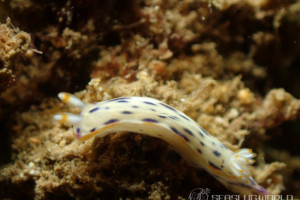
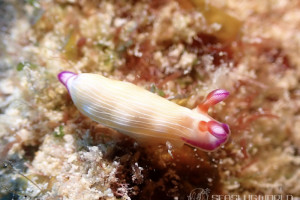
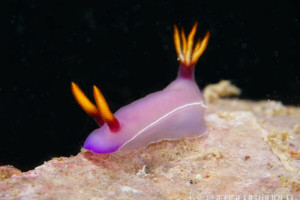

Similar Colors Nudibranchs
Academic Database
Sea slug observation data is available in international marine biodiversity databases.