Cadlina japonica Baba, 1937
Description
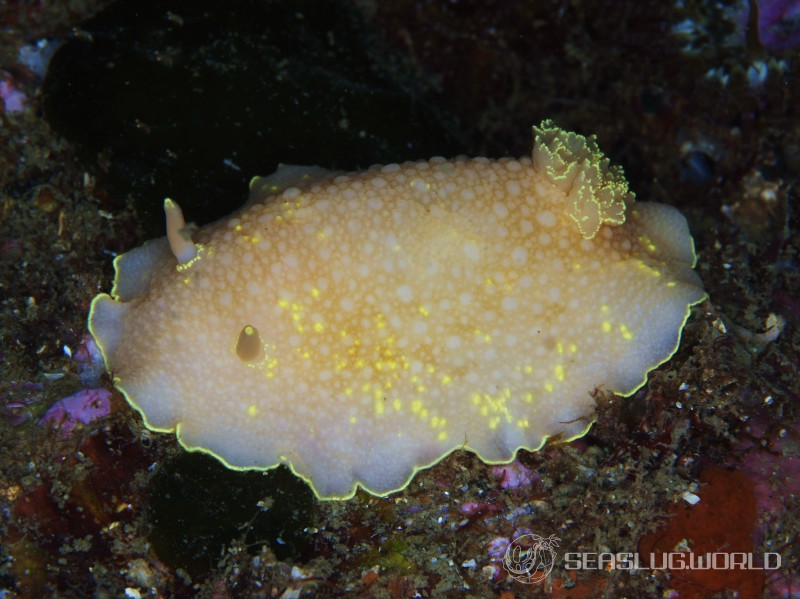
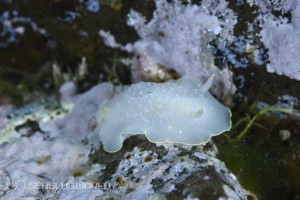
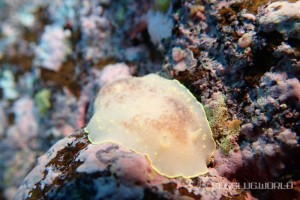
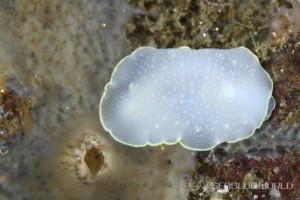
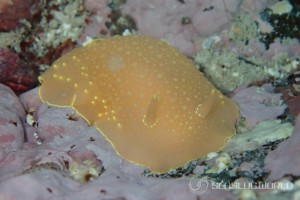
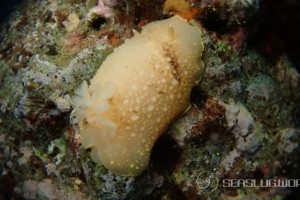
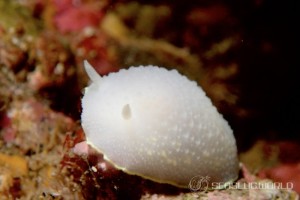
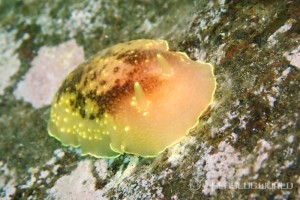
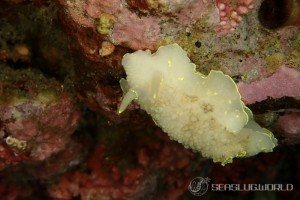
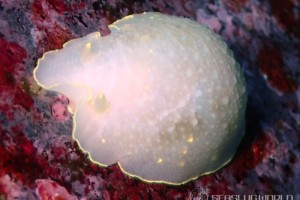
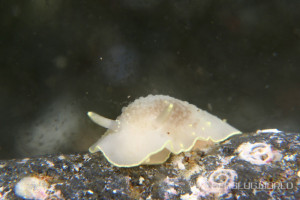
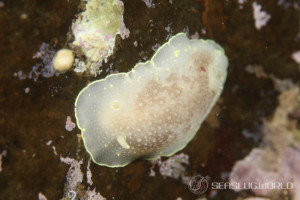
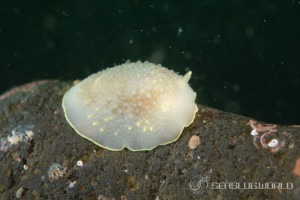
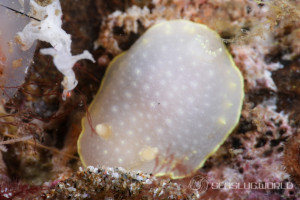
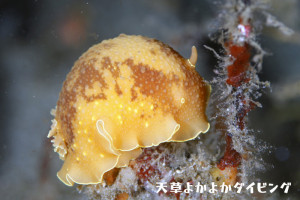
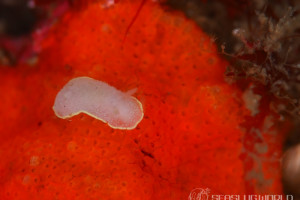
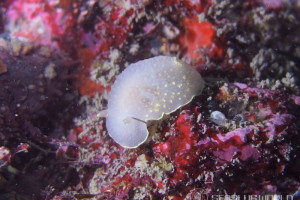
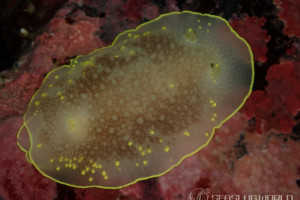
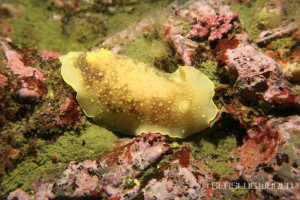
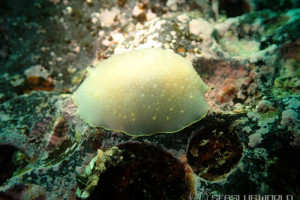
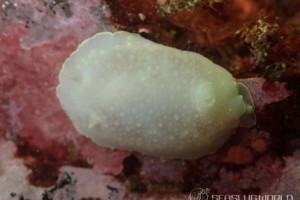
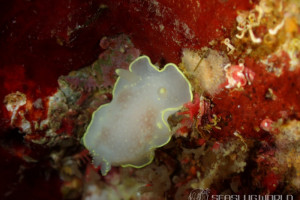
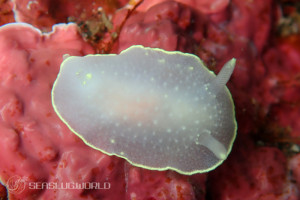
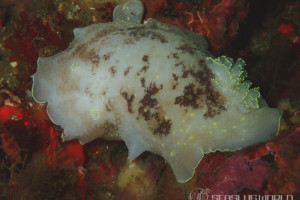
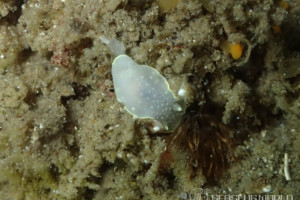
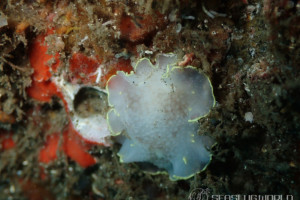
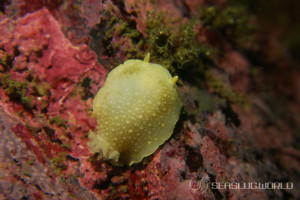
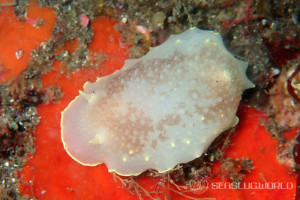
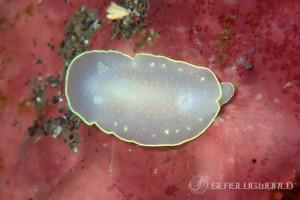
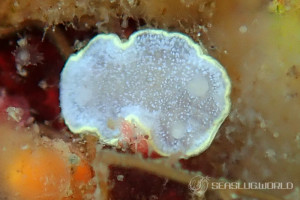
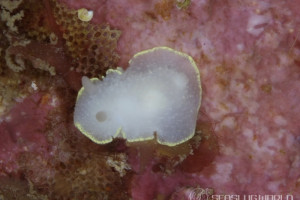
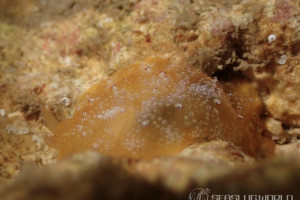
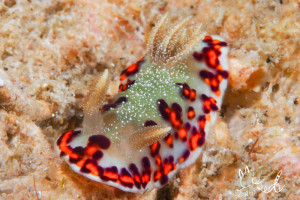
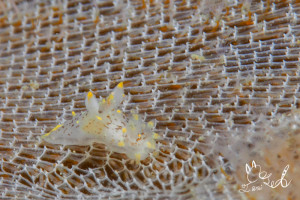
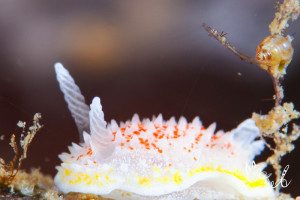
A doridiform nudibranch reaching 25-65 mm in length, oval and rounded equally at both ends. The mantle is wide and overhangs the body all around save for the tip of the tail, which projects during locomotion. The dorsum is densely covered with blunt, closely-set tubercles of various sizes, and the whole skin is reinforced with spicules. The rhinophores consist of a cylindrical stalk and a conical perfoliate clavus, fully retractile into a sheath with an elevated, entire margin. The 6 tripinnate branchial plumes form an almost complete ring around the anal papilla. The oral tentacles are short, triangular lobes with an external posterior groove. The foot is abruptly rounded and bilabiate in front and ends in a bluntly pointed tail.The ground colour is greyish white, almost obscured dorsally by chocolate shades. The tips of all the tubercles are greyish white. The rhinophore stalk is white, the clavus light chocolate with the tip yellow, and the branchial plumes are white bordered with yellow. A yellow line edges the mantle margin, the rhinophore sheaths, the branchial cavity, the foot edge and the tips of the oral tentacles. A small number of yellow spots may be scattered over the dorsal surface.
Distribution
Type locality: Amadaiba, Sagami Bay, Japan, at 50 fathoms. Additional records from off Kameki in Sagami Bay (40-45 fathoms) and from 170 fathoms in the same bay, as well as from Momotori near Toba.Etymology
The specific epithet japonica is Latin for "Japanese". Baba 1937 did not state an explicit reason for the name, but it clearly refers to the Japanese type locality.Remarks
The Japanese vernacular name "Cadlina-umiushi" is a direct katakana transcription of the genus name Cadlina.When described, the species was placed in the family Dorididae, subfamily Glossodoridinae. Following the revision of dorid systematics by Korshunova et al. 2020, the genus Cadlina is now referred to the family Cadlinidae.
Baba distinguished Cadlina japonica from all Cadlina species known at the time by its much larger radula (more than 50 teeth in a half-row) and by its labial armature of simple, non-bifid hooks (other species had less than 50 teeth per half-row and bi- or trifid hooks). The same paper also describes Cadlina sagamiensis from Sagami Bay as a second new species.
References
- カドリナウミウシ(新稱 ), Baba, K. 1937d. Two new species of the nudibranchiate genus Cadlina from Sagami Bay, Japan. Venus 7(2):75-80.
- カドリナウミウシ, Baba K. (1949). Opisthobranchia of Sagami Bay collected by His Majesty the Emperor of Japan (相模湾産後鰓類図譜). Iwanami Shoten, Tokyo. 4+2+194+7 pp., pls. 1-50.
- Korshunova T., Fletcher K., Picton B., Lundin K., Kashio S., Sanamyan N., Sanamyan K., Padula V., Schrödl M. & Martynov A. (2020). The Emperor’s Cadlina, hidden diversity and gill cavity evolution: new insights for the taxonomy and phylogeny of dorid nudibranchs (Mollusca: Gastropoda). Zoological Journal of the Linnean Society. DOI: 10.1093/zoolinnean/zlz126/5741605.
A Kindle field guide by the site author

Kimoto N. (2026). Sea Slugs of Japan & the Indo-Pacific, 2nd Edition.
Kindle Edition
View on Amazon PR (Amazon Associates)Seasonality
Shooting Locations
Loading shooting locations...
Photos of Cadlina japonica















Same Genus Nudibranchs
Similar Colors Nudibranchs

Academic Database
Sea slug observation data is available in international marine biodiversity databases.