Trapania toddi Rudman, 1987
Trapania toddi
No field photograph submitted for this species yet
Have you photographed this species?Description
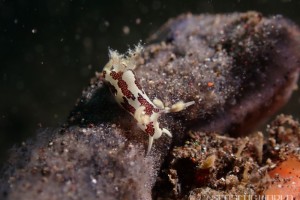
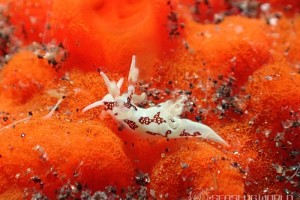
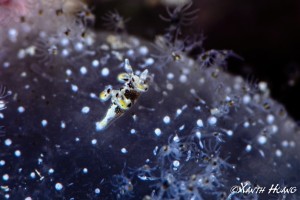
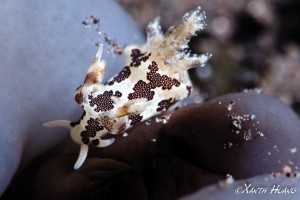
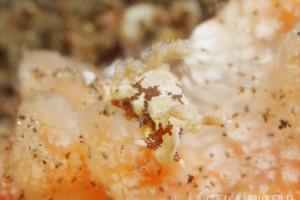
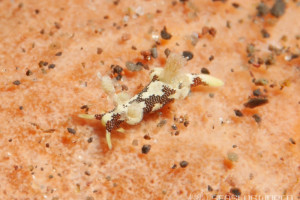
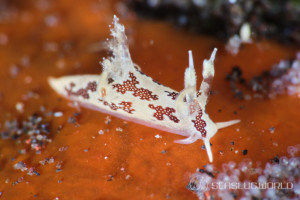
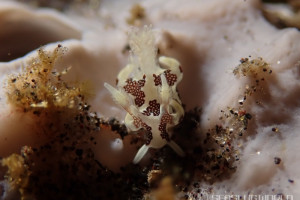
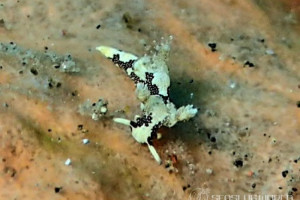
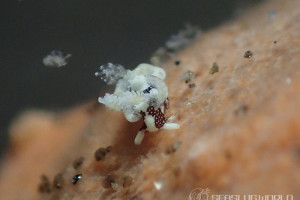
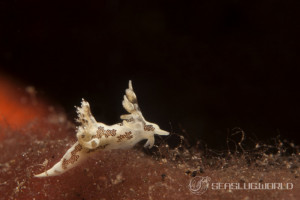
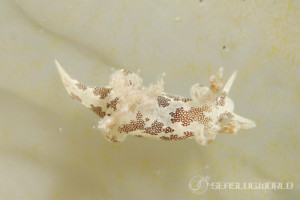
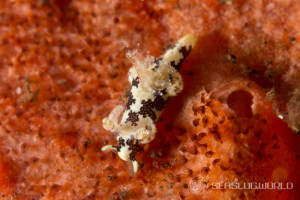
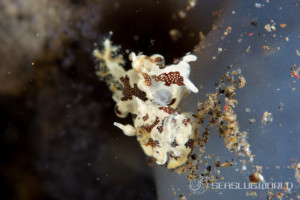
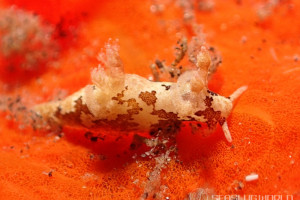
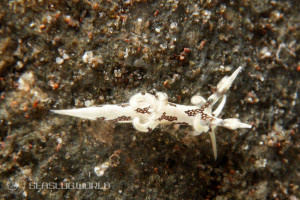
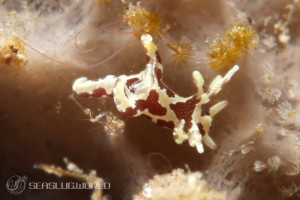
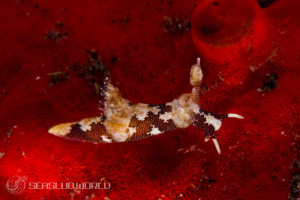
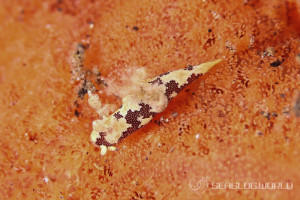
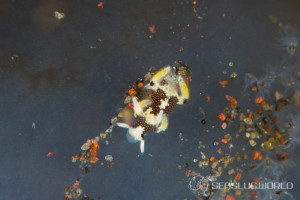
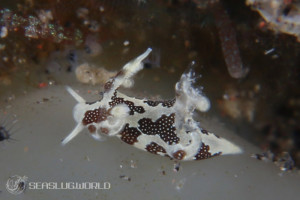
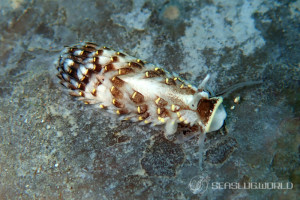
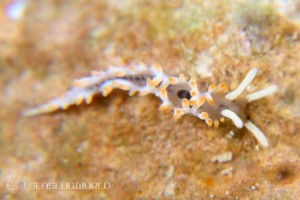
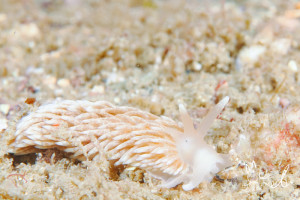
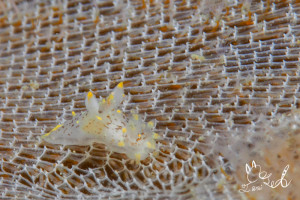
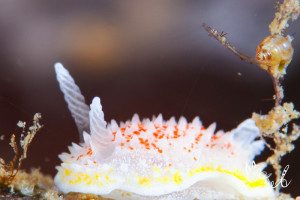
A small goniodoridid dorid reaching about 7 mm in preserved body length. Hong Kong specimens have a translucent white body with brown reticulate patches arranged in a regular pattern. Yellow markings occur on the oral tentacles, lateral processes, rhinophores, gills, and the posterior tip of the foot. A brown reticulate band crosses the head; three brown patches sit on the dorsum between the gills and rhinophores (a midline patch behind the rhinophores plus two flanking it, and another midline patch between them and the gills). Lateral patches occur below and behind the rhinophores and below and in front of the gills, with an elongate patch behind each gill. Oral tentacles and lateral processes are white with a yellow band just below the tip; the lateral processes alongside the gills also have a brown spot midway along their length. Rhinophore stalk translucent white; the lower half of the club brown with white specks, the upper half yellow with a translucent white tip. Gills translucent with a yellowish tip and a brown band just below it. Foot tip yellow. Reaches about 7 mm preserved (Hong Kong); the Red Sea specimen was 3 mm alive.Distribution
Type locality: Loo Fu Fon, Tolo Channel, Hong Kong, 3-6 m. Also recorded from Suakin, Sudanese Red Sea (intertidal). The widely separated records suggest a broad distribution across the Indo-West Pacific.Etymology
The species is named after Dr. C. D. Todd, Gatty Marine Laboratory, University of St Andrews, Scotland, who presented to the Australian Museum a valuable collection of nudibranchs with associated field notes and photographs made on the British Suakin Expedition to the Sudanese Red Sea.Remarks
The Mediterranean Trapania fusca is superficially similar (whitish body with brown spots, yellow appendages and rhinophores), but in the latter the brown patches are arranged differently and consist of brown spots rather than reticulations. To avoid confusion the type material is restricted to the Hong Kong specimens.References
- Trapania toddi sp. nov., Rudman W.B. (1987). The genus Trapania (Nudibranchia: Goniodorididae) in the Indo-West Pacific. Journal of Molluscan Studies. 53(2): 189-212.
- Trapania toddi, 高岡生物研究会. (2002). 日本海のウミウシ. 第2版.
- Trapania toddi, Paz-Sedano S., Moles J., Smirnoff D., Gosliner T.M. & Pola M. (2024). A combined phylogenetic strategy illuminates the evolution of Goniodorididae nudibranchs (Mollusca, Gastropoda, Heterobranchia). Molecular Phylogenetics and Evolution. 192: 107990. https://doi.org/10.1016/j.ympev.2023.107990
A Kindle field guide by the site author
Kimoto N. (2026). Sea Slugs of Japan & the Indo-Pacific, 2nd Edition.
Kindle Edition
View on Amazon PR (Amazon Associates)Seasonality
Shooting Locations
Loading shooting locations...
Photos of Trapania toddi












Same Genus Nudibranchs
Similar Colors Nudibranchs

Academic Database
Sea slug observation data is available in international marine biodiversity databases.