Trapania tamaraw Smirnoff, Donohoo & Gosliner, 2022
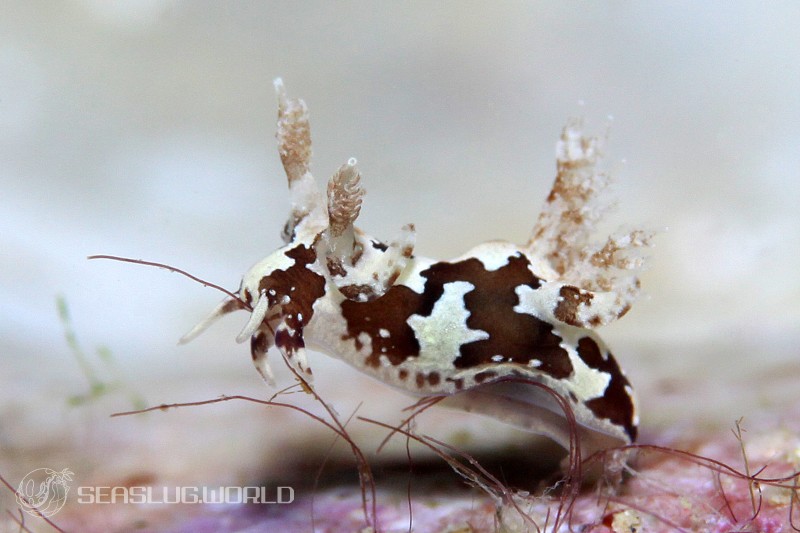
- Location
- Tengan(Kombu), Okinawa Island (East coast), Okinawa, Japan
- Date
- 2025/06/08
- Length
- 8mm
- Depth
- 4.0m
- Water temperature
- 25.0℃
MORPHOLOGY
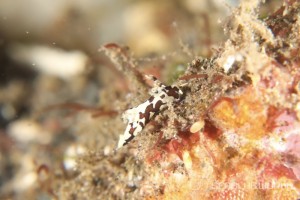
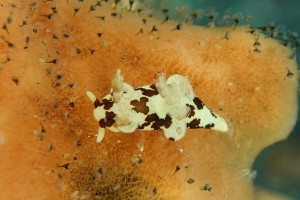
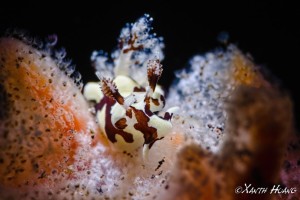
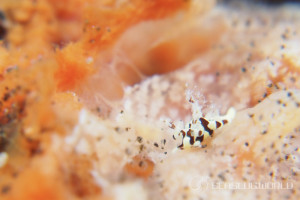
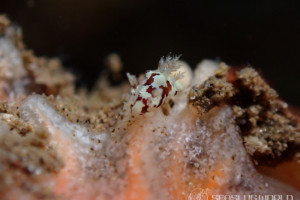
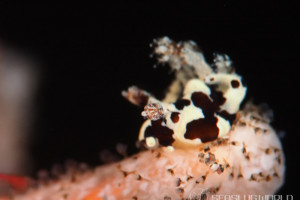
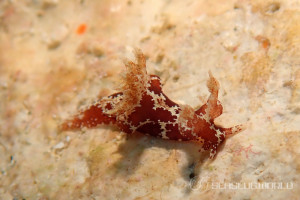
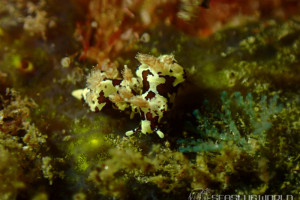
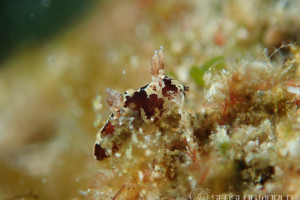
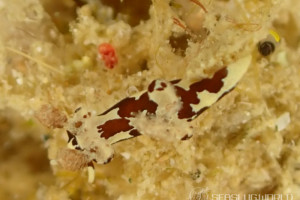
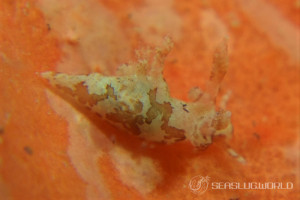
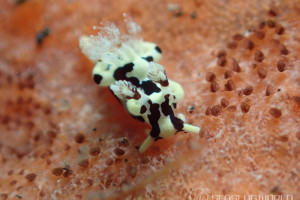
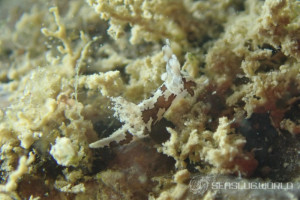
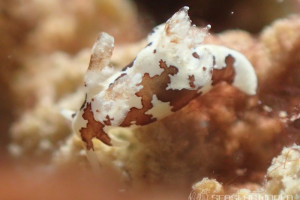
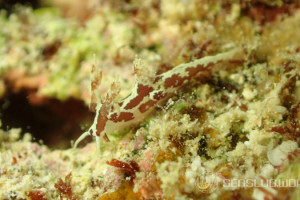
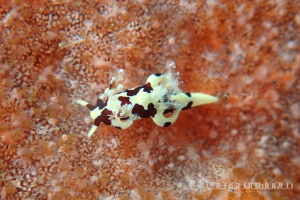
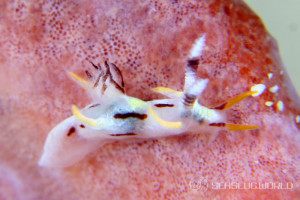
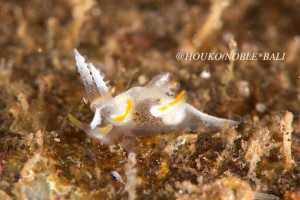
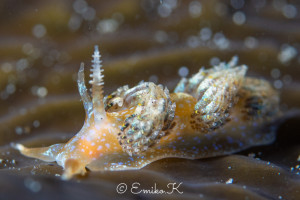
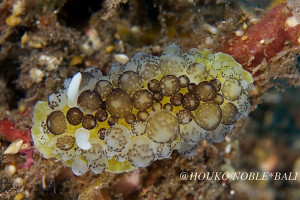
Live animal coloured with alternating blotches of dark brown/ black and yellowish tan across the entire body. Rhinophores are cylindrical halfway up and conical to a blunt tip the rest of the way with five to six lamellae. Top two-thirds of the rhinophores have a purple-brown appearance, while the bottom third has light coloration, similar to other parts of the body. Gill plume consists of three branches that have a translucent yellow-tan appearance with the same coloration as the rhinophores along the gill plume tips. Extra-branchial and extra-rhinophoral appendages are elongated and curved, typical of Trapania. Each is coloured yellowish tan with a single spot of purple/brown coloration halfway along their length. Digitiform oral tentacles are dark brown/black at their base and yellowish tan at their distal halves. The anterior margins of the foot extend laterally as elongate appendages are dark brown/black at their base and translucent yellowish at their distal halves.DISTRIBUTION
Known only from Puerto Galera, the Philippines.ETYMOLOGY
A tamaraw is the native name for the dwarfed hoofed buffalo endemic to Mindoro, Bubalus mindorensis (Heude, 1888). The horns of this buffalo resemble the well-developed and large jaws of this species compared to other members of the genus Trapania.References
- Trapania sp. 13, Terrence Gosliner, Ángel Valdés and David Behrens. (2018). Nudibranch and Sea Slug Identification Indo-Pacific 2nd Edition. New World Pubns Inc.
- Smirnoff D.S., Donohoo S.A. & Gosliner T.M. (2022). Extra-branchial processes manifest extra diversity: systematics of the genus Trapania (Nudibranchia: Goniodorididae) and nine new species descriptions. Zoological Journal of the Linnean Society. 196(1): 270-313. https://doi.org/10.1093/zoolinnean/zlac009
- Paz-Sedano S., Moles J., Smirnoff D., Gosliner T.M. & Pola M. (2024). A combined phylogenetic strategy illuminates the evolution of Goniodorididae nudibranchs (Mollusca, Gastropoda, Heterobranchia). Molecular Phylogenetics and Evolution. 192: 107990. https://doi.org/10.1016/j.ympev.2023.107990
- PAZ-SEDANO S., COBB G., GOSLINER T.M. & POLA M. (2024). Filling gaps in the knowledge of Goniodorididae taxa (Mollusca, Gastropoda, Nudibranchia) with description of seven new species. Zootaxa. 5443(4): 523-547. https://doi.org/10.11646/zootaxa.5443.4.3
- ホルスタインウミウシ(新称), 今川郁. (2026). 沖縄のウミウシ: DNA解析による最新の分類図鑑1089種. 誠文堂新光社.
Related articles
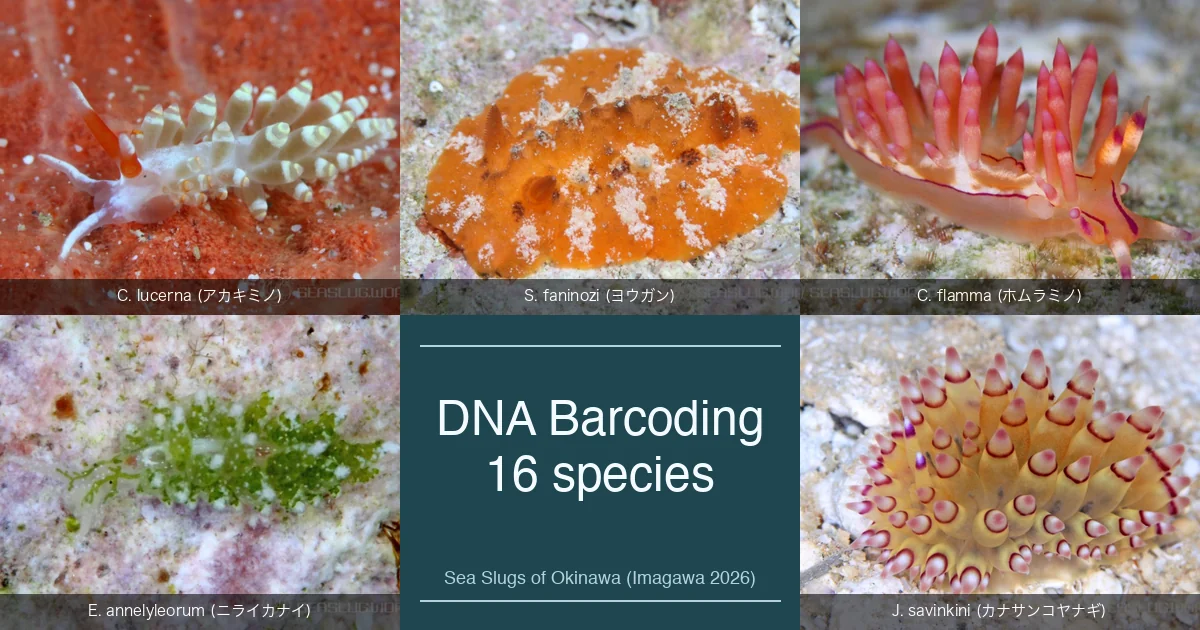
Sea Slugs of Okinawa (Imagawa 2026): 16 species with DNA-confirmed identity
Featured in this book
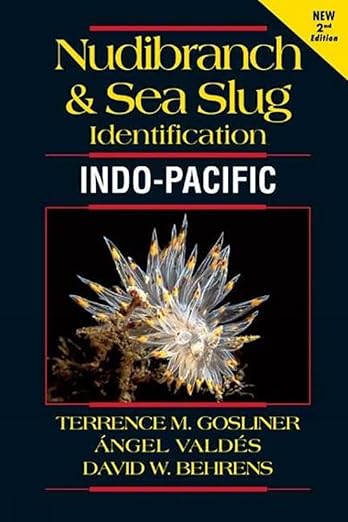
Terrence Gosliner, Ángel Valdés and David Behrens. (2018). Nudibranch and Sea Slug Identification Indo-Pacific 2nd Edition. New World Pubns Inc.
New World Publications
This species, Trapania tamaraw, is included in the book.
View on Amazon PR (Amazon Associates)Seasonality
Shooting Locations
Loading shooting locations...
Photos of Trapania tamaraw









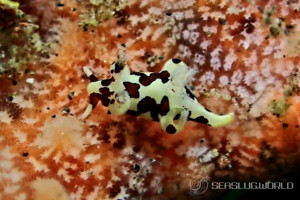

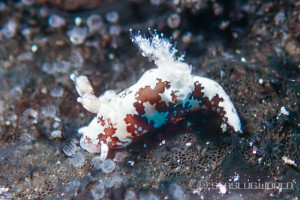

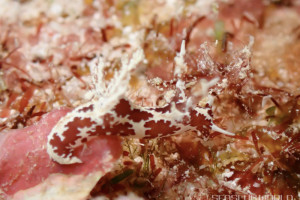
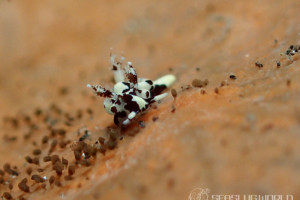



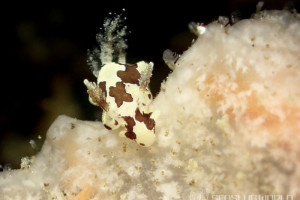
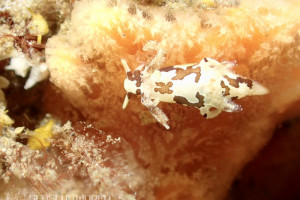
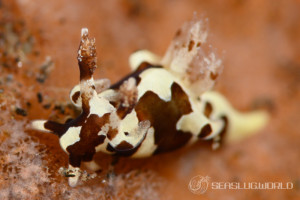

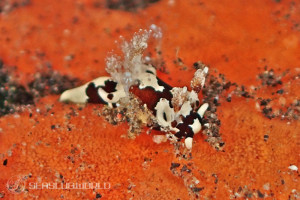




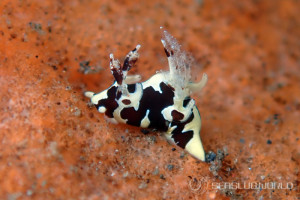
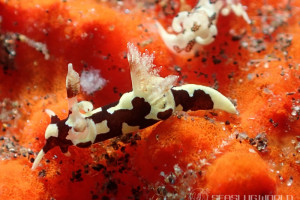
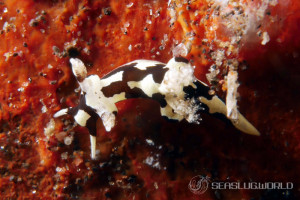

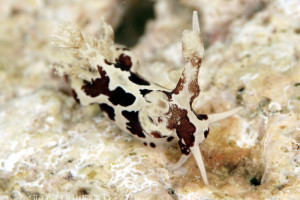

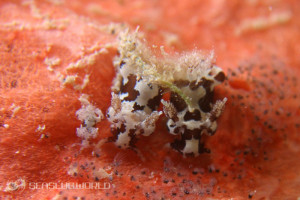

Specimen & DNA
| Observation | Database | COI | 16S | H3 |
|---|---|---|---|---|
| #53934 | BOLD Systems | SSWBP682-26 |
Same Genus Nudibranchs
Similar Colors Nudibranchs


Academic Database
Sea slug observation data is available in international marine biodiversity databases.