Crimora lutea Baba, 1949
Description
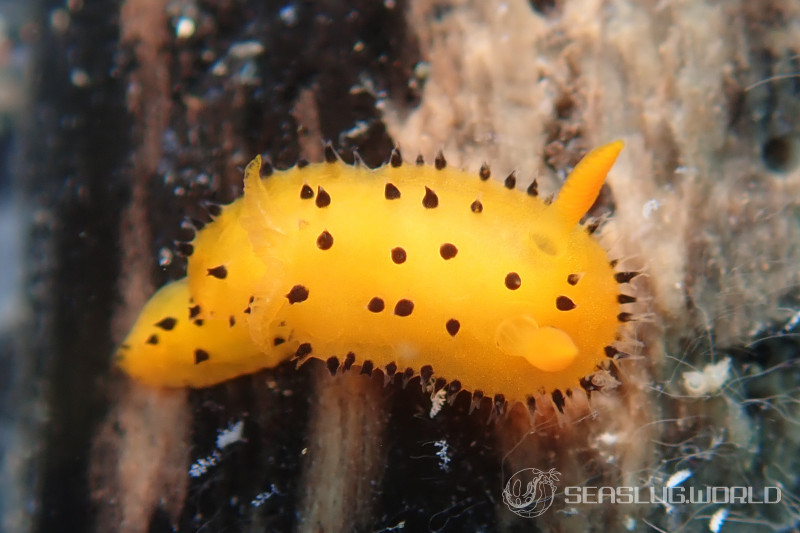
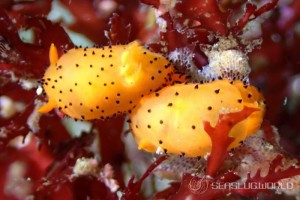
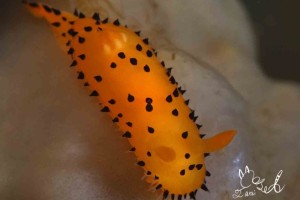
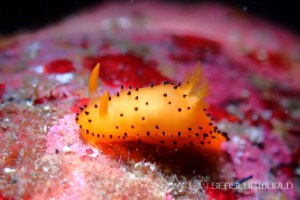
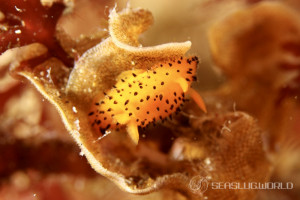
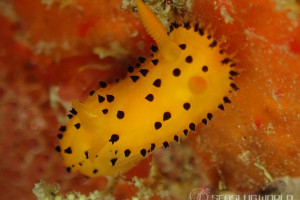
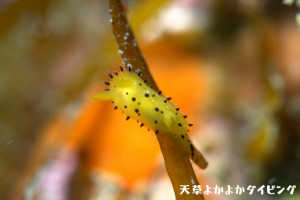
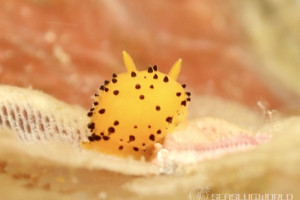
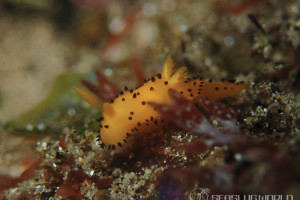
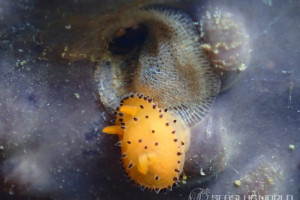
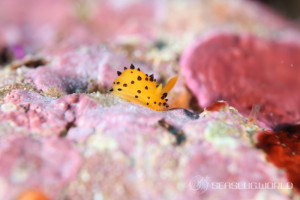
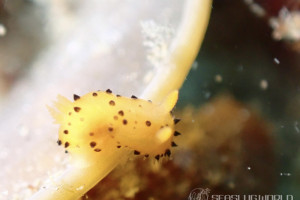
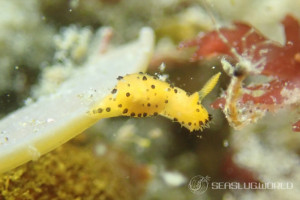
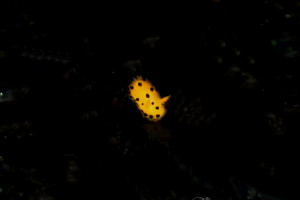
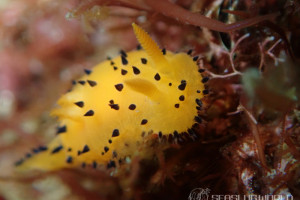
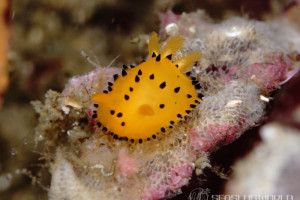
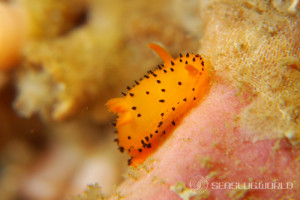
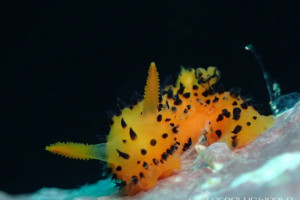
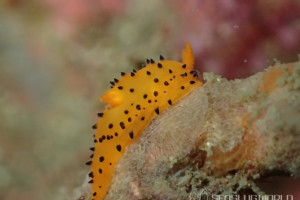
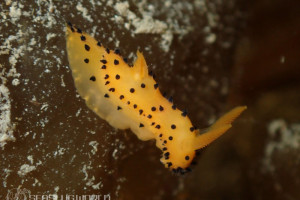
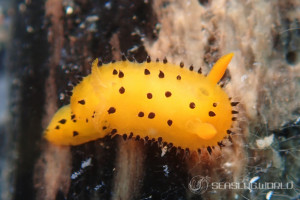
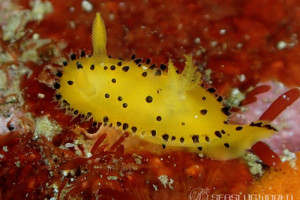
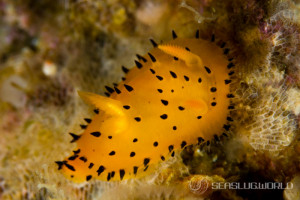
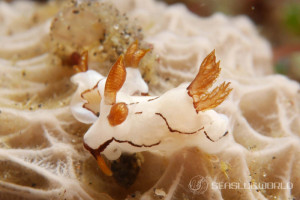
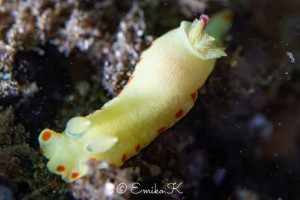
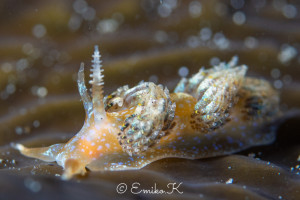
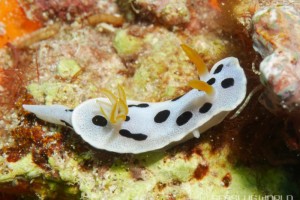
Crimora lutea is a small sea slug only a few millimetres long, with a bright yellow body dotted with black processes. The mantle margin is clearly set off from the body sides, and along this margin some 20-25 small processes (each single or apically bifid) are arranged in a row. About nine similar processes are scattered on the central dorsum, with a further three or four on the tail ridge. The body sides are smooth. The rhinophores sit in sheaths, and there are three simple gills on the back. The ground colour is bright yellow, and all of the small processes are black.Distribution
The type locality is Sagami Bay, central Japan (off Kurosaki and off Hasaki near Sajima, 15-17 m depth). The species is found along the Pacific coast of Honshu, including the Izu Peninsula.Etymology
The specific epithet lutea is Latin for "yellow", referring to the bright yellow body colour.References
- Crimora lutea (genus context), Alder J. & Hancock A. (1862). Descriptions of a new genus and some new species of naked Mollusca. Annals and Magazine of Natural History. (3)10(57): 261-265.
- Crimora lutea Baba, 1949, Baba K. (1949). Opisthobranchia of Sagami Bay collected by His Majesty the Emperor of Japan (相模湾産後鰓類図譜). Iwanami Shoten, Tokyo. 4+2+194+7 pp., pls. 1-50.
- ヤグルマウミウシ, 小野篤司. (2004). 沖縄のウミウシ. ラトルズ.
- ヤグルマウミウシ, 中野理枝. (2004). 本州のウミウシ. ラトルズ.
- ヤグルマウミウシ, 小野篤司 & 加藤昌一. (2009). ウミウシ. 誠文堂新光社.
A Kindle field guide by the site author
Kimoto N. (2026). Sea Slugs of Japan & the Indo-Pacific, 2nd Edition.
Kindle Edition
View on Amazon PR (Amazon Associates)Seasonality
Shooting Locations
Loading shooting locations...
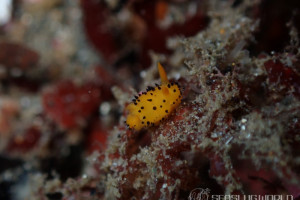
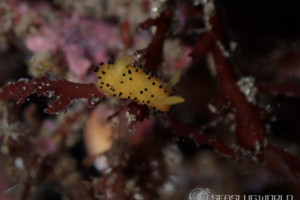
Photos of Crimora lutea


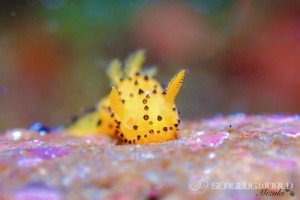

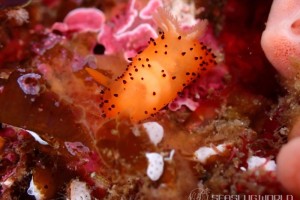

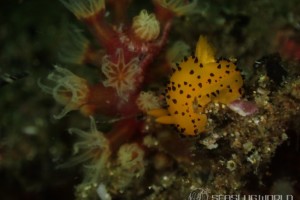

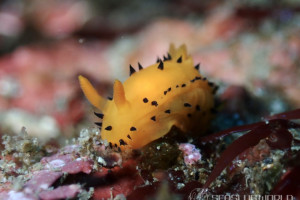



















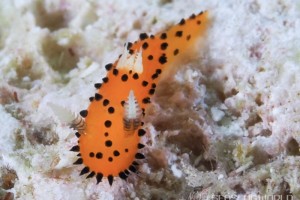
Same Genus Nudibranchs
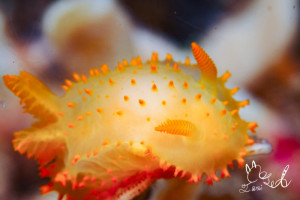
Similar Colors Nudibranchs

Academic Database
Sea slug observation data is available in international marine biodiversity databases.