Vayssierea felis (Collingwood, 1881)
Description
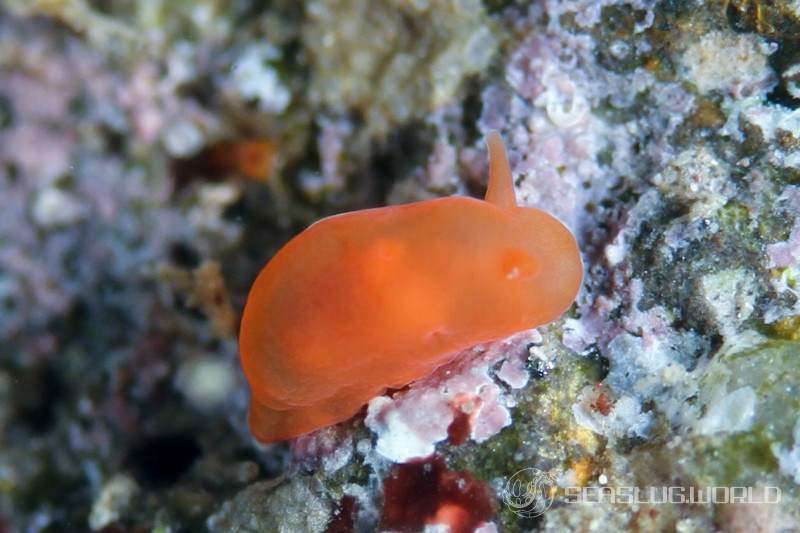
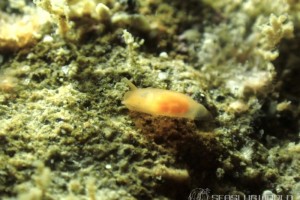
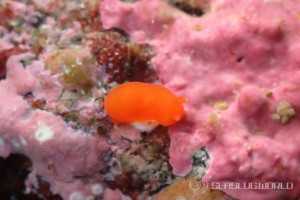
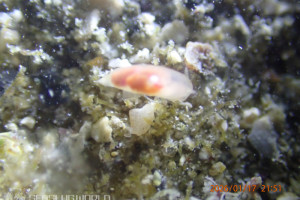
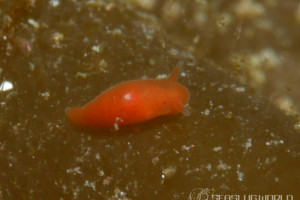
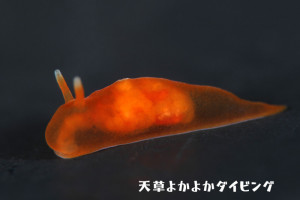
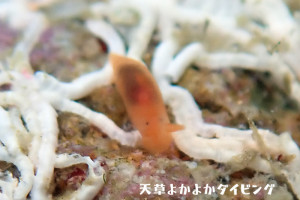
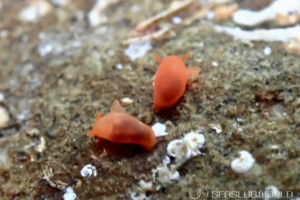
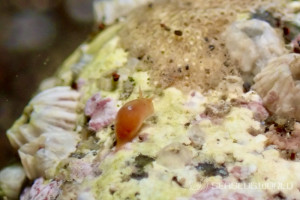
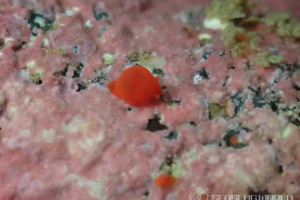
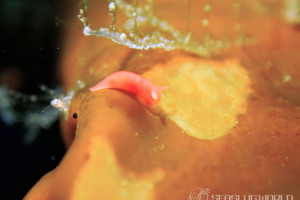
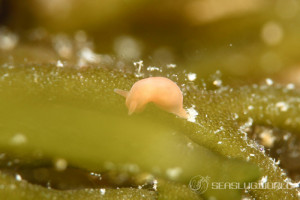
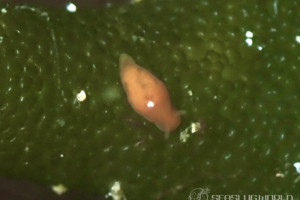
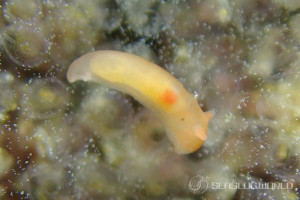
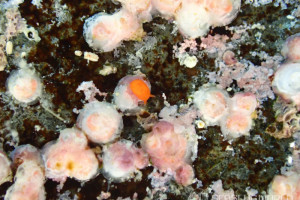
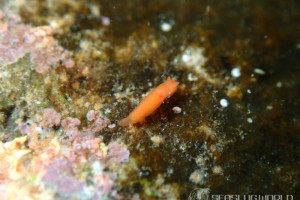
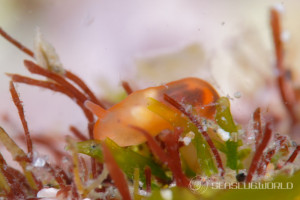
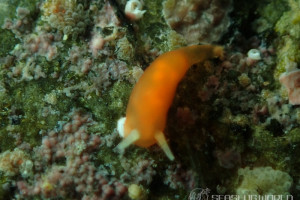
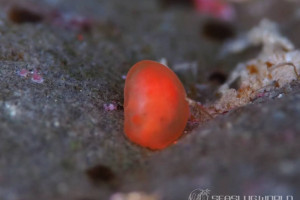
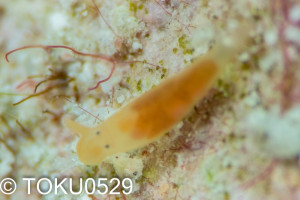
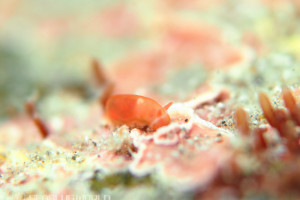
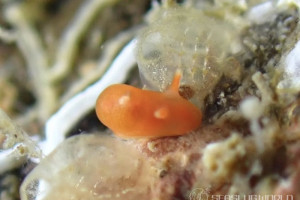
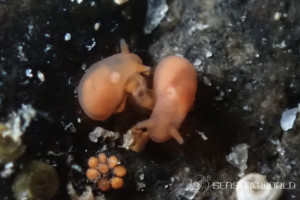
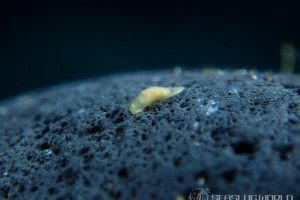
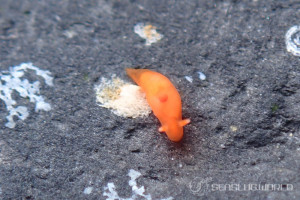
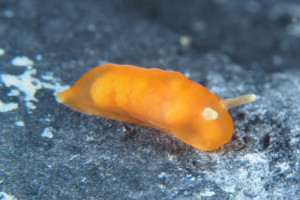
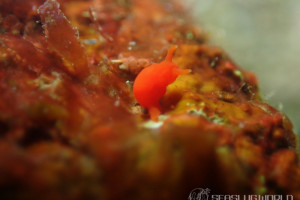
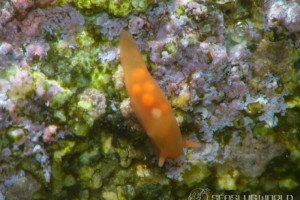
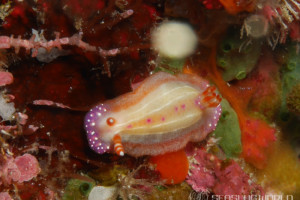
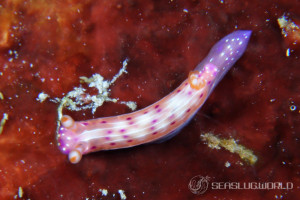
A minute species, typically 5-6 mm in length, with a translucent orange to reddish-orange body that tapers posteriorly.Gills are completely absent. The rhinophores are short, simple cones lacking lamellae and rhinophoral sheaths.
The mouth has no oral tentacles, and jaw plates are also absent.
Found on calm intertidal rocky shores, on the undersides of stones and boulders, where it feeds exclusively on calcareous tube-building polychaetes such as Spirorbis and related spirorbids.
Development is direct: each egg mass contains only 3-5 eggs, which hatch as crawling juveniles without a planktonic larval stage.
Distribution
The type locality is the South China Sea. The species is broadly distributed across the Indo-West Pacific, including Japan, China, the Russian Far East, Australia, New Caledonia, New Zealand, the Hawaiian Islands, South Africa, and Tanzania.It has also been recorded as introduced to San Diego on the west coast of North America, presumably dispersed together with its spirorbid prey via fouling on hulls or floating substrates.
Etymology
The specific epithet felis is Latin for "cat".In his original description, Collingwood remarked that the living animal contracted and extended its body so freely that it appeared in turn like "a fox, a rabbit, a cat", and the name reflects this remarkable plasticity of form rather than any single feline character.
Remarks
The Japanese name "Okada-umiushi" derives from Okadaia elegans, the new genus and new species erected by Kikutaro Baba in 1930.Working on intertidal material from the inner Tokyo Bay (Okinoshima, Susanomisaki, Enoshima, Zushi), Baba founded the genus Okadaia and the family Okadaiidae on the basis of the complete absence of gills and blood gland, dedicating the genus to his mentor Professor Yaichiro Okada.
Okadaia was the first new genus that Baba erected in his nudibranch work, marking the starting point of his career as a taxonomist.
Later study showed that the species is conspecific with Trevelyana felis, described by Collingwood from the South China Sea in 1881, and it is now placed in Vayssierea Risbec, 1928, with Okadaia elegans treated as a junior synonym.
The family Okadaiidae itself was subsequently absorbed into Polyceridae as the subfamily Okadaiinae.
References
- ヲカダウミウシ(新称), Baba, K. 1930a. Studies on Japanese nudibranchs (2). A. Polyceridae. B. Okadaia, n.g. (preliminary report). Venus 2(2).
- オカダウミウシ, Baba K. (1949). Opisthobranchia of Sagami Bay collected by His Majesty the Emperor of Japan (相模湾産後鰓類図譜). Iwanami Shoten, Tokyo. 4+2+194+7 pp., pls. 1-50.
- Okadaia elegans Baba Okada-umiushi, Baba, K. 1957. A revised list of the species of Opisthobranchia from the northern part of Japan, with some additional descriptions. J. Fac. Sci., Hokkaido Univ.,ser. 6, Zool. 13(1-4):8-14.
- 高岡生物研究会. (2002). 日本海のウミウシ. 第2版.
- オカダウミウシ, 中野理枝. (2004). 本州のウミウシ. ラトルズ.
- オカダウミウシ, 小野篤司. (2004). 沖縄のウミウシ. ラトルズ.
- オカダウミウシ, 小野篤司 & 加藤昌一. (2009). ウミウシ. 誠文堂新光社.
A Kindle field guide by the site author
Kimoto N. (2026). Sea Slugs of Japan & the Indo-Pacific, 2nd Edition.
Kindle Edition
View on Amazon PR (Amazon Associates)Seasonality
Shooting Locations
Loading shooting locations...
Photos of Vayssierea felis
Tag:





















Similar Colors Nudibranchs
Academic Database
Sea slug observation data is available in international marine biodiversity databases.