Tenellia ornata (Baba, 1937)
Description
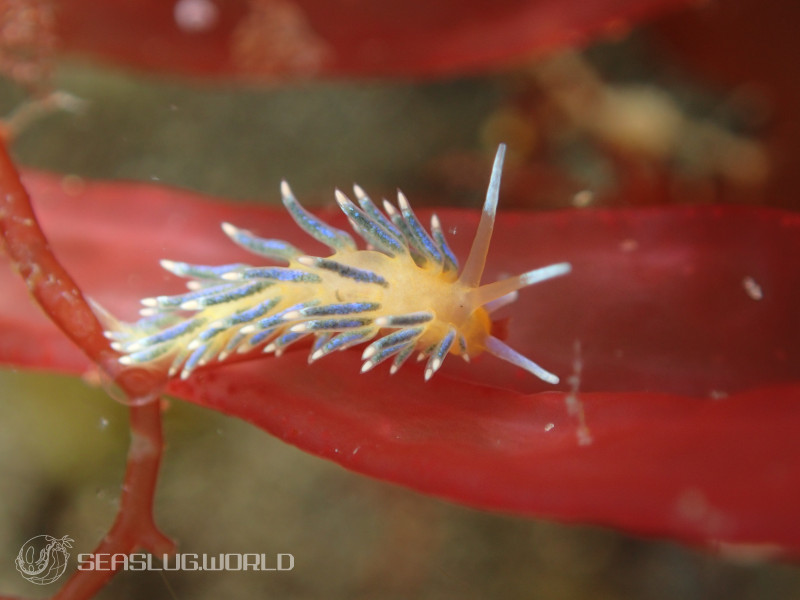
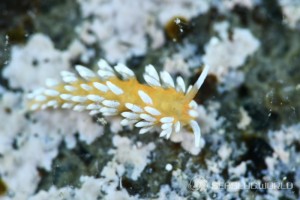
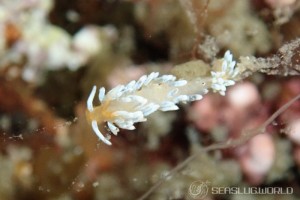
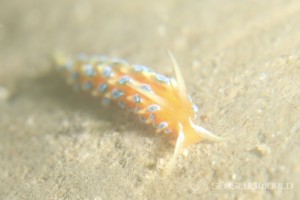
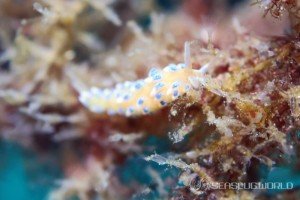
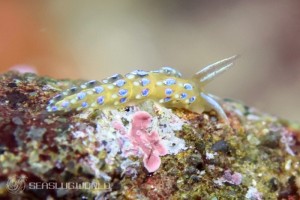
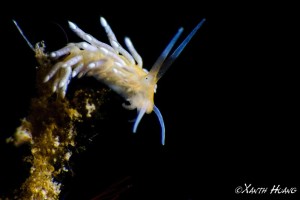
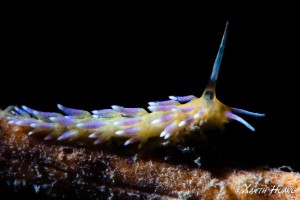
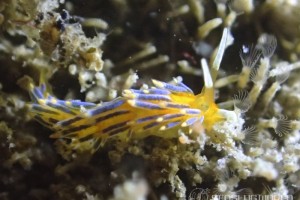
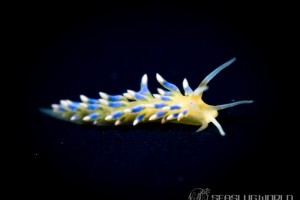
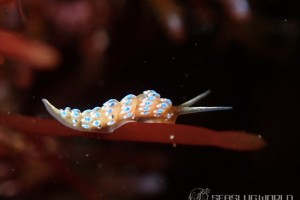
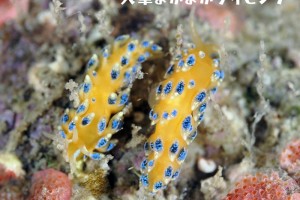
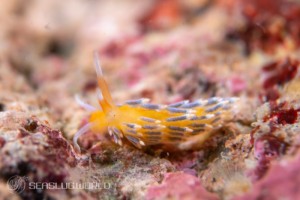
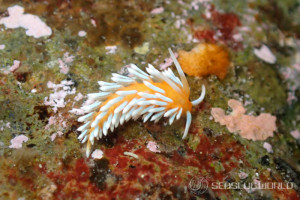
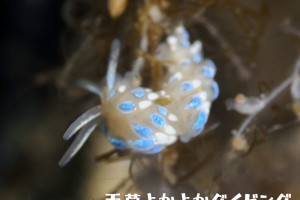
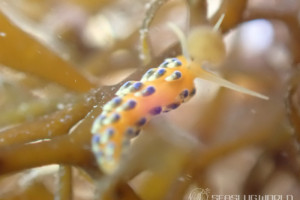
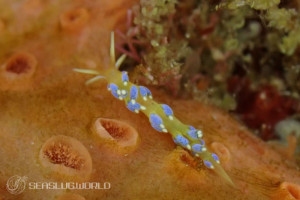
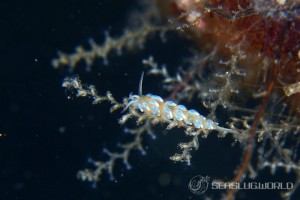
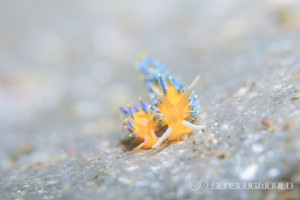
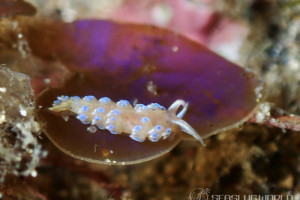
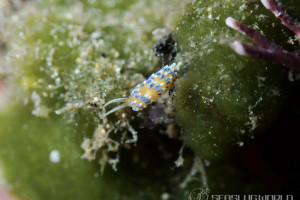
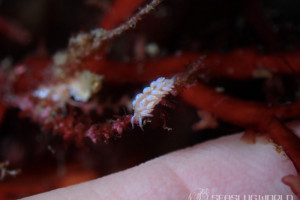
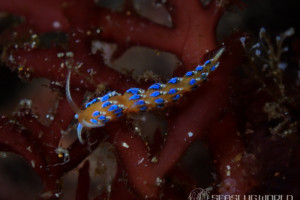
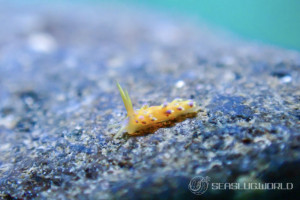
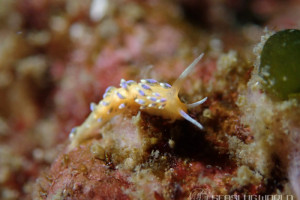
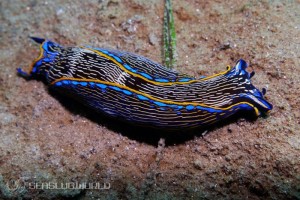
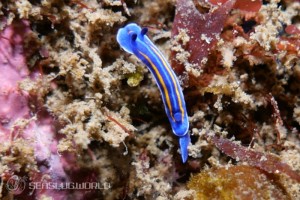
A small aeolid, 8-12 mm in length. The antero-lateral corners of the head are produced into two slender oral tentacles. The rhinophores are slightly longer, simply cylindrico-conical without lamellae. The dorsal margin bears 9 transverse rows of branchial papillae, the innermost largest and the outermost smallest; the papillae are short and fusiform with 2-5 per row depending on position. The body ends in a long tail behind the last row. The foot is fairly narrow with a rounded anterior edge, the lateral corners produced into two horn-like processes.The general colour of the head, back and sides is orange-yellow, including the basal half of the rhinophores and oral tentacles. The branchial papillae are yellow with a cobalt-blue vein terminating distally in an opaque yellow marking. The upper half of the rhinophores and oral tentacles is yellow.
Distribution
Type locality: Tomioka, Amakusa.Etymology
The specific epithet ornata (Latin feminine of ornatus, "ornamented, adorned") is read as a descriptive naming after the vivid orange-yellow head and dorsum together with the cobalt-blue-veined cerata.Remarks
Originally placed in Cuthona (Hervia); subsequently transferred to Tenellia.References
- Cuthona ornata, Baba K. (1937). Opisthobranchia Of Japan (II). Journal of the Faculty of Agriculture, Kyushu University. 5(7): 289-344. https://doi.org/10.5109/22586
- フジエラミノウミウシ(新稱), 馬場菊太郎 & 濱谷巌. (1952). 紀州産後鰓類目録. 南紀生物. Supplement 1: 1-11.
- フジエラミノウミウシ, 生物學御研究所編. (1955). 相模湾産後鰓類図譜〈補遺〉. 岩波書店.
- フジエラミノダマシ(仮称),ダンズミノウミウシ(仮称), 益田一. (1999). 海洋生物ガイドブック. 東海大学出版会.
- フジエラミノウミウシ,ダンズミノウミウシ, 鈴木敬宇. (2000). ウミウシガイドブック〈2〉. TBSブリタニカ.
- 高岡生物研究会. (2002). 日本海のウミウシ. 第2版.
- オショロミノウミウシ属の1種 1, 小野篤司. (2004). 沖縄のウミウシ. ラトルズ.
A Kindle field guide by the site author
Kimoto N. (2026). Sea Slugs of Japan & the Indo-Pacific, 2nd Edition.
Kindle Edition
View on Amazon PR (Amazon Associates)Seasonality
Shooting Locations
Loading shooting locations...
Photos of Tenellia ornata
Tag:












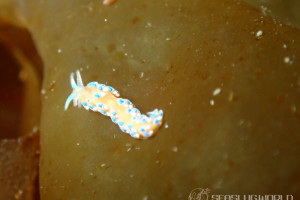

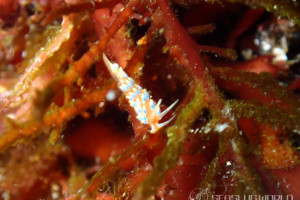

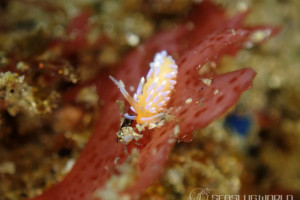

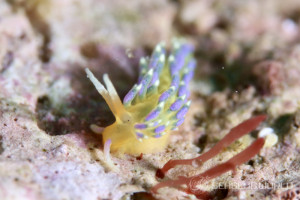




Same Genus Nudibranchs
Similar Colors Nudibranchs
Academic Database
Sea slug observation data is available in international marine biodiversity databases.