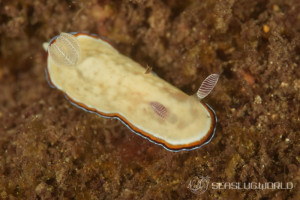
Goniobranchus fabulus Soong & Gosliner, 2022
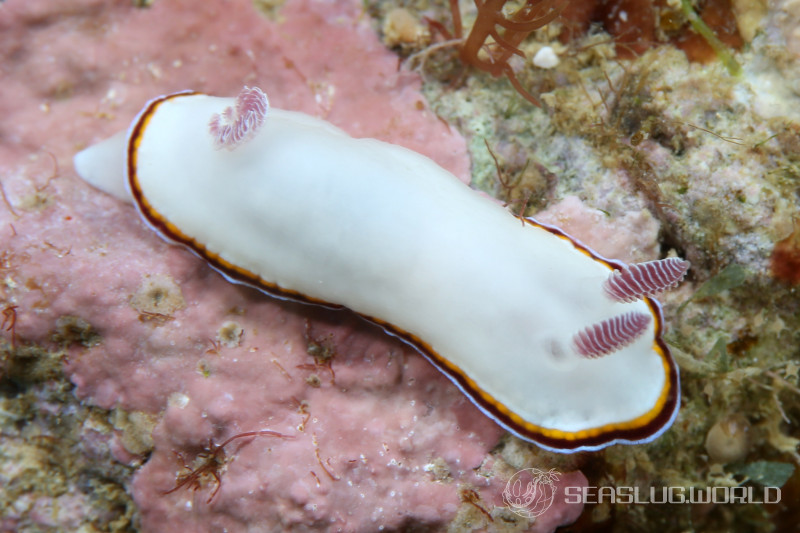
- Location
- Tengan(Kombu), Okinawa Island (East coast), Okinawa, Japan
- Date
- 2015/05/16
- Length
- 12mm
- Depth
- 5.0m
- Water temperature
- 24.0℃
Description
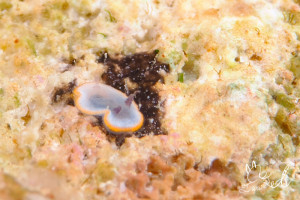
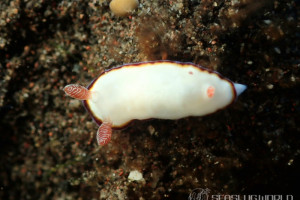
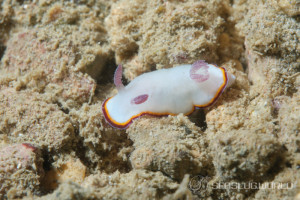
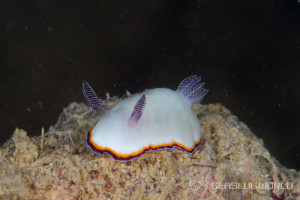
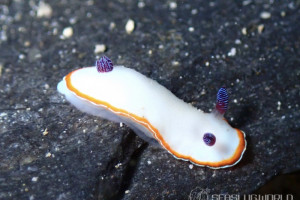
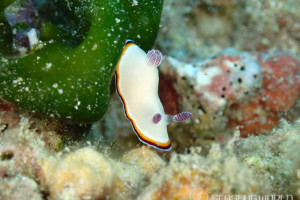
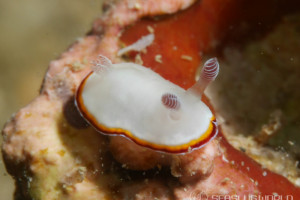
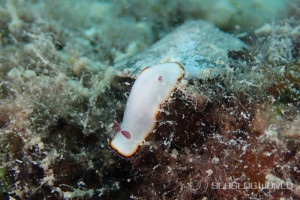
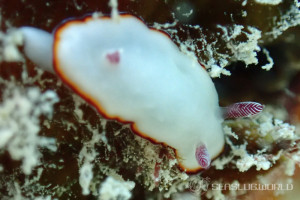
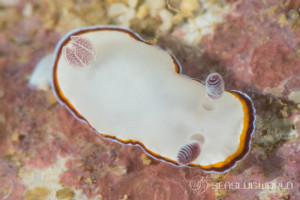
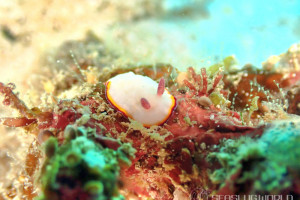
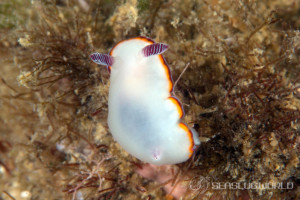
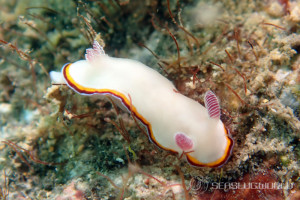
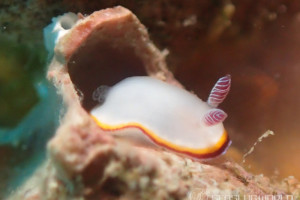
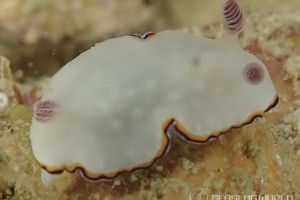
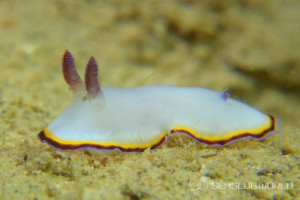
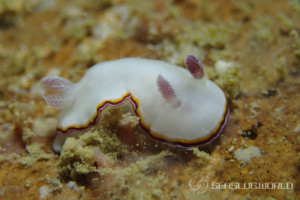
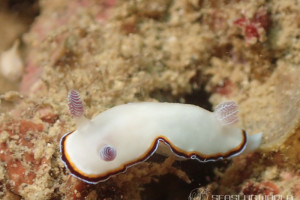
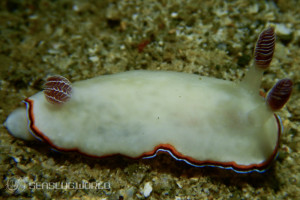
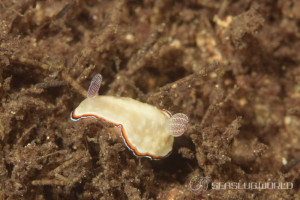
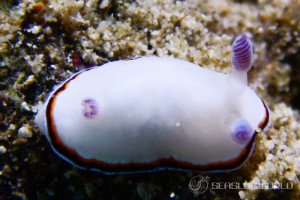
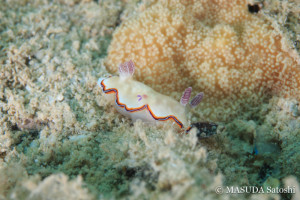
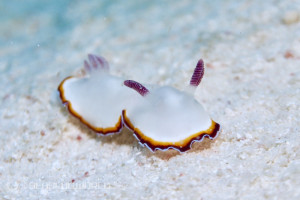
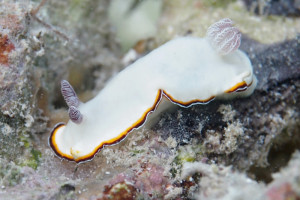
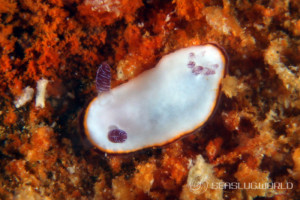
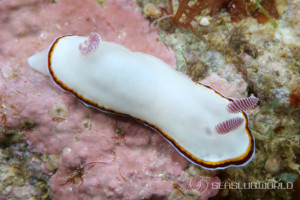
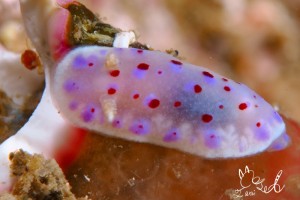
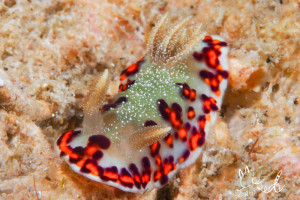
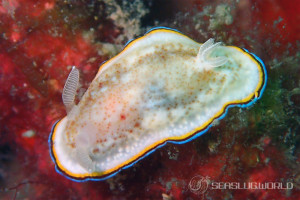
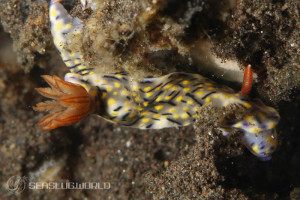
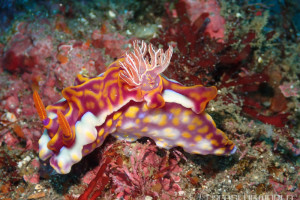
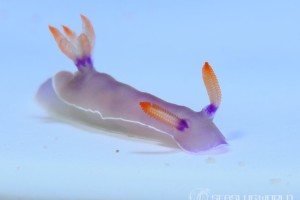
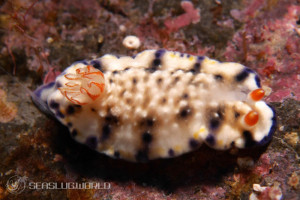
Living animals 12-18 mm in length. Body oval with three marginal bands on the mantle edge. Notum smooth without apparent spots. Six to ten unipinnate gill branches; rhinophores with 11-12 lamellae. Two distinct morphotypes occur. Morphotype A has a creamy opaque white body; the outermost mantle edge is tinged opaque bluish-white, followed by a deep red band, a yellow submarginal band, and an innermost opaque white band, all of similar width; gills and rhinophores reddish purple with white edges. Morphotype B has an opaque creamy-white body with a speckled opaque-white outermost band, followed by a deep red band, a yellow submarginal band, and an innermost opaque white band; gills and rhinophores reddish purple with white edges and opaque white speckles. Radular formula 42 x 35.1.35 in a 5 mm specimen (CASIZ 191271). The rachidian tooth is triangular; the innermost lateral teeth bear two denticles on the inner side and three or four on the outer side of the cusp, with the central cusp ~2x the length of adjacent denticles.Distribution
Western and southern central Pacific tropics: Philippines, Japan, Papua New Guinea, New Caledonia, Tonga, Vanuatu, Australia and Fiji. Morphotype B is so far known only from Papua New Guinea.Etymology
Verbatim from the original description (Soong, Wilson & Gosliner, 2022, p.200):Goniobranchus fabulus sp. nov. is named after the Latin word which, in one translation, means a small bean, in reference to the body shape of the nudibranch.
Remarks
Described in Soong, G.Y., Wilson, N.G. & Gosliner, T.M. 2022 ZooKeys 1083: 169-210, within a revision of the white Goniobranchus species with marginal bands (G. albonares, G. preciosus, G. rubrocornutus, G. sinensis, G. verrieri). Recovered as sister to G. daphne with interspecific COI distances of 2.5-4.5%. Morphotype A externally matches Rudman's 1985 description of G. preciosus from New Caledonia, but the morphology and sequences disagree with the original description of G. preciosus; Rudman's 1985 "G. preciosus" is therefore reassigned to G. fabulus sp. nov.References
- クロモドーリス・プレキオーサ, 中野理枝. (2004). 本州のウミウシ. ラトルズ.
- Chromodoris preciosa, Helmut Debelius, Rudie H. Kuiter. (2007). Nudibranchs of the World.
- ハスイロウミウシ(新称), 中野理枝, 朝倉知子, 池田紫, 石川雅教, 今本淳, 岩瀬南美, 西田和記, 堀江諒, 山田久子 & 渡井久美. (2017). 奄美大島北部海域における後鰓類相の調査報告. Kuroshio Biosphere. 13: 1-18 + 6 pls.
- Goniobranchus fabulus sp. nov., Soong G.Y., Bonomo L.J., Reimer J.D. & Gosliner T.M. (2022). Battle of the bands: systematics and phylogeny of the white Goniobranchus nudibranchs with marginal bands (Nudibranchia, Chromodorididae). ZooKeys. 1083: 169-210. https://doi.org/10.3897/zookeys.1083.72939
Featured in this book
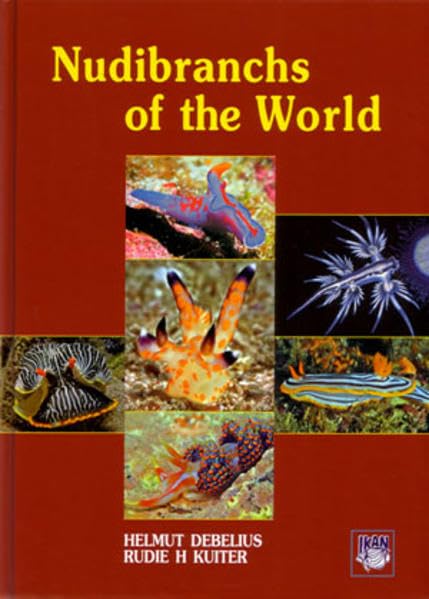
Helmut Debelius, Rudie H. Kuiter. (2007). Nudibranchs of the World.
IKAN-Unterwasserarchiv
This species, Goniobranchus fabulus, is included in the book.
View on Amazon PR (Amazon Associates)Seasonality
Shooting Locations
Loading shooting locations...
Photos of Goniobranchus fabulus

























Same Genus Nudibranchs
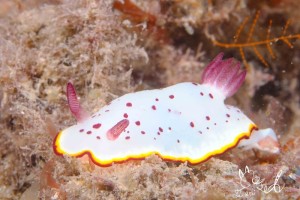
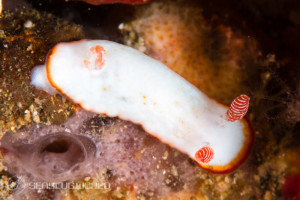
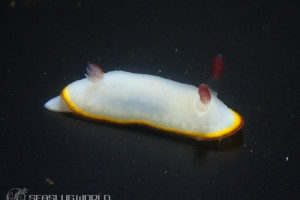
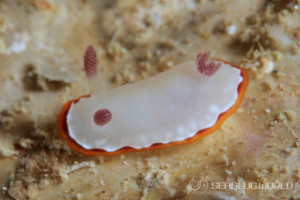

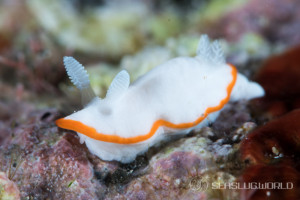
Similar Colors Nudibranchs
Academic Database
Sea slug observation data is available in international marine biodiversity databases.