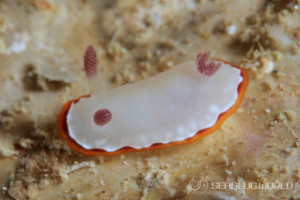
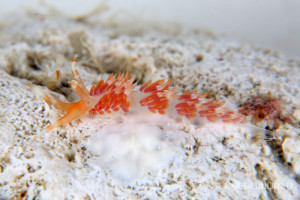
Goniobranchus albonares (Rudman, 1990)
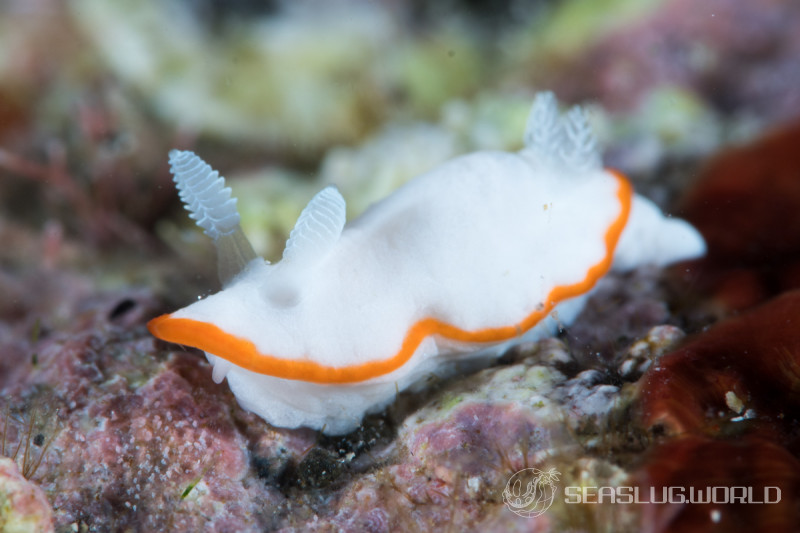
- Location
- Sokodo(Sanmata), Hachijo Island, Tokyo, Japan
- Date
- 2018/10/11
- Length
- 8mm
- Depth
- 8.0m
- Water temperature
- 26.0℃
Description
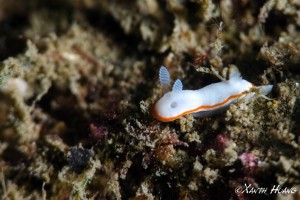
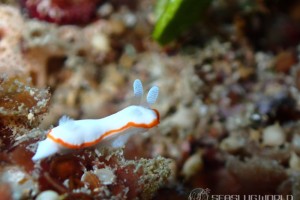
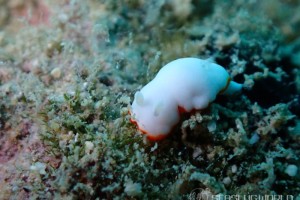
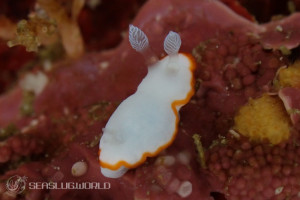
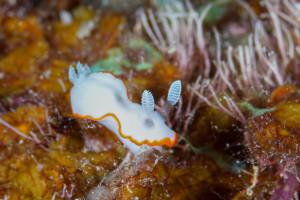
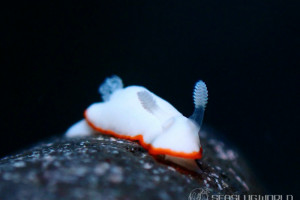
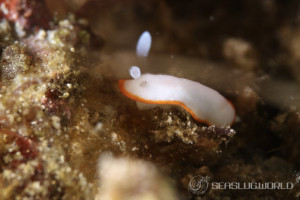
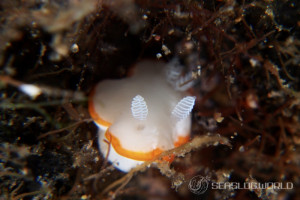
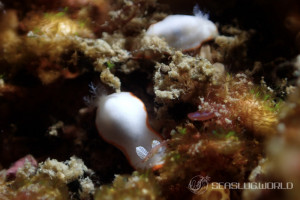
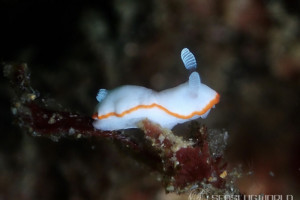
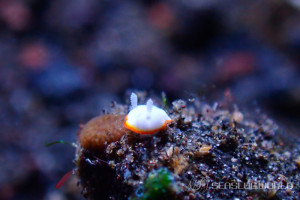
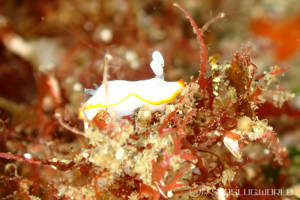
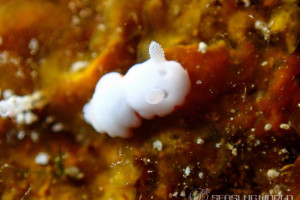
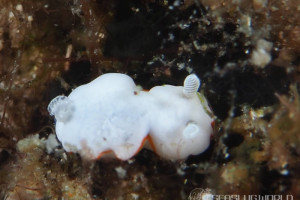
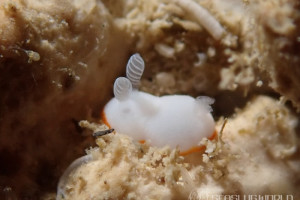
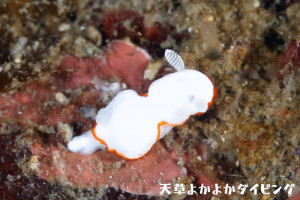
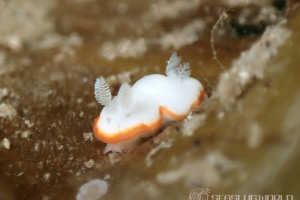
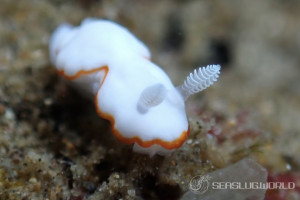
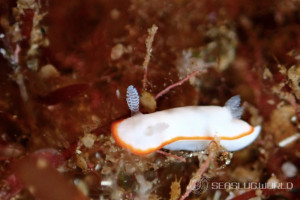
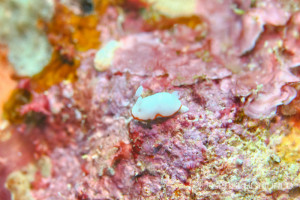
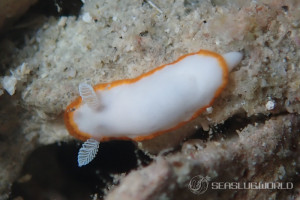
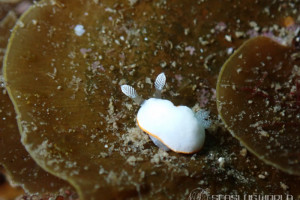
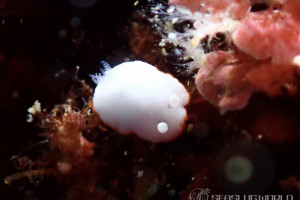
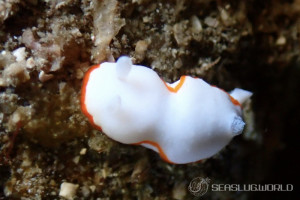
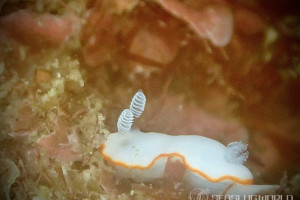
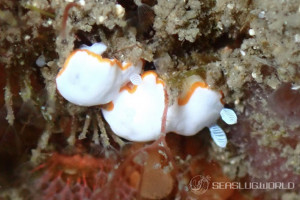
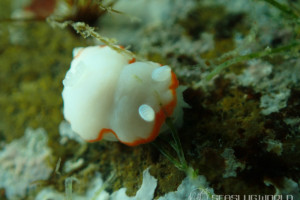
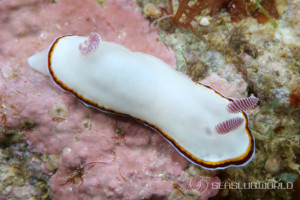
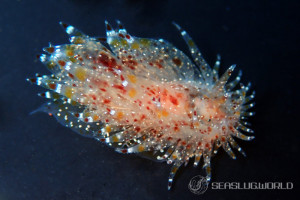
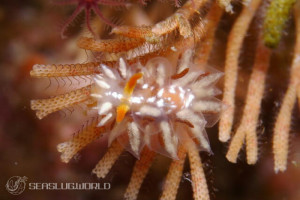
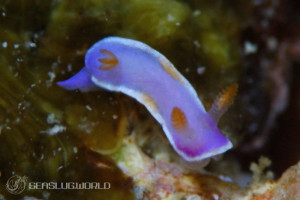
Mantle elongately ovate with a relatively wide overlap, folded down each side about a third of the way back from the head. The rhinophore clubs are relatively large; eight simple gills form a cup-shaped cluster around the anus and are not vibratile. Mantle opaque white with a bright orange band just inside the edge; an extremely narrow transparent strip lies right at the edge. On the underside the inner edge of the orange band diffuses farther onto the mantle skirt. Underside of the foot opaque white. Rhinophore stalk transparent; club translucent white with white dusting and opaque white lamellae. Gills transparent with opaque white edging. Holotype 9 mm long alive.Distribution
Type locality is the west side of Northwest Solitary Island, off Coffs Harbour, NSW, Australia (6 m, December 1988). The original description rests on a single NSW specimen; subsequent records extend to New Caledonia, Indonesia, the Philippines, and Japan.Etymology
The specific epithet albonares is a Latin compound of albus (white) and nares (nose), referring to the white rhinophores, which fulfil a nose-like sensory role in nudibranchs (verbatim from the original description).Remarks
Originally described as Chromodoris albonares and later transferred to Goniobranchus. The combination of an orange marginal band and white rhinophores and gills is diagnostic. Distinguished from Goniobranchus trimarginatus (three marginal bands plus reddish spots) by mantle border construction.References
- ボンボリイロウミウシ(新称), 小野篤司. (2004). 沖縄のウミウシ. ラトルズ.
- Goniobranchus albonares, Johnson R.F. & Gosliner T.M. (2012). Traditional taxonomic groupings mask evolutionary history: a molecular phylogeny and new classification of the chromodorid nudibranchs. PLoS ONE 7(4): e33479.
- Goniobranchus albonares, Soong G.Y., Bonomo L.J., Reimer J.D. & Gosliner T.M. (2022). Battle of the bands: systematics and phylogeny of the white Goniobranchus nudibranchs with marginal bands (Nudibranchia, Chromodorididae). ZooKeys. 1083: 169-210. https://doi.org/10.3897/zookeys.1083.72939
A Kindle field guide by the site author
Kimoto N. (2026). Sea Slugs of Japan & the Indo-Pacific, 2nd Edition.
Kindle Edition
View on Amazon PR (Amazon Associates)Seasonality
Shooting Locations
Loading shooting locations...
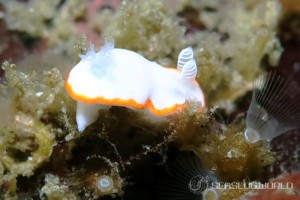
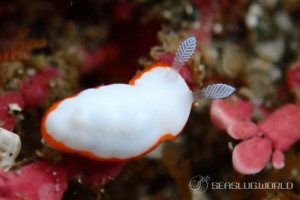
Photos of Goniobranchus albonares
Tag:
























Same Genus Nudibranchs

Similar Colors Nudibranchs
Academic Database
Sea slug observation data is available in international marine biodiversity databases.