Neptunazurea porterae (T. D. A. Cockerell, 1901)
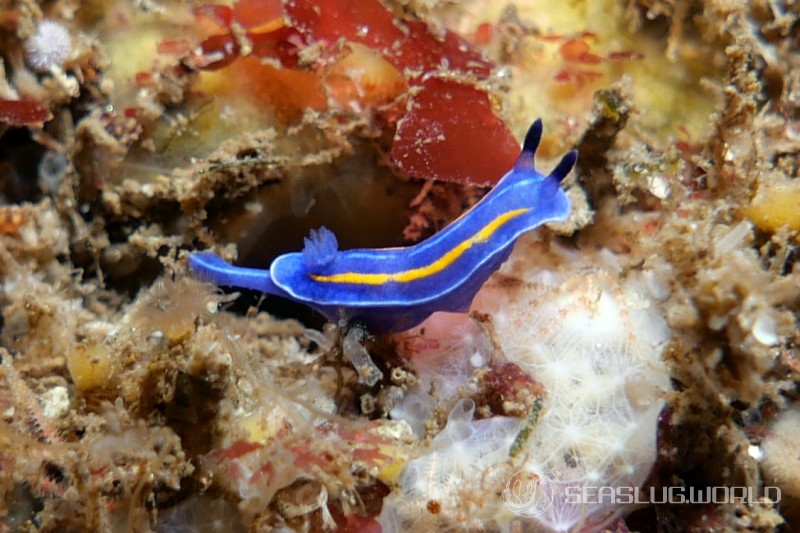
- Location
- End Of The Rainbow, San Diego, California, United States
- Date
- 2019/11/05
- Length
- ??mm
- Depth
- ??m
- Water temperature
- ??℃
Description
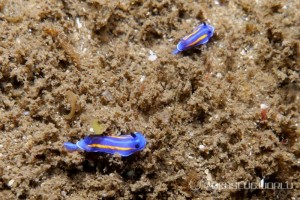
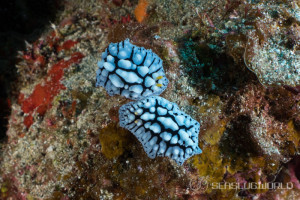
A small chromodorid, reaching about 35 mm but usually 10–30 mm long. The mantle is deep blue with a thin white margin. A pale bluish-white line runs along the dorsal midline, and a bright yellow band runs down each side of the mantle from the base of the rhinophores back to the gill pocket. The bold combination of blue, yellow and white makes it conspicuous.Distribution
Endemic to the eastern Pacific, ranging from Monterey Bay, California, south to Bahía Tortugas, Baja California, Mexico. It occurs on rocky reefs from the intertidal zone to about 18 m depth. The species was originally described from tide pools at La Jolla, California.Etymology
The specific epithet porterae honours Wilmatte Porter Cockerell, wife of the author T. D. A. Cockerell, who named the species after her; it is the feminine genitive of her maiden name, Porter.Remarks
A sponge feeder, reported to prey on the non-spiculate sponge Dysidea amblia and to store prey-derived defensive compounds in glands along the mantle margin. Its vivid colours are thought to be aposematic, warning potential predators, and the species belongs to a group of similarly coloured eastern Pacific chromodorids that form a mimicry complex. In English it is known as Porter's chromodorid or the Mexican sea goddess. It was placed in the genus Neptunazurea, newly erected in 2025 for small blue chromodorids of the eastern Pacific and Atlantic.References
- Chromodoris porterae n.sp., Cockerell T.D.A. (1901). Pigments of nudibranchiate Mollusca. Nature. 65(1674): 79-80.
- Mexichromis porterae, Helmut Debelius, Rudie H. Kuiter. (2007). Nudibranchs of the World.
- Neptunazurea porterae comb. nov., Ribeiro A., García-Méndez K., Valdés Á., Schrödl M. & Padula V. (2025). Description of a new genus of Chromodorididae with a taxonomic review of Neptunazurea kempfi (Ev. Marcus, 1971) comb. nov. (Mollusca, Gastropoda, Nudibranchia). Zootaxa. 5716(3): 333-348.
Featured in this book
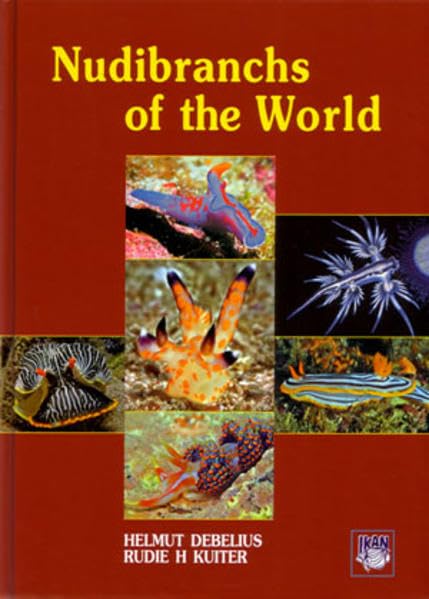
Helmut Debelius, Rudie H. Kuiter. (2007). Nudibranchs of the World.
IKAN-Unterwasserarchiv
This species, Neptunazurea porterae, is included in the book.
View on Amazon PR (Amazon Associates)Seasonality
Shooting Locations
Loading shooting locations...
Photos of Neptunazurea porterae
Tag:

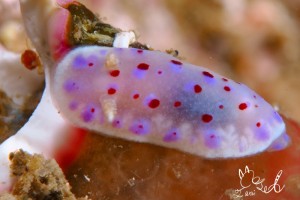
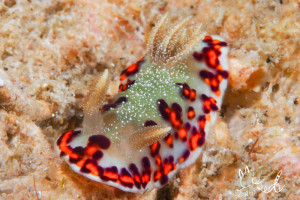
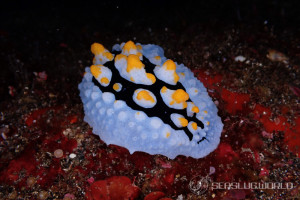
Similar Colors Nudibranchs
Academic Database
Sea slug observation data is available in international marine biodiversity databases.