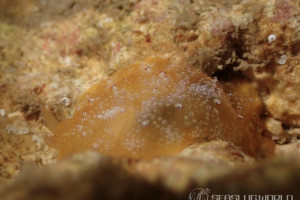
Okenia echinata Baba, 1949
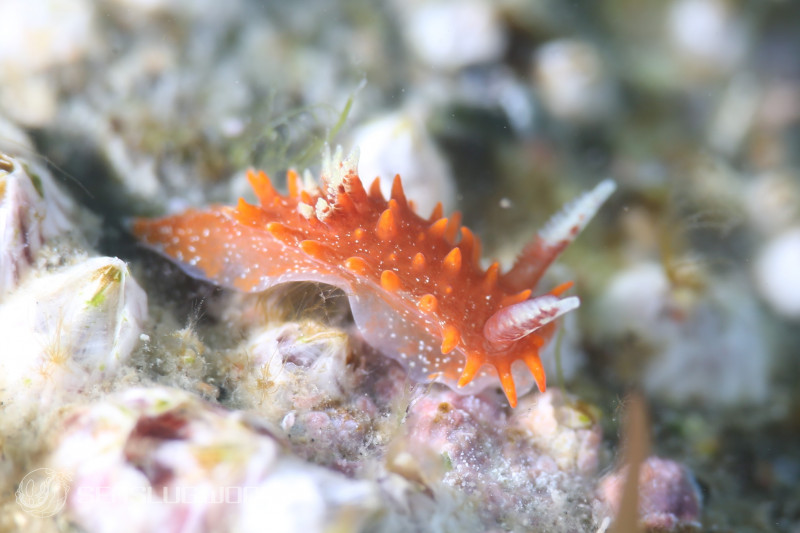
- Location
- Okinoshima, Hasama, Chiba, Japan
- Date
- 2013/05/19
- Length
- 8mm
- Depth
- 6.0m
- Water temperature
- 15.0℃
Description
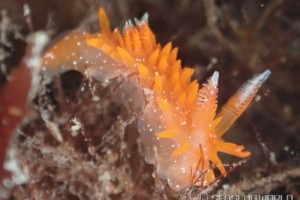
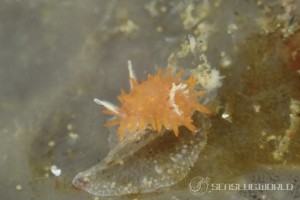
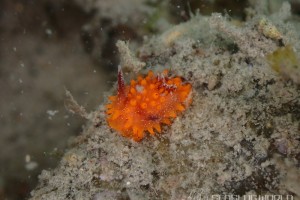
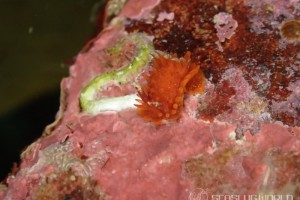
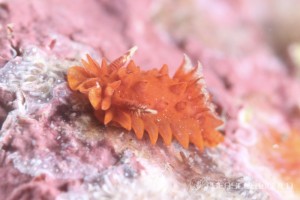
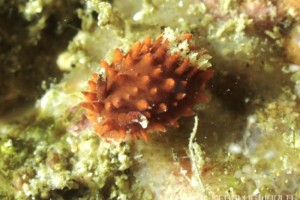
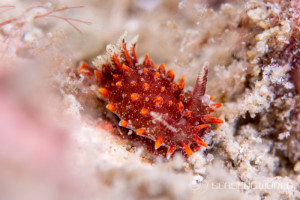
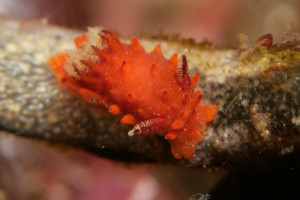
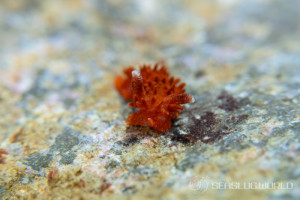
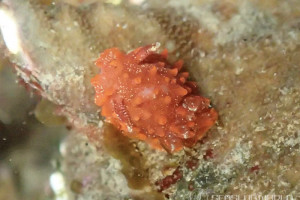
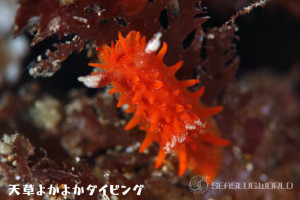
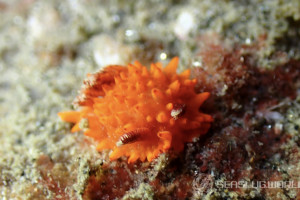
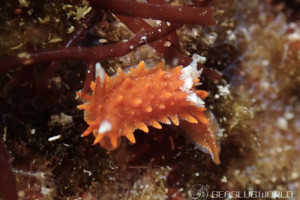
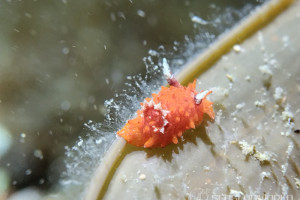
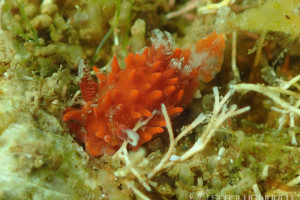
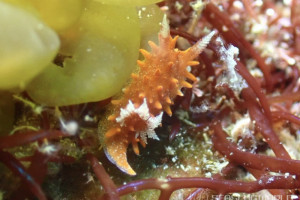
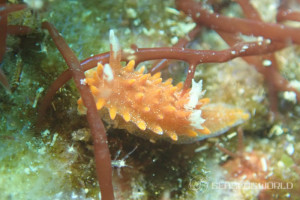
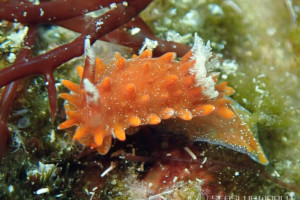
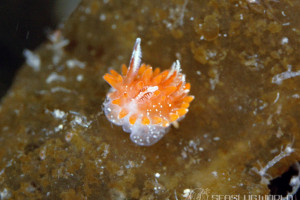
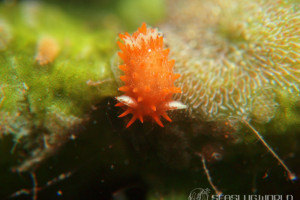
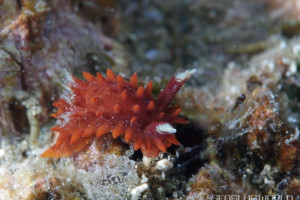
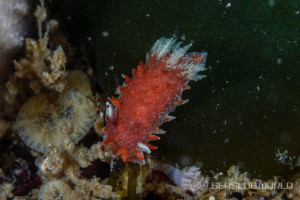
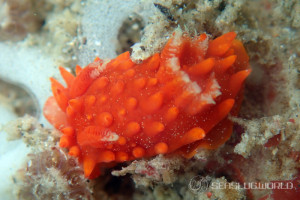
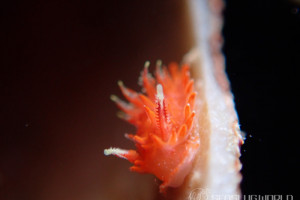
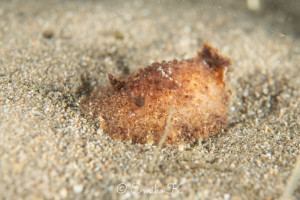
A tiny Okenia, body length about 5 mm, the body bearing numerous processes that give it an appearance reminiscent of a small sea cucumber. The body is short-oval and somewhat broader than that of the related Okenia japonica, with a short tail. The mantle papillae are long-conical, 12-13 per side. The central dorsum bears 9-10 somewhat shorter conical papillae arranged irregularly between the rhinophores and the gills. No rhinophore sheath. Gills 9-11, simple, arranged in a large semicircle around the anus, with no gill pocket. Oral tentacles large and leaf-like. The whole body is dark chestnut-brown (chocolate), with albuminous small spots scattered on the body surface. Rhinophores and gills also chestnut-brown. The labial plate forms a half-moon-shaped narrow band of 4-6 rows of small scale-teeth. Radula formula 15×1.1.0.1.1.Distribution
Type locality is off Hasaki, Sajima Island, Sagami Bay (17 m depth, August 1940, 2 specimens). The original description (Baba, 1949) records the species only from Sagami Bay.Etymology
The specific epithet echinata is Latin for spiny or prickly. The original description does not give an explicit etymology paragraph; the descriptive sense reflects the numerous spine-like papillae on the body surface. The Japanese name "Kuro-ibara-umiushi" (black-thorn sea slug) reflects the dark brown body and numerous processes.Remarks
Distinguished from the related Okenia japonica (= Bermudella japonica) by (1) a shorter, broader oval body, (2) long-conical (not club-shaped) papillae, and (3) more numerous gills (9-11 vs 5).References
- Okenia echinata Baba, 1949, Baba K. (1949). Opisthobranchia of Sagami Bay collected by His Majesty the Emperor of Japan (相模湾産後鰓類図譜). Iwanami Shoten, Tokyo. 4+2+194+7 pp., pls. 1-50.
- クロイバラウミウシ, 鈴木敬宇. (2000). ウミウシガイドブック〈2〉. TBSブリタニカ.
- 高岡生物研究会. (2002). 日本海のウミウシ. 第2版.
- クロイバラウミウシ, 中野理枝. (2004). 本州のウミウシ. ラトルズ.
- クロイバラウミウシ, 小野篤司 & 加藤昌一. (2009). ウミウシ. 誠文堂新光社.
A Kindle field guide by the site author
Kimoto N. (2026). Sea Slugs of Japan & the Indo-Pacific, 2nd Edition.
Kindle Edition
View on Amazon PR (Amazon Associates)Seasonality
Shooting Locations
Loading shooting locations...
Photos of Okenia echinata



















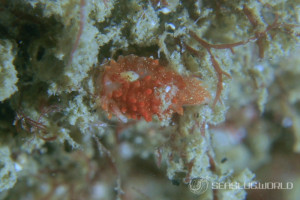

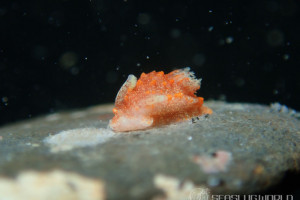

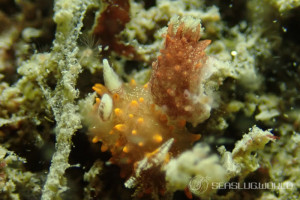
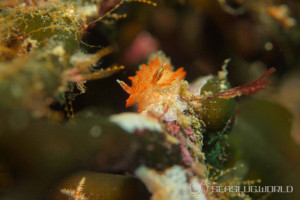




Same Genus Nudibranchs
Similar Colors Nudibranchs
Academic Database
Sea slug observation data is available in international marine biodiversity databases.