Okenia rhinorma Rudman, 2007
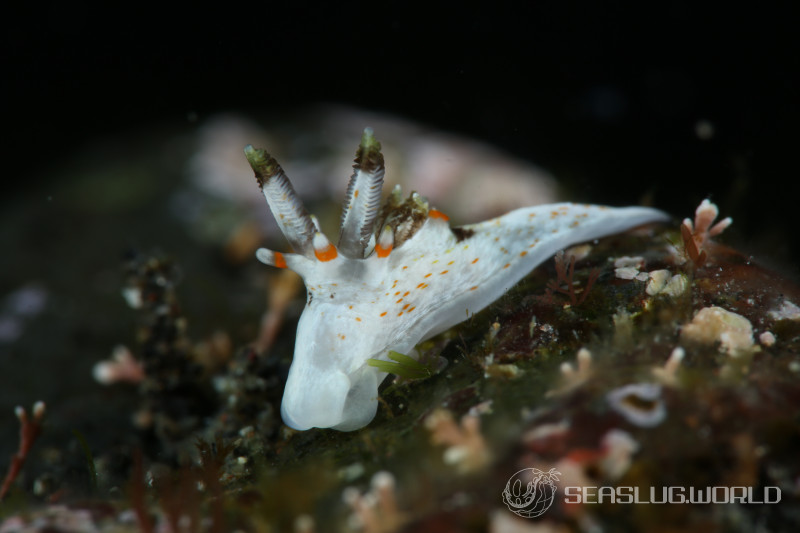
- Location
- Nodahama, Izu Oshima, Tokyo, Japan
- Date
- 2014/05/18
- Length
- 10mm
- Depth
- 5.0m
- Water temperature
- 20.0℃
Description
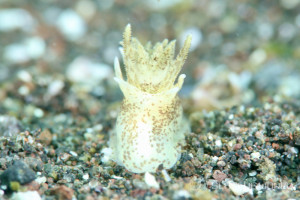
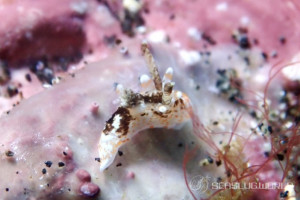
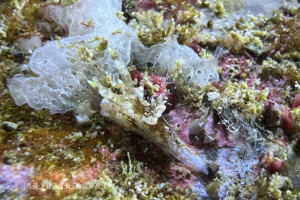
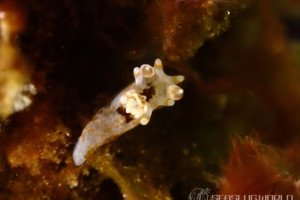
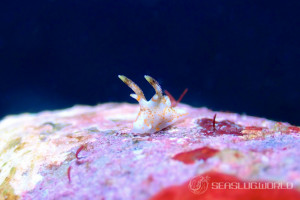
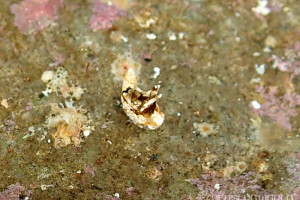
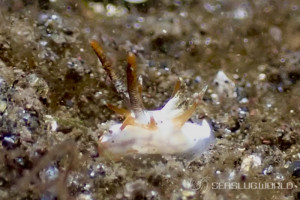
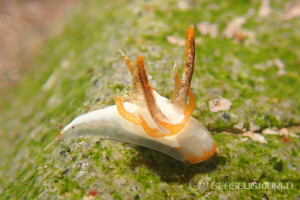
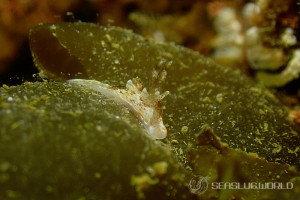
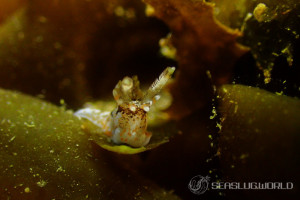
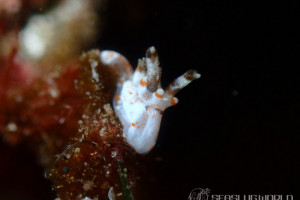
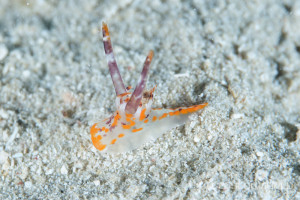
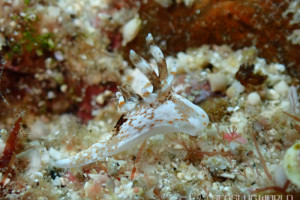
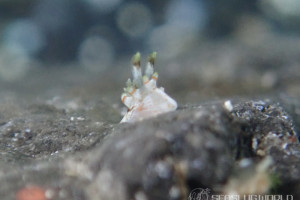
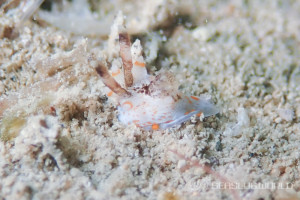
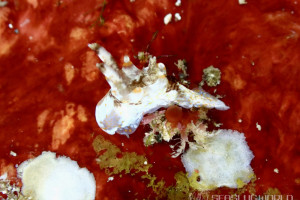
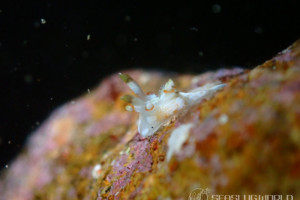
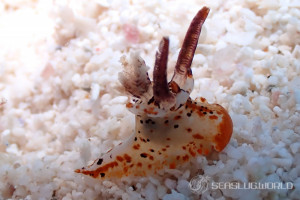
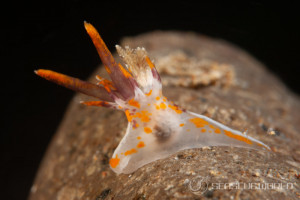
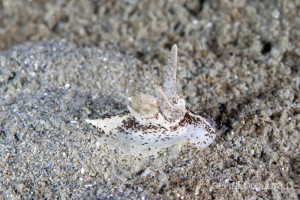
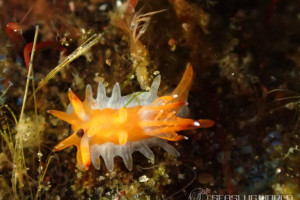
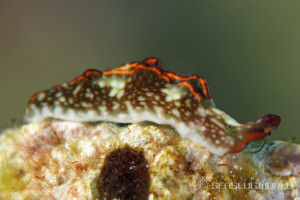
Body elongate and relatively tall, with a defined mantle ridge bearing three pairs of large lateral papillae per side; the anteriormost pair is the longest, about equal to the body width, while the posteriormost pair is roughly half that length. Rhinophores remarkably long, at least half the body length, lamellate on the posterior side, and held erect — the basis for the species' name. Six gills arranged in an arc around the anus. Ground colour opaque white with translucent areas and irregular orange and purple patches. Lateral papillae white with orange tips and a subapical purple band; rhinophores white at the base, orange at the tip, with mottled purple along the sides; gills translucent with brown and white pigmentation. The Red Sea specimen is paler, with reduced orange and purple markings. Holotype 11 mm alive (15 mm alive recorded for the second specimen).Distribution
Type locality is Bongoyo Island off Msasani Bay, Dar es Salaam, Tanzania (November 1976). The original description (Rudman, 2007) includes only Tanzania and the Red Sea (Gulf of Eilat, Israel); subsequent observations extend the range to Indonesia, Japan, and Hawaii.Etymology
The specific epithet rhinorma is an invented word combining rhinophore and enormous, reflecting the unusually large rhinophores of this species.Remarks
The body shape recalls the North Atlantic ascidian-feeding Okenia group (Okenia aspersa, Okenia quadricornis, Okenia ascidicola), but Okenia rhinorma is readily distinguished externally by its very long rhinophores, the white ground colour with orange-and-purple patches, and its taller body profile. The radular morphology suggests that it feeds on ascidians, but no direct feeding observation has been made.References
- ツノウミウシ(新称), 鈴木敬宇. (2000). ウミウシガイドブック〈2〉. TBSブリタニカ.
- イバラウミウシ属の1種, 小野篤司. (2004). 沖縄のウミウシ. ラトルズ.
- ツノウミウシ,イバラウミウシ属の1種 2, 中野理枝. (2004). 本州のウミウシ. ラトルズ.
- Okenia rhinorma sp. nov., Rudman W.B. (2007). New species of Okenia (Nudibranchia: Goniodorididae) from eastern Australia and Tanzania. Zootaxa. 1543: 1-20. https://doi.org/10.11646/zootaxa.1543.1.1
- ツノウミウシ、イバラウミウシ属の1種3, 中野理枝. (2018). 日本のウミウシ. 文一総合出版.
- Okenia rhinorma, Terrence Gosliner, Ángel Valdés and David Behrens. (2018). Nudibranch and Sea Slug Identification Indo-Pacific 2nd Edition. New World Pubns Inc.
- ツノウミウシ, 小野篤司 & 加藤昌一. (2020). 新版 ウミウシ. 誠文堂新光社.
- Paz-Sedano S., Wilson N.G., Carmona L., Gosliner T.M. & Pola M. (2021). An ocean yet to be discovered: increasing systematic knowledge of Indo-Pacific Okenia Menke, 1830 (Nudibranchia : Goniodorididae). Invertebrate Systematics. 35(7): 797-825. https://doi.org/10.1071/is20088
- Paz-Sedano S., Moles J., Smirnoff D., Gosliner T.M. & Pola M. (2024). A combined phylogenetic strategy illuminates the evolution of Goniodorididae nudibranchs (Mollusca, Gastropoda, Heterobranchia). Molecular Phylogenetics and Evolution. 192: 107990. https://doi.org/10.1016/j.ympev.2023.107990
Featured in this book

Terrence Gosliner, Ángel Valdés and David Behrens. (2018). Nudibranch and Sea Slug Identification Indo-Pacific 2nd Edition. New World Pubns Inc.
New World Publications
This species, Okenia rhinorma, is included in the book.
View on Amazon PR (Amazon Associates)Seasonality
Shooting Locations
Loading shooting locations...
Photos of Okenia rhinorma
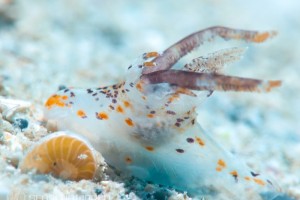

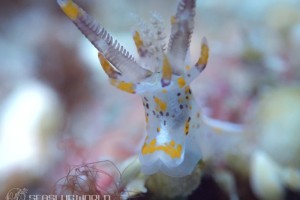

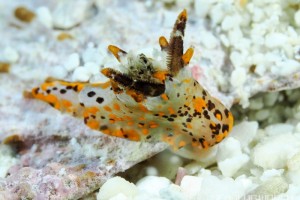

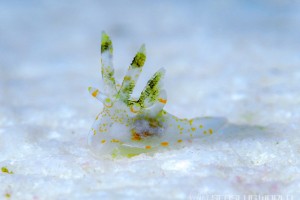
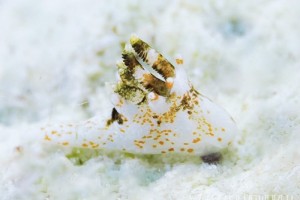
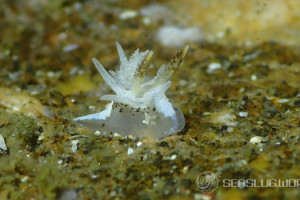



















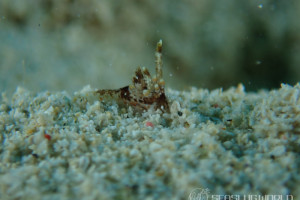

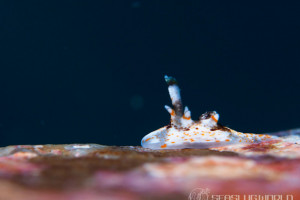

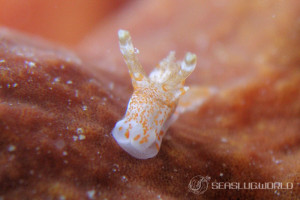

Same Genus Nudibranchs
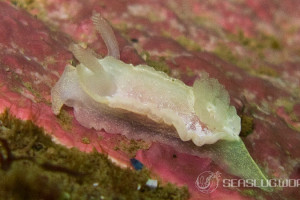
Similar Colors Nudibranchs
Academic Database
Sea slug observation data is available in international marine biodiversity databases.