Goniobranchus gleniei (Kelaart, 1858)
Description
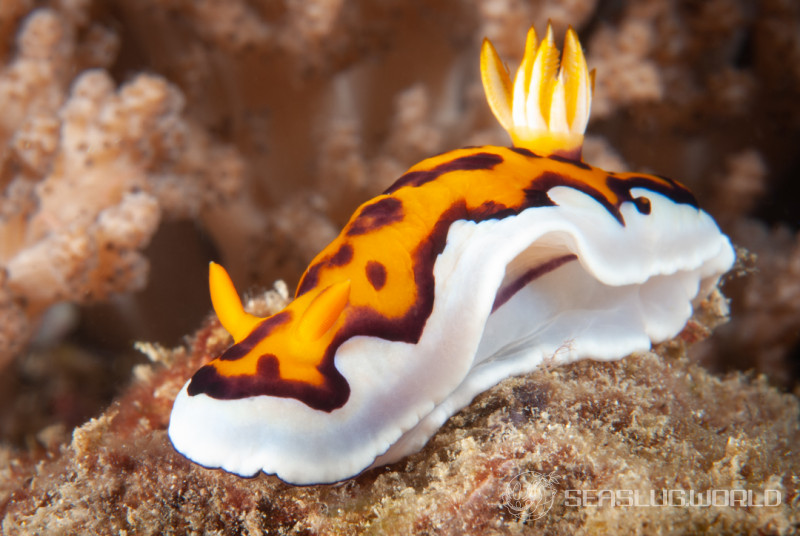
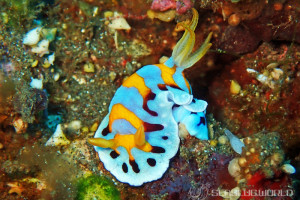
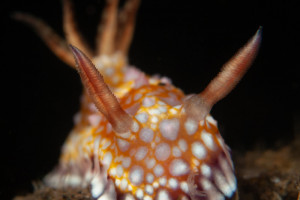
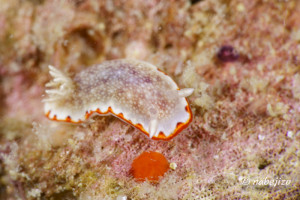
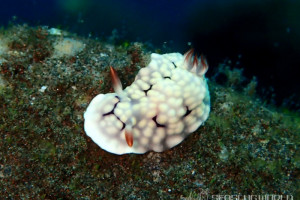
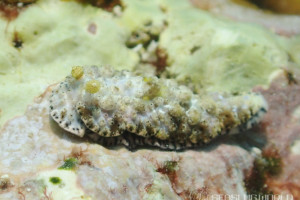
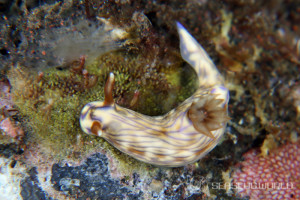
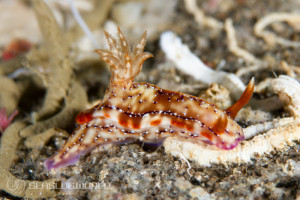
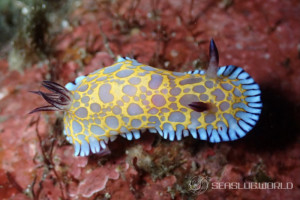
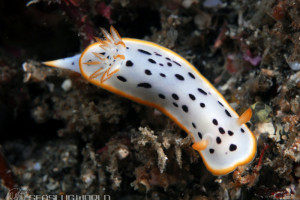
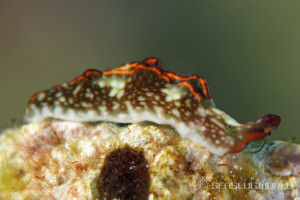
Body color white. The outermost edge of the mantle is bordered with white, with an inner band of greyish purple. A wavy dark brown to blackish-purple line runs along the center of the dorsum, branching around the rhinophores and gills. The area inside this central line is light orange-brown with irregular blackish-purple blotches. Rhinophores and inner surfaces of the gills are orange; outer gill surfaces are white. The anterior underside of the mantle is brilliantly colored purple, visible when the animal flaps its mantle edge. Maximum body length approximately 75 mm, though most specimens are around 35 mm.Distribution
Distributed in the Indian Ocean. Type locality is Trincomalee, Sri Lanka. Also recorded from Tanzania and the Maldives. Does not occur in the Pacific Ocean, where its sister species Goniobranchus coi replaces it.Etymology
The specific epithet gleniei honors Reverend Owen Glenie, Colonial Chaplain in Trincomalee and a friend of the describing author Edward Frederick Kelaart.Remarks
A member of the family Chromodorididae. Originally described as Doris gleniei in 1858. Later transferred to Chromodoris, and subsequently moved to Goniobranchus following the molecular phylogenetic revision of the Chromodorididae. Feeds on sponges, as is typical for chromodorid nudibranchs.References
- Goniobranchus gleniei, Johnson R.F. & Gosliner T.M. (2012). Traditional taxonomic groupings mask evolutionary history: a molecular phylogeny and new classification of the chromodorid nudibranchs. PLoS ONE 7(4): e33479.
- Goniobranchus gleniei, Terrence Gosliner, Ángel Valdés and David Behrens. (2015). Nudibranch and Sea Slug Identification Indo-Pacific. New World Pubns Inc.
Featured in this book

Terrence Gosliner, Ángel Valdés and David Behrens. (2018). Nudibranch and Sea Slug Identification Indo-Pacific 2nd Edition. New World Pubns Inc.
New World Publications
This species, Goniobranchus gleniei, is included in the book.
View on Amazon PR (Amazon Associates)Seasonality
Shooting Locations
Loading shooting locations...
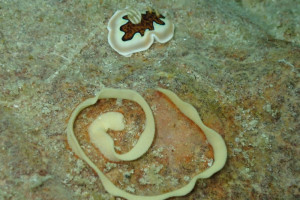
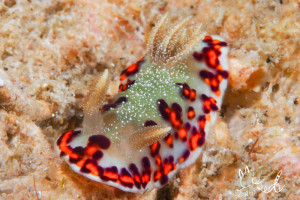
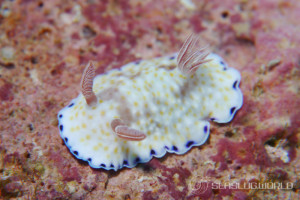
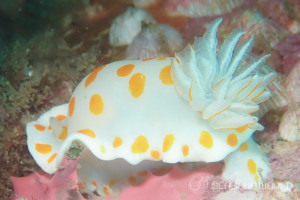
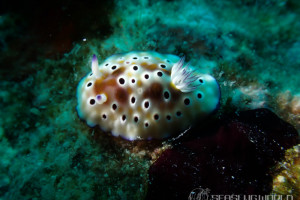
Photos of Goniobranchus gleniei



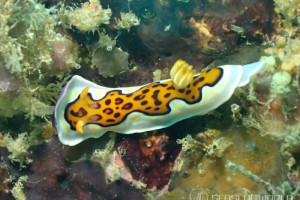
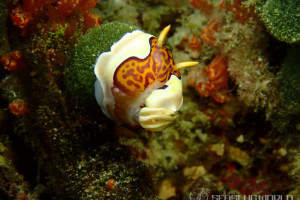
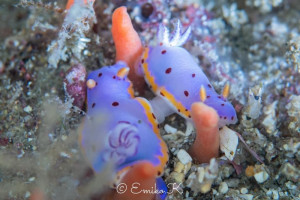
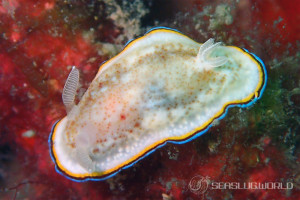
Same Genus Nudibranchs
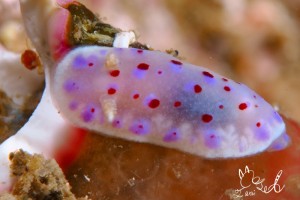

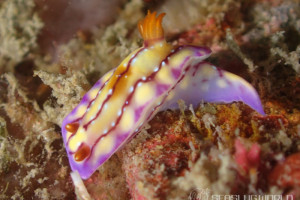
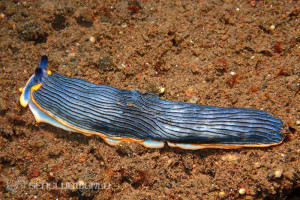
Similar Colors Nudibranchs
Academic Database
Sea slug observation data is available in international marine biodiversity databases.