Elysia rufescens (Pease, 1871)
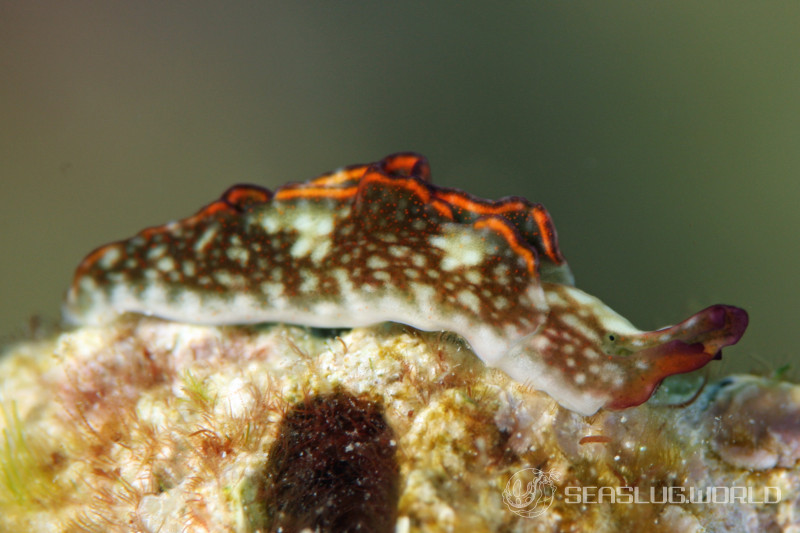
- Location
- Horse Shoes, Okinawa Island (Onna and Yomitan area), Okinawa, Japan
- Date
- 2009/02/07
- Length
- 15mm
- Depth
- 5.0m
- Water temperature
- 20.0℃
Description
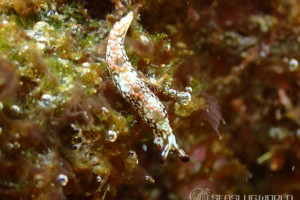
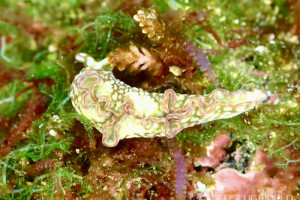
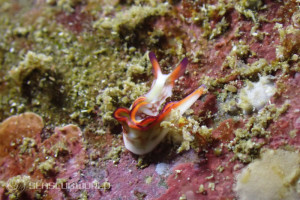
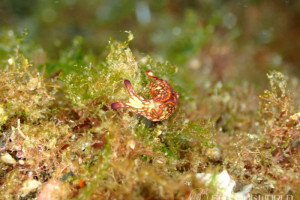
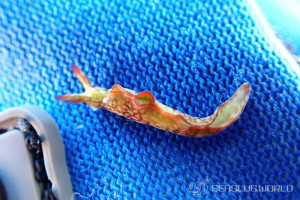
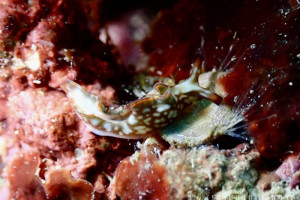
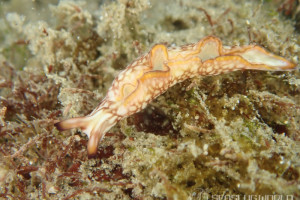
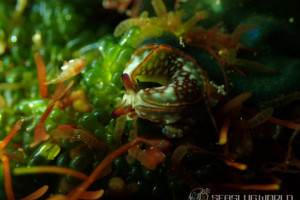
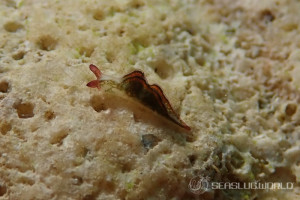
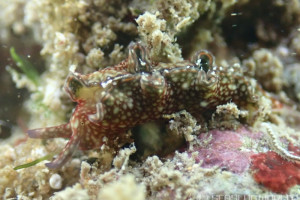
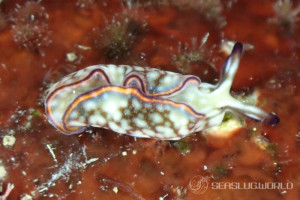
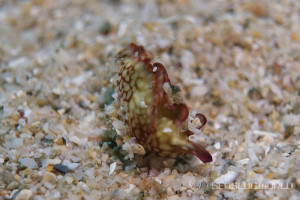
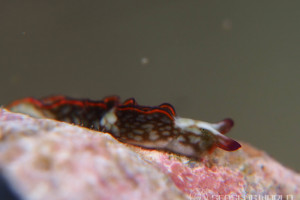
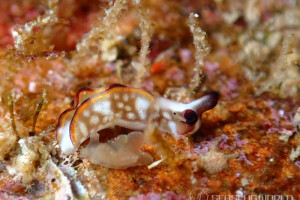
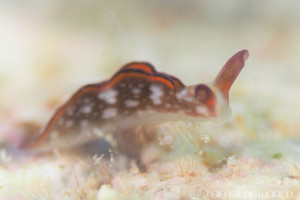
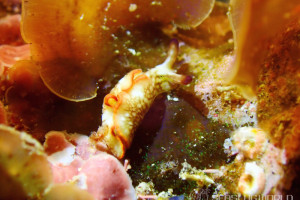
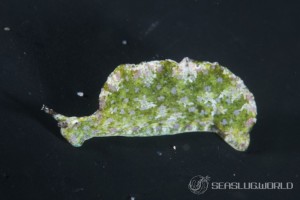
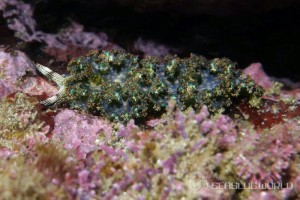
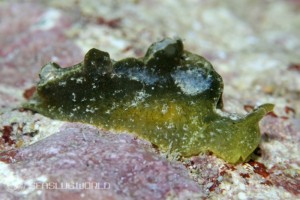
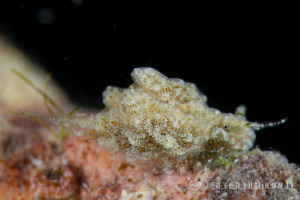
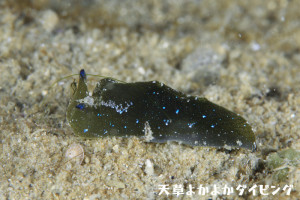
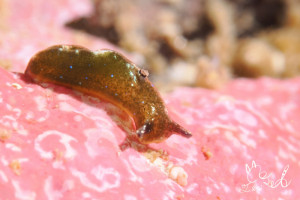
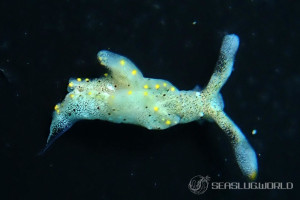
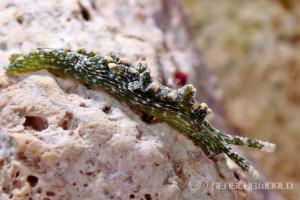
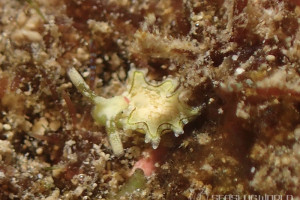
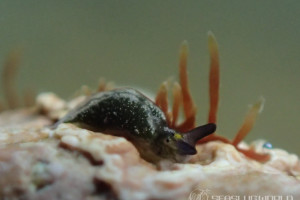
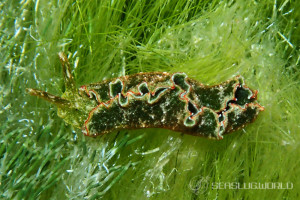
A rather slender sacoglossan reaching about 30-60 mm in body length, truncated behind. The ground colour in life is rufous brown, passing into whitish beneath, and olivaceous brown on the head. The whole body is closely spotted with small, irregular, greenish-white spots, which give the ground colour a reticulated appearance. The front of the head, in the region of the lips, is white. The tentacles are lineated with greenish white, and tinged with violet on their outer part. The parapodia are edged with dark lead colour, with an intramarginal orange line. The disk (central part of the inner parapodial surface) is pale with opaque white spots; the inner surface is edged like the outer side, but the ground colour is greenish lead, becoming paler centrally, with whitish spots and remotely punctured with vermilion. The eyes are pale with black pupils. Pease's type was about 1 1/4 inches (≈ 3 cm) long.Distribution
Indo-West Pacific to the central Pacific. Type locality: Tahiti, Society Islands, based on a specimen collected by Andrew Garrett and described by Pease. Subsequently recorded from the Hawaiian Islands, southern Japan, the Philippines, Indonesia, the Red Sea and elsewhere. Colour pattern varies between regions and some populations have been treated as separate species.Etymology
The specific epithet rufescens is the Latin adjective meaning "becoming reddish", in reference to the rufous brown ground colour of the species.Remarks
Originally placed by Pease in his genus Pterogasteron, later synonymised with Elysia Risso, 1818; the parentheses in the author citation reflect this generic transfer. The Japanese name "クシモトミドリガイ" refers to its discovery at Kushimoto on the Kii Peninsula. The species is known to feed on green algae of the genus Bryopsis in the western Pacific.References
- Pterogasteron rufescens Pease n. sp., Pease W.H. (1871). Descriptions of nudibranchiate Mollusca inhabiting Polynesia. American Journal of Conchology, 6(4): 299-305, pls. XIX-XXII.
- Elysia (Elysia) kushimotoensis BABA, n. sp. Kushimoto-midorigai (n.n.), Baba K. (1957). THE SPECIES OF THE GENUS ELYSIA FROM JAPAN. Publications of the Seto Marine Biological Laboratory. 6(1): 69-74. https://doi.org/10.5134/174573
- 高岡生物研究会. (2002). 日本海のウミウシ. 第2版.
A Kindle field guide by the site author
Kimoto N. (2026). Sea Slugs of Japan & the Indo-Pacific, 2nd Edition.
Kindle Edition
View on Amazon PR (Amazon Associates)Seasonality
Shooting Locations
Loading shooting locations...
Photos of Elysia rufescens







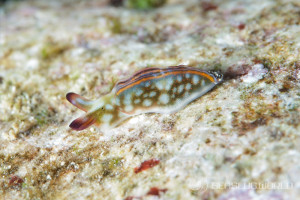

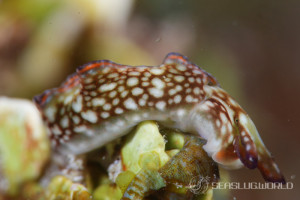

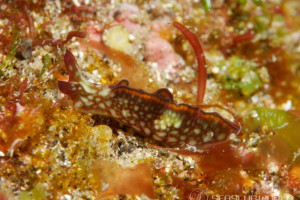

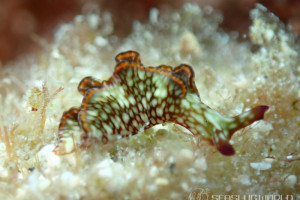









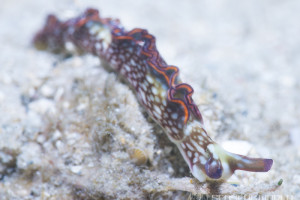

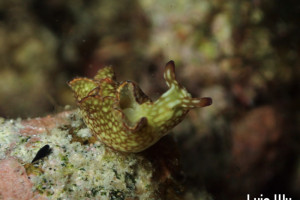

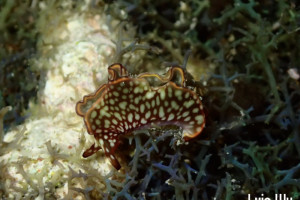
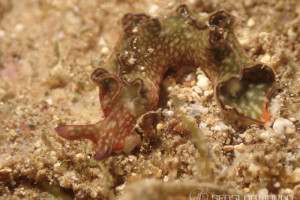

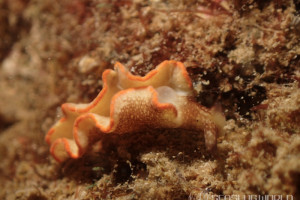
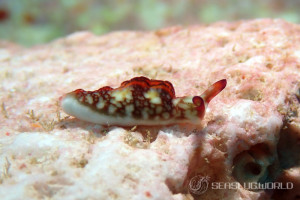

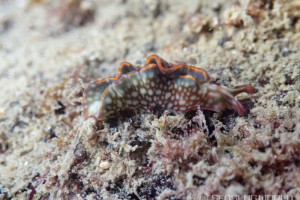

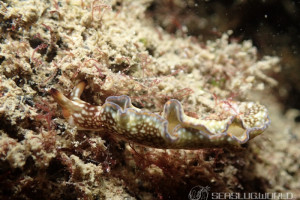
Same Genus Nudibranchs
Academic Database
Sea slug observation data is available in international marine biodiversity databases.