Hermaea noto (Baba, 1959)
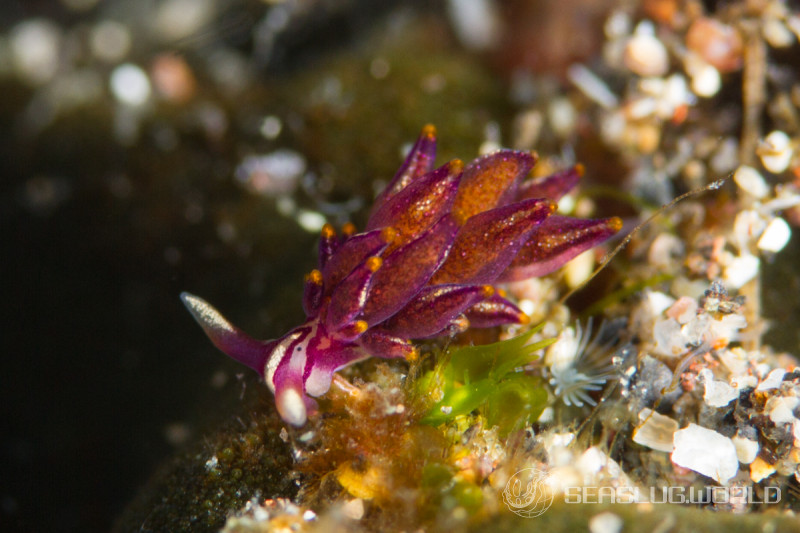
- Location
- Sokodo(Sanmata), Hachijo Island, Tokyo, Japan
- Date
- 2017/04/19
- Length
- 8mm
- Depth
- 12.0m
- Water temperature
- 14.7℃
Description
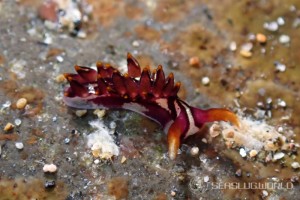
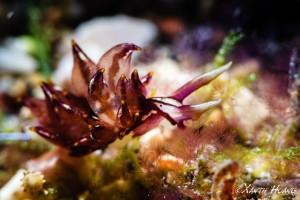
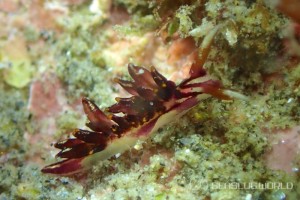
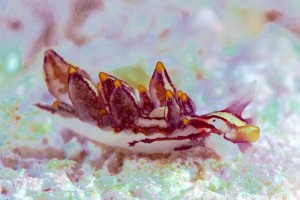
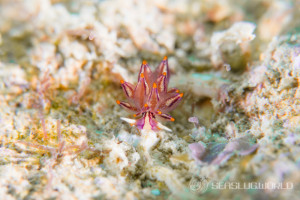
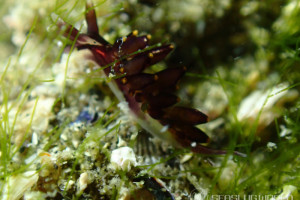
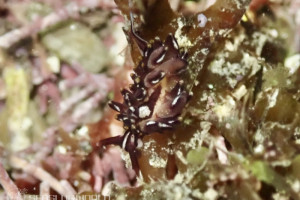
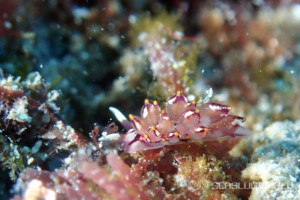
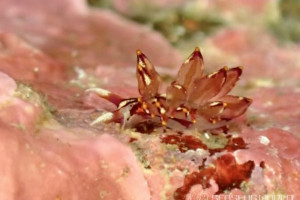
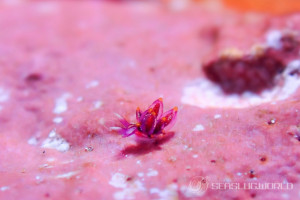
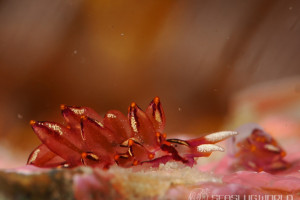
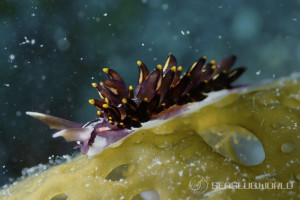
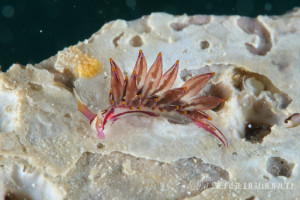
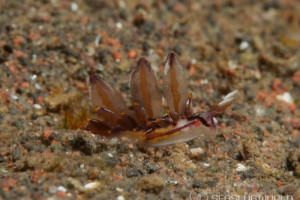
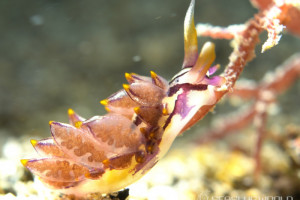
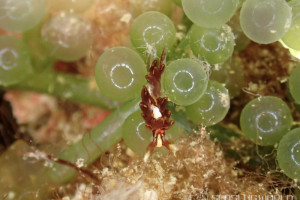
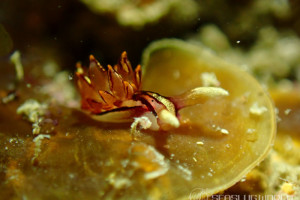
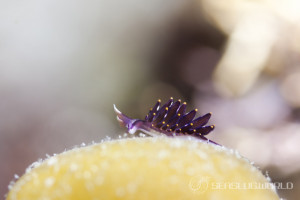
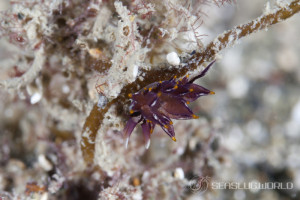
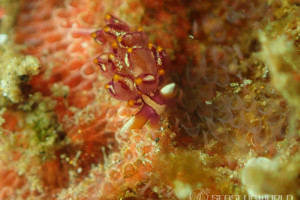
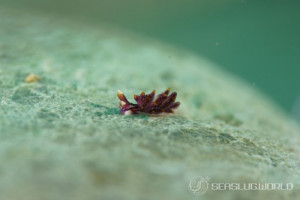
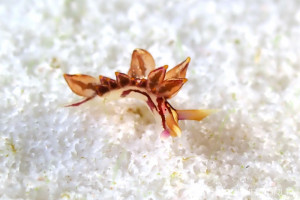
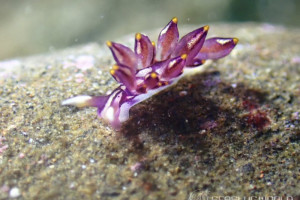
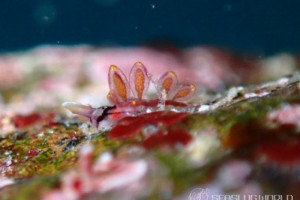
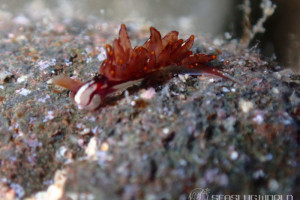
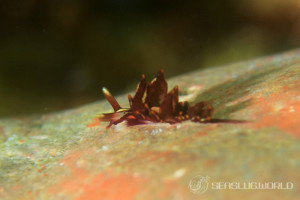
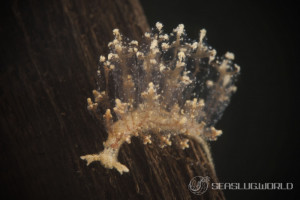
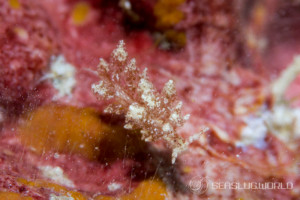
A medium-sized sacoglossan 5-10 mm in length. With a pair of lobiform oral tentacles. Rhinophores auriculate, with an outer longitudinal groove. Cerata long-fusiform, arranged in 9-10 oblique rows on each side with 1-2 cerata per row. Liver diverticula ramify in the cerata, but there is no branching of the albumen gland. The pericardial prominence is ovate. General aspect black. The head is especially marked by four longitudinal bands of intense black; the median part of the head and the eye regions are white. The back is black, deeper towards the outer mantle edges and along the midline behind the pericardial prominence. The upper halves of the oral tentacles and rhinophores are opaque white. The pericardial region is also opaque white. Cerata black, with the inner and outer edges towards the tip opaque white and the tips yellowish-brown; the inner veins of the cerata are dark yellow. Sole yellowish-white.Distribution
Type locality: Usetsu, Toyama Bay, Japan. The species is also recorded from Hegura Island (north of the Noto Peninsula) and Togi Kazanashi (west coast of Noto Peninsula).Etymology
The indeclinable specific epithet noto refers to the Noto Peninsula, in apposition.Remarks
Originally described as Stiliger (Ercolania) noto and subsequently transferred to Hermaea.References
- Stiliger (Ercolania) noto BABA, n. sp. Noto-arimo-umiushi (n. n.)., Baba K. (1959). THE FAMILY STILIGERIDAE FROM JAPAN (OPISTHOBRANCHIA-SACOGLOSSA). Publications of the Seto Marine Biological Laboratory. 7(3): 327-334. https://doi.org/10.5134/174635
- エビチャモウミウシ(仮称), 小野篤司. (1999). ウミウシガイドブック. TBSブリタニカ.
- 高岡生物研究会. (2002). 日本海のウミウシ. 第2版.
- ノトアリモウミウシ, 小野篤司. (2004). 沖縄のウミウシ. ラトルズ.
- ノトアリモウミウシ, 中野理枝. (2004). 本州のウミウシ. ラトルズ.
- ノトアリモウミウシ, 中野理枝. (2018). 日本のウミウシ. 文一総合出版.
- Hermaea noto, Terrence Gosliner, Ángel Valdés and David Behrens. (2018). Nudibranch and Sea Slug Identification Indo-Pacific 2nd Edition. New World Pubns Inc.
Featured in this book

Terrence Gosliner, Ángel Valdés and David Behrens. (2018). Nudibranch and Sea Slug Identification Indo-Pacific 2nd Edition. New World Pubns Inc.
New World Publications
This species, Hermaea noto, is included in the book.
View on Amazon PR (Amazon Associates)Seasonality
Shooting Locations
Loading shooting locations...
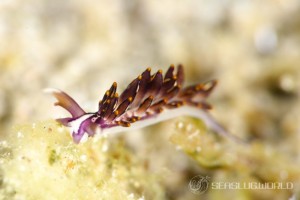
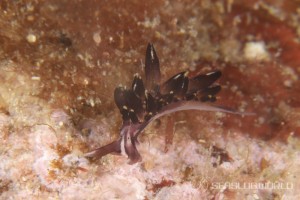
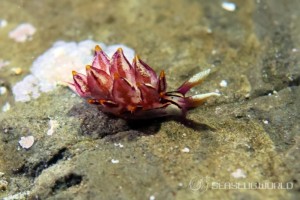
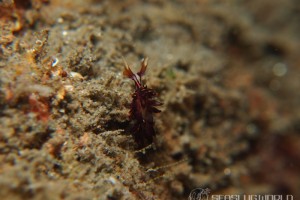
Photos of Hermaea noto

























Same Genus Nudibranchs
Similar Colors Nudibranchs
Academic Database
Sea slug observation data is available in international marine biodiversity databases.