Sclerodoris rubicunda (Baba, 1949)
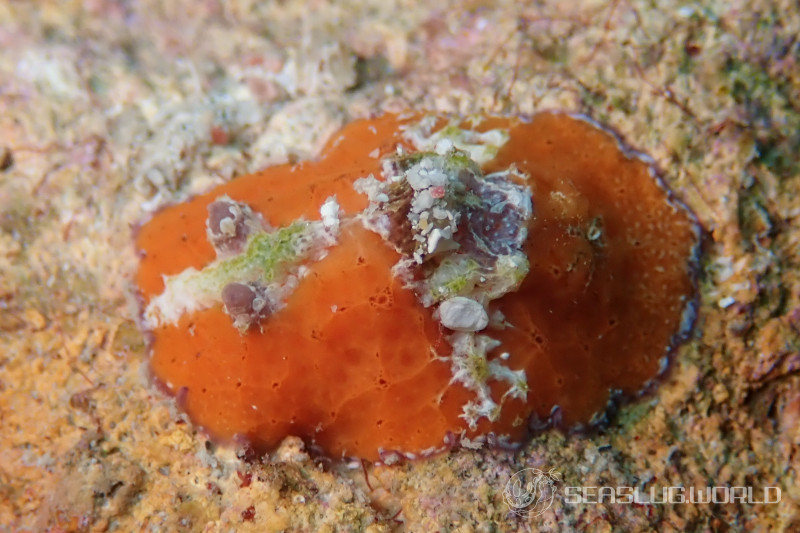
- Location
- Yamamoto Special, Amami Oshima, Kagoshima, Japan
- Date
- 2024/04/22
- Length
- ??mm
- Depth
- ??m
- Water temperature
- 22.0℃
Description
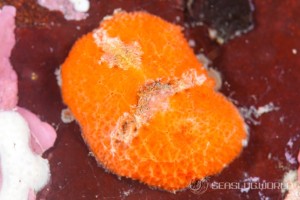
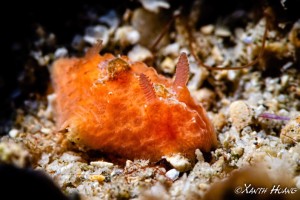
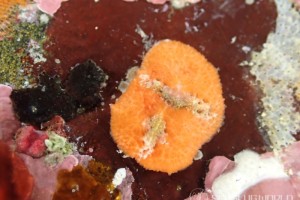
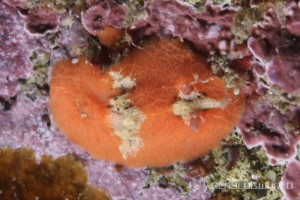
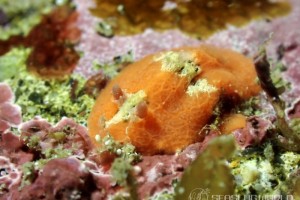
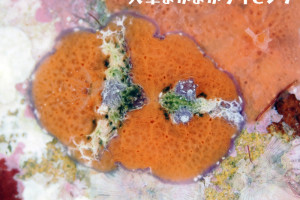
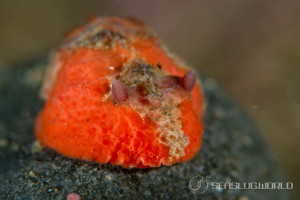
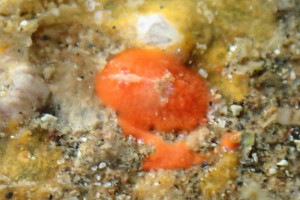
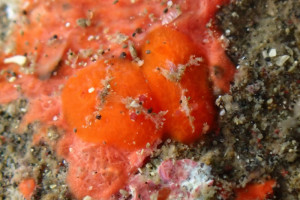
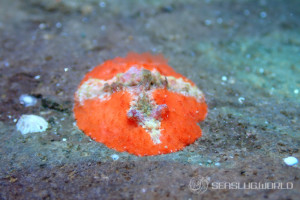
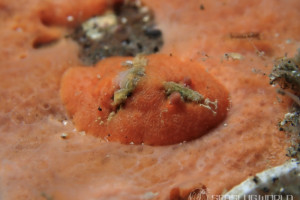
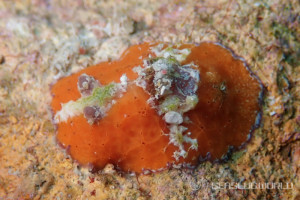
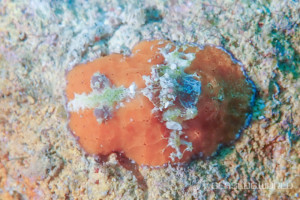
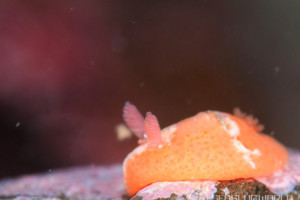
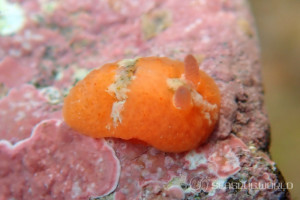
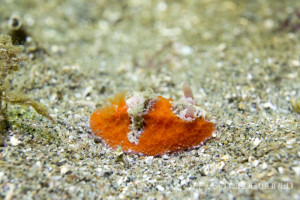
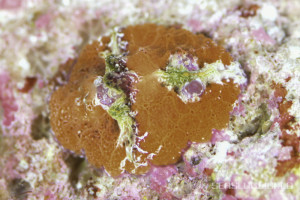
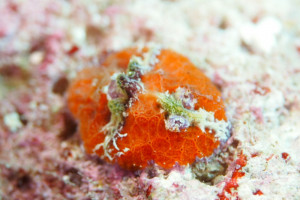
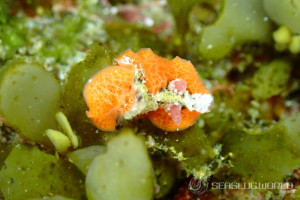
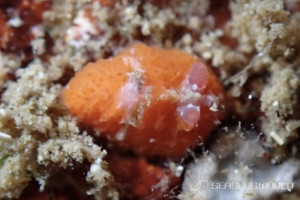
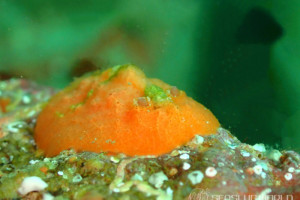
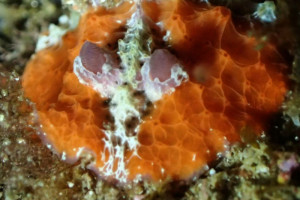
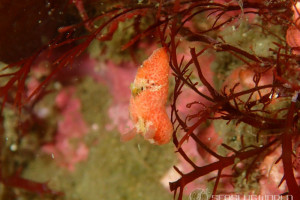
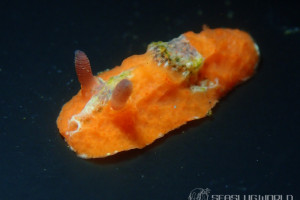
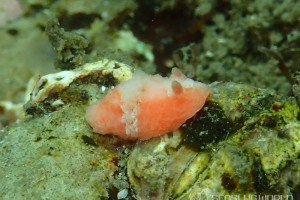
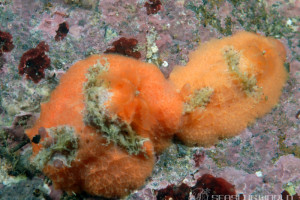
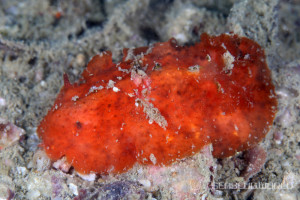
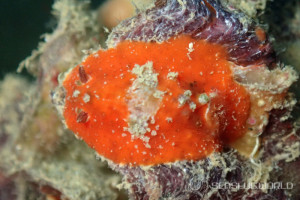
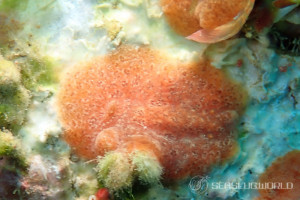
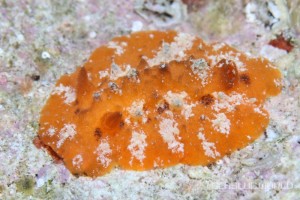
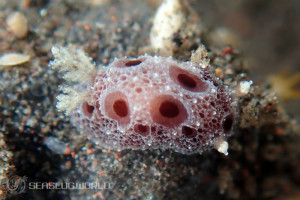
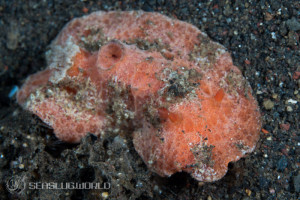
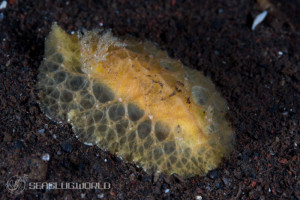
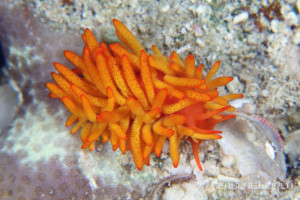
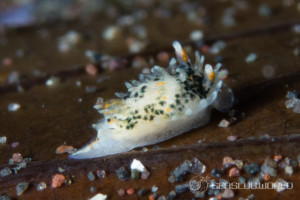
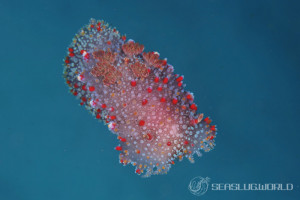
A small dorid, body length 1-3 cm, firmer-bodied than the sympatric Halgerda japonica. The entire dorsum is covered by a network of fine ridges, with the intersections forming conspicuous small bead-like tubercles. Three to four bi- to tri-pinnate gills (5 lobes total). Rhinophore sheath margin entire; gill pocket margin wavy with 5 lobes. Oral tentacles finger-shaped. The whole body is a beautiful orange-red, with a short dark-yellow longitudinal stripe on the dorsal midline between the rhinophores and an inverted-V dark-yellow transverse band in front of the gills. No labial plate. Radula formula about 25×23-25.0.23-25, with only the 3-4 outermost lateral teeth bearing comb-like apically split tips; the rest of the laterals are smooth sickle-shaped.Distribution
Type locality is Akiya-Tateishi, Sagami Bay (intertidal, July 1939) and Hayama-Koiso, Sagami Bay (intertidal, July 1940). The original description (Baba, 1949) records the species only from Sagami Bay.Etymology
The specific epithet rubicunda is Latin for ruddy or reddish. The original description does not give an explicit etymology paragraph; the descriptive sense reflects the bright orange-red coloration. The Japanese name "Hiodoshi-umiushi" likens the colour to "hi-odoshi", the red-laced lacing of traditional Japanese armour.Remarks
Originally described as Halgerda rubicunda and later transferred to Sclerodoris. Distinguished from Halgerda japonica by smaller size, firmer body, conspicuously bead-like ridge intersections, and the orange-red ground colour with dark-yellow median dorsal stripe and inverted-V transverse band.References
A Kindle field guide by the site author
Kimoto N. (2026). Sea Slugs of Japan & the Indo-Pacific, 2nd Edition.
Kindle Edition
View on Amazon PR (Amazon Associates)Seasonality
Shooting Locations
Loading shooting locations...
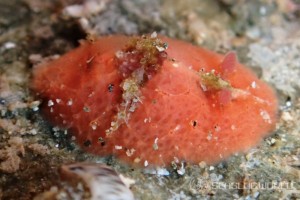
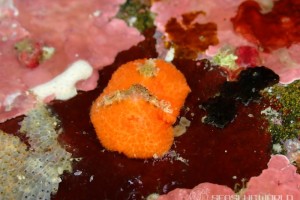
Photos of Sclerodoris rubicunda
Tag:






















Same Genus Nudibranchs
Similar Colors Nudibranchs

Academic Database
Sea slug observation data is available in international marine biodiversity databases.