Kalinga ornata Alder & Hancock, 1864
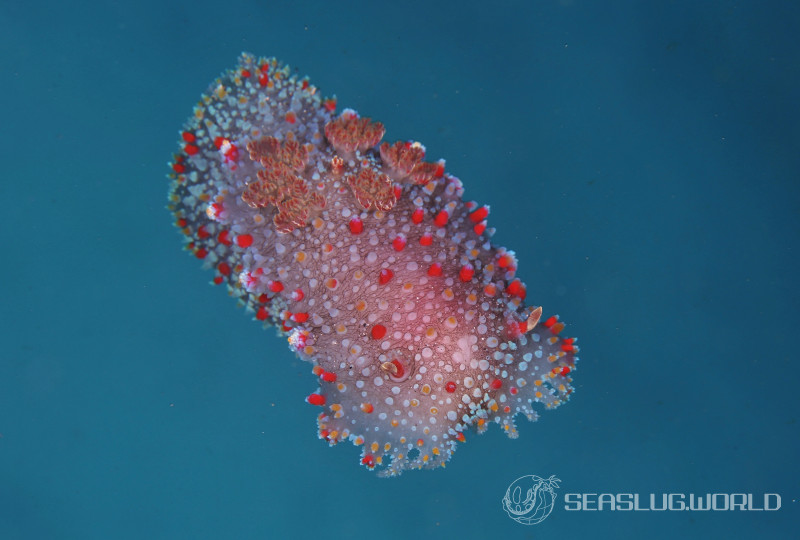
Description
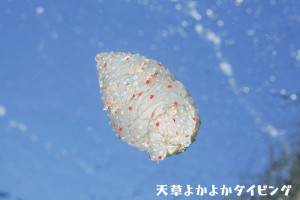
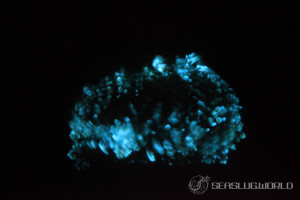
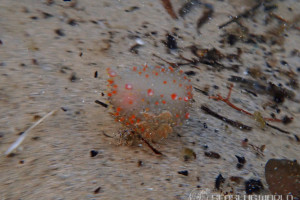
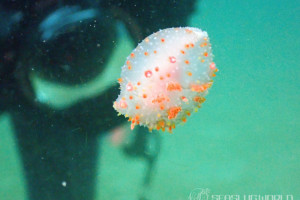
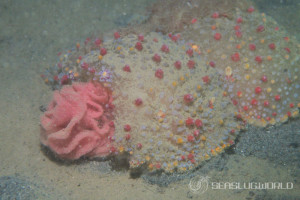
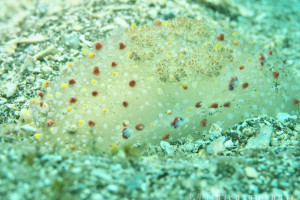
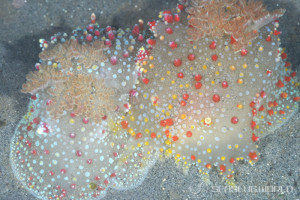
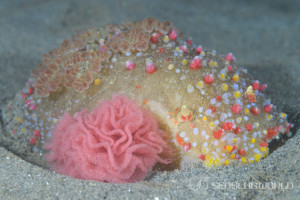
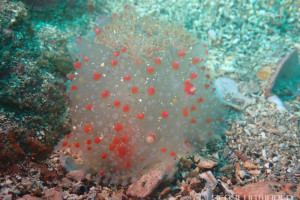
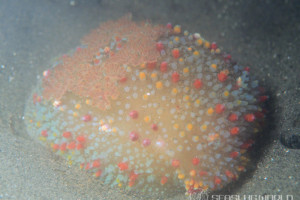
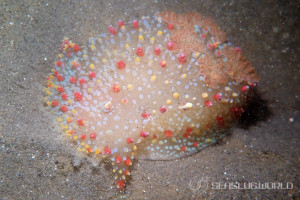
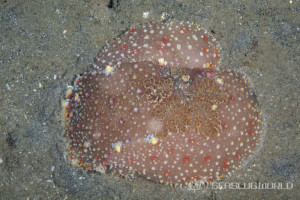
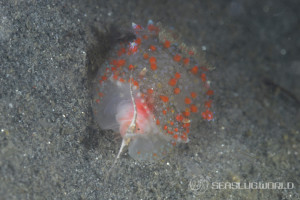
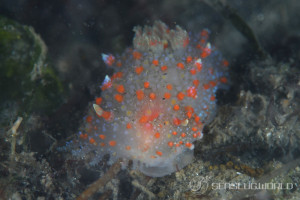
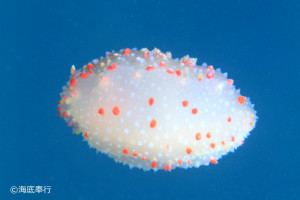
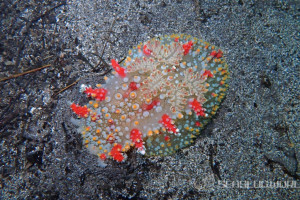
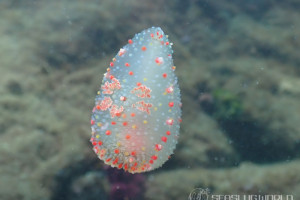
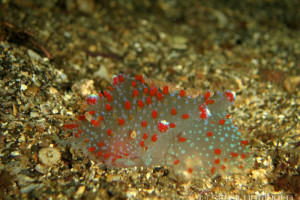
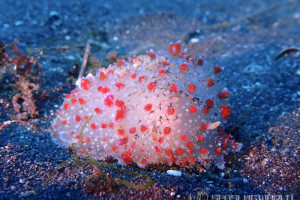
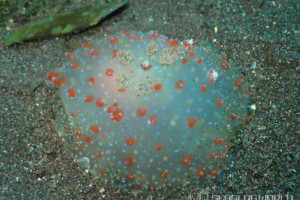
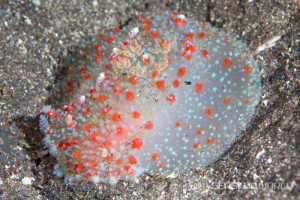
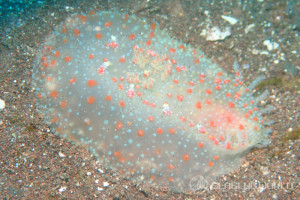
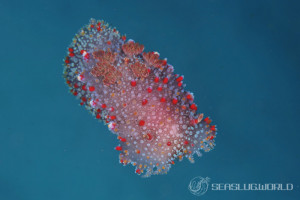
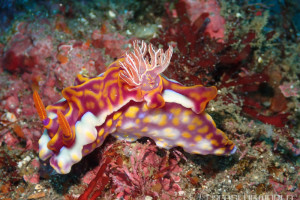
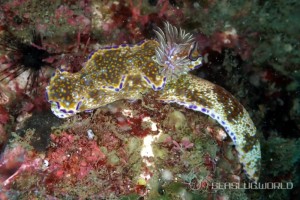
A large dorid reaching 3 to 8 inches (ca. 7.6–20 cm) in body length. The body is broadly oval, somewhat enlarged and rounded behind, not produced into a tail. The skin is coriaceous but rather soft, covered on all the upper surface with distant, soft, papillated tubercles of various sizes, having the appearance of little tufts. The mantle is rather broad, forming a ridge along the side, and produced over the head into twelve or fourteen close-set, linear or subclavate, fimbriated or papillated processes; six or seven larger but similarly branched processes run down each side on the ridge of the cloak, the ridge itself terminating at each side behind the branchiae in one of these processes. The colour of the surface is white or yellowish, varied with tints of green and rose-colour on the anterior portion; the tubercles white, with frequently a rose-coloured or crimson spot in the centre; the frontal processes are white; those down the sides crimson, with yellow tips. The dorsal tentacles are rather small, clavate or subfusiform, tapering to a point above; the laminae divided by a narrow groove in front; the base of the tentacles and upper part of the laminated portion are crimson, the intermediate space and tips white; the sheaths are subglobose, surrounded near the margin with crimson tufts. The sides of the head are expanded into large oval discs, which are adherent to the under surface of the mantle; the oral tentacles, which are small and flattened oval processes, spring from the anterior margin of these discs. The branchial plumes are generally five, large and spreading, placed at some little distance from the anus and from each other, three or four times pinnate, white, with the pinnae veined with crimson. The foot is very broad, rounded behind, and laminated but not notched in front. Kalinga was erected as a new genus, intermediate between Euplocamus and Plocamophorus but differing from both in the obtusely rounded body and the separate position of the branchial plumes — in this respect approaching Hexabranchus. The species feeds on brittle stars (Ophiuroidea).Distribution
Type locality: Waltair, near Vizagapatam, Coromandel coast, Madras Presidency, India (now Visakhapatnam, Andhra Pradesh). Based on three specimens (two mutilated, one immature) collected by Walter Elliot in 1853–1854. The species is now known to range widely through the Indo-West Pacific and central Pacific, with records from South Africa, Sri Lanka, Australia, Papua New Guinea, China, Japan, and Hawaii.Etymology
A footnote in the original description (Alder & Hancock, 1864, p.134) reads: "An old Indian name for Telinguna." The genus name Kalinga derives from an ancient name for the historical Kalinga region of eastern India (modern Odisha and northern Andhra Pradesh), encompassing the Coromandel coast where the type material was collected. The specific epithet ornata is Latin for "adorned, decorated", in reference to the species' ornate colouration and elaborately branched marginal processes.Remarks
In the original description Alder & Hancock placed this species as the type of the new monotypic genus Kalinga in the family Polyceridae. The genus has remained monotypic, and the author citation is unparenthesized (no generic transfer has occurred). The Japanese name "ハナデンシャ" ("flower tram") refers to the species' flamboyant colouration evoking the decorated festival trams of Japan.References
- Kalinga ornata n. sp. (genus Kalinga nov. gen.), Alder J. & Hancock A. (1864). Notice of a collection of nudibranchiate Mollusca made in India by Walter Elliot Esq., with descriptions of several new genera and species. Transactions of the Zoological Society of London. 5(3): 113-147.
- はなでんしや(新稱), 内田清之助ほか. (1927). 日本動物圖鑑. 北隆館.
- ハナデンシャ, Baba, K. 1930. Studies on Japanese nudibranchs (1). Polyceridae. Venus 2(1)
- ハナデンシャ, 生物學御研究所編. (1955). 相模湾産後鰓類図譜〈補遺〉. 岩波書店.
- ハナデンシャ, 鈴木敬宇. (2000). ウミウシガイドブック〈2〉. TBSブリタニカ.
- 高岡生物研究会. (2002). 日本海のウミウシ. 第2版.
- ハナデンシャ, 中野理枝. (2004). 本州のウミウシ. ラトルズ.
- Kalinga ornata, Terrence Gosliner, Ángel Valdés and David Behrens. (2015). Nudibranch and Sea Slug Identification Indo-Pacific. New World Pubns Inc.
- ハナデンシャ, 中野理枝. (2019). 日本のウミウシ. 第二版. 文一総合出版.
Featured in this book
Terrence Gosliner, Ángel Valdés and David Behrens. (2018). Nudibranch and Sea Slug Identification Indo-Pacific 2nd Edition. New World Pubns Inc.
New World Publications
This species, Kalinga ornata, is included in the book.
View on Amazon PR (Amazon Associates)Seasonality
Shooting Locations
Loading shooting locations...
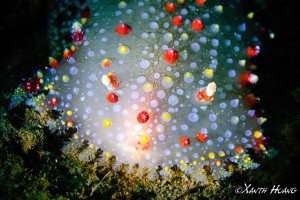
Photos of Kalinga ornata
Tag:


















Similar Colors Nudibranchs

Academic Database
Sea slug observation data is available in international marine biodiversity databases.