Sclerodoris faninozi Innabi, Stout & Á. Valdés, 2023
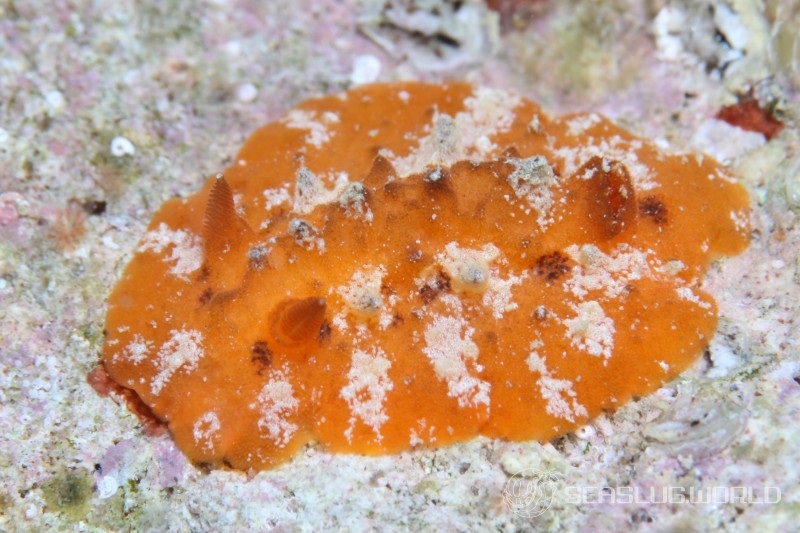
- Location
- Gorilla Chop, Okinawa Island (Motobu and Northern area), Okinawa, Japan
- Date
- 2026/01/08
- Length
- 17mm
- Depth
- 6.0m
- Water temperature
- 21.4℃
Description
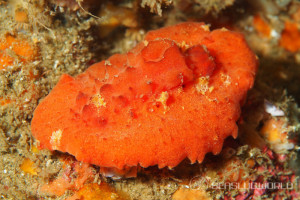
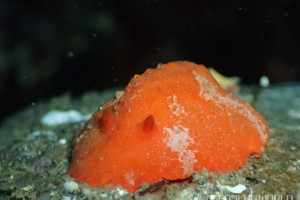
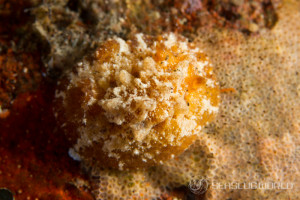
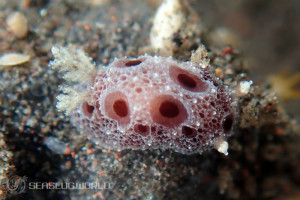
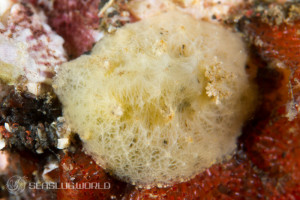
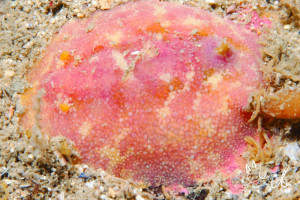
A small dorid nudibranch with a flattened, oval body and a coriaceous, hard-feeling dorsum. The dorsum is densely covered with small caryophyllidia, traversed by a longitudinal ridge, and bears several large, rounded tubercles. The branchial and rhinophoral sheaths are slightly elevated and irregular in shape, and the visceral hump rises above the rest of the mantle. Body ground color yellowish brown, with scattered opaque white pigment and patches of dark brown and dark gray. Branchial leaves and rhinophores dark brown. The gill comprises five short, tripinnate, upright leaves; the rhinophores are short and lamellated, with about 15 lamellae. Up to 25 mm in length.Distribution
The type locality is Koumac, New Caledonia, where the holotype was collected at 0 m depth from blocks of dead coral on the margin of the fringing reef flat. The species was originally known only from this single specimen at Koumac. A specimen from Okinawa with a COI sequence matching S. faninozi at 99% identity has subsequently been obtained, suggesting a wider distribution across the western Pacific.Etymology
The specific epithet faninozi honors Sébastien Faninoz, whose efforts were critical for organizing the Koumac expeditions.Remarks
Molecular phylogenetic analyses recover Sclerodoris faninozi as sister to Sclerodoris tuberculata, the type species of the genus. Externally it closely resembles Sclerodoris coriacea from Zanzibar, but is distinguished by the presence of a longitudinal dorsal ridge, which is absent in S. coriacea. The holotype was found under a block of dead coral on a fringing reef flat, where its mottled color and rough dorsal texture render it highly cryptic against the surrounding rocks and sponges.References
- カザンウミウシ属の1種 4, 中野理枝. (2018). 日本のウミウシ. 文一総合出版.
- Sclerodoris faninozi sp. nov., Innabi J., Stout C.C. & Valdés Á. (2023). Seven new “cryptic” species of Discodorididae (Mollusca, Gastropoda, Nudibranchia) from New Caledonia. ZooKeys. 1152: 45-95. https://doi.org/10.3897/zookeys.1152.98258
- ヨウガンウミウシ(新称), 今川郁. (2026). 沖縄のウミウシ: DNA解析による最新の分類図鑑1089種. 誠文堂新光社.
Related articles
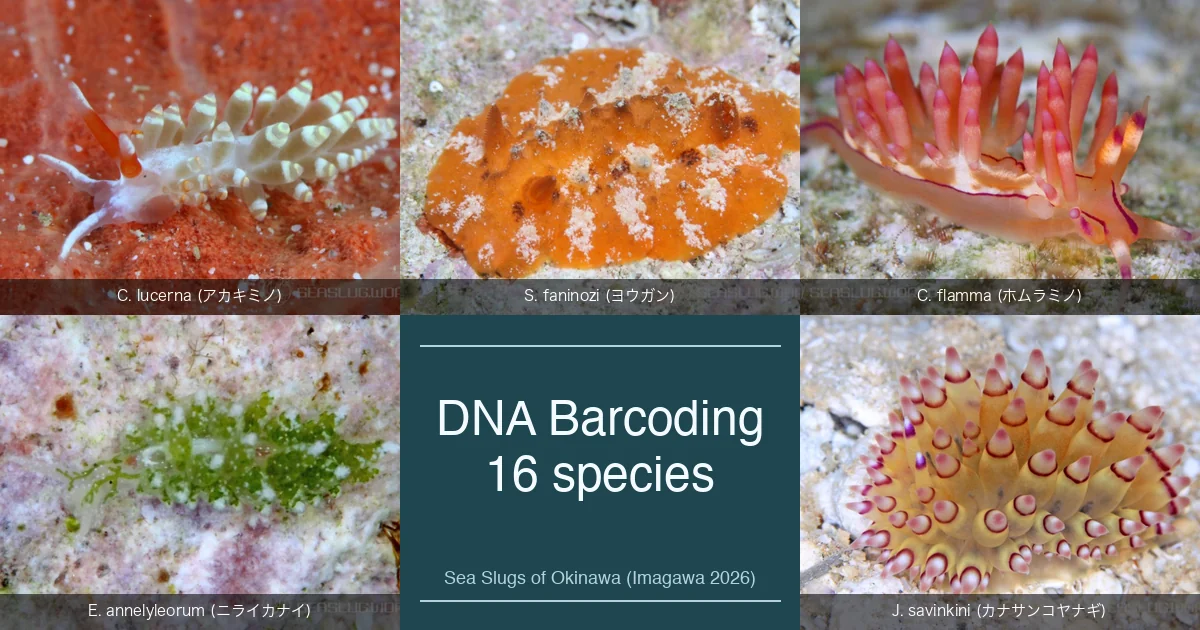
Sea Slugs of Okinawa (Imagawa 2026): 16 species with DNA-confirmed identity
Featured in this book
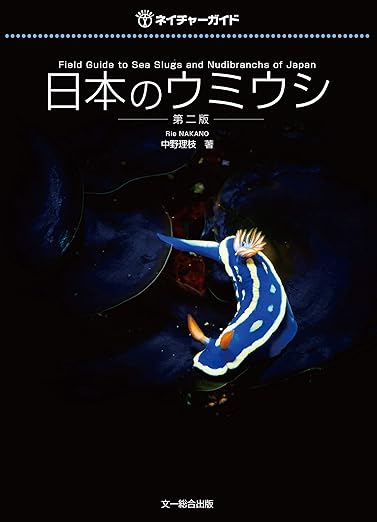
中野理枝. (2019). 日本のウミウシ. 第二版. 文一総合出版.
文一総合出版
This species, Sclerodoris faninozi, is included in the book.
View on Amazon PR (Amazon Associates)Seasonality
Shooting Locations
Loading shooting locations...
Photos of Sclerodoris faninozi

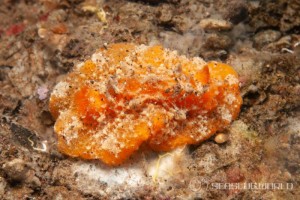
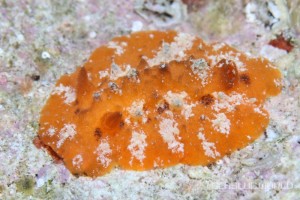

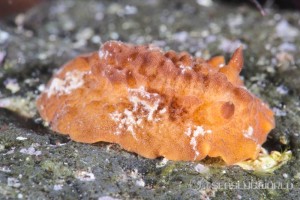

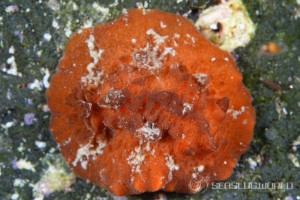

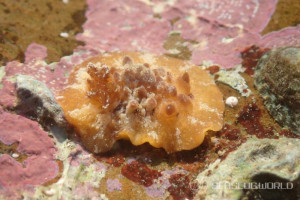
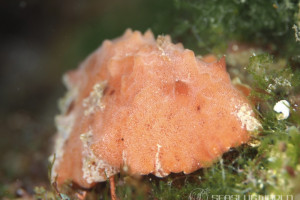

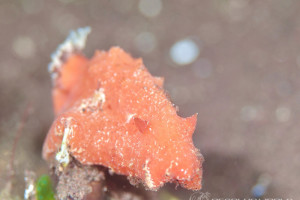

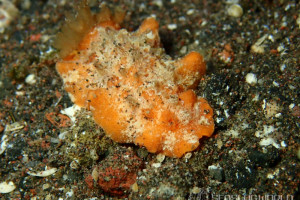

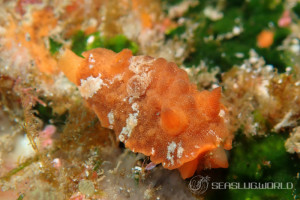

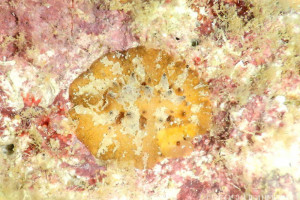

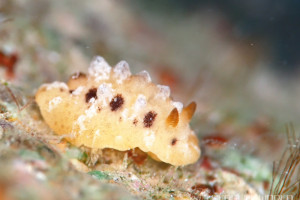

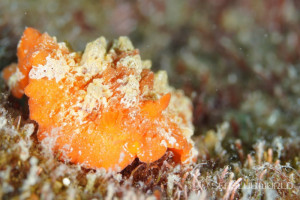



Specimen & DNA
| Observation | Database | COI | 16S | H3 |
|---|---|---|---|---|
| #53873 | SSWBP705-26 |
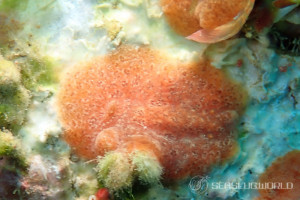
Same Genus Nudibranchs
Similar Colors Nudibranchs

Academic Database
Sea slug observation data is available in international marine biodiversity databases.