Sclerodoris apiculata (Alder & Hancock, 1864)
Description
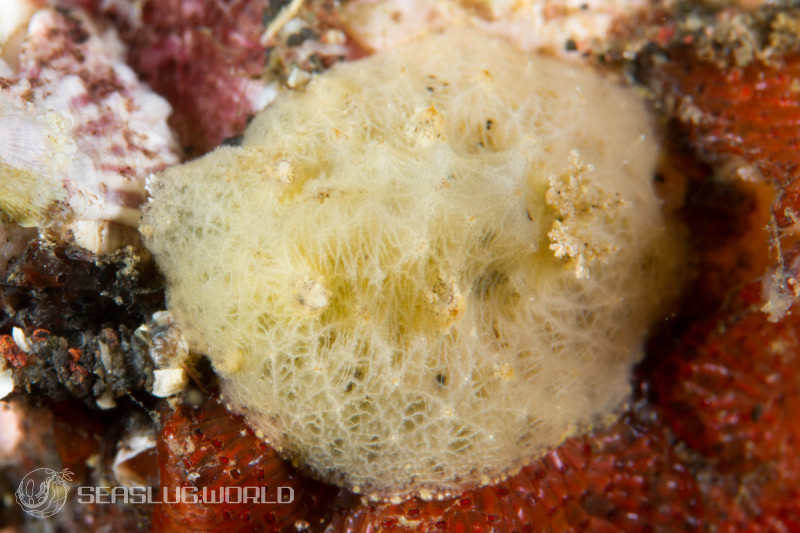
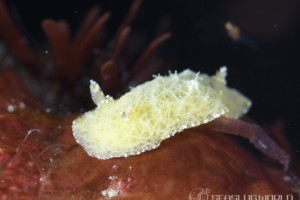
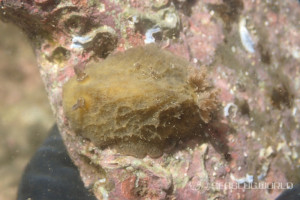
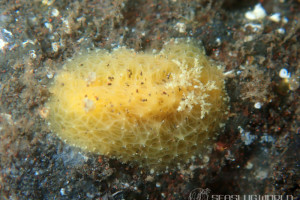
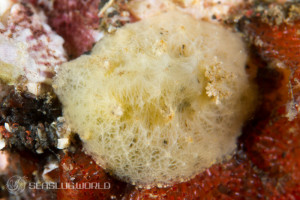
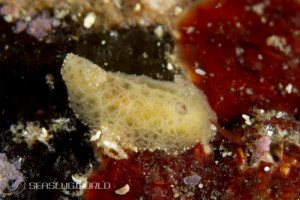
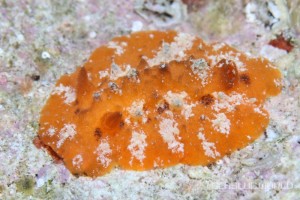
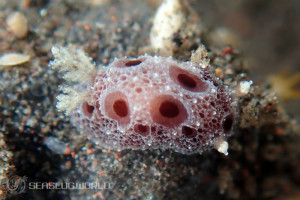
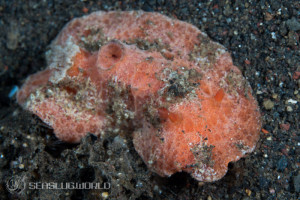
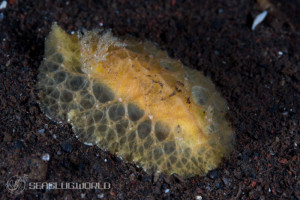
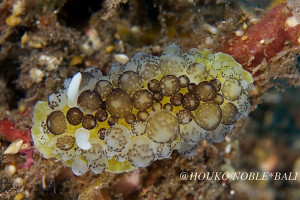
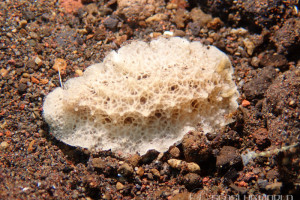
A medium-sized dorid reaching about 1 inch (ca. 2.5 cm) in body length. The body is broadly oval and rather convex. The mantle is firm, raised into reticulated ridges frequently radiating from elevated conical centres, each of which bears a delicate style or filament; the ridges and centres are crowded with minute, pale, spiculose tubercles, the interspaces being comparatively smooth and of a dark brown colour approaching to black. The colour of the elevated ridges and apices of the cones (which do not extend to the margin of the cloak) is yellowish, as are also the sides of the cloak, the latter being rather paler and obscurely blotched with brown; a row of minute dark spots runs along the extreme pallial margin. The under side is minutely reticulated with pale lines, giving it a sponge-like appearance; there are also a few scattered pale brown spots. The dorsal tentacles are clavate, rather slender, pale, with the laminated portion dark; retractile within short sheaths, the margins of which are beset with numerous minute points. The head is small, with short lateral linear processes or oral tentacles. The branchial plumes are five, tripinnate, freckled with blackish brown; the margin of the cavity minutely and irregularly denticulated. The foot is narrow, plain below, spotted with brown above; the anterior lamina rather ample and notched. The radula is as in Doris tuberculata, with no collar. Alder & Hancock noted that this curious species comes very near Doris inci figured in Mrs. Gray's "Figures of Molluscous Animals."Distribution
Type locality: Waltair, near Vizagapatam, Coromandel coast, Madras Presidency, India (now Visakhapatnam, Andhra Pradesh). Based on a single preserved specimen collected by Walter Elliot in 1853–1854. The species has subsequently been recorded from the western Pacific and Indian Ocean.Etymology
The specific epithet apiculata is a Latin adjective derived from apiculus (a small tip or apex), meaning "with a small point", in reference to the delicate style or filament topping each elevated conical centre on the mantle.Remarks
In the original description Alder & Hancock placed the species in Doris. The species was later transferred to Sclerodoris Eliot, 1903 (the parentheses in the author citation reflect this generic transfer). The Japanese name "カクレカザンウミウシ" ("hidden volcano slug") refers to the cluster of conical mounds with apical filaments on the mantle resembling miniature volcanoes.References
- Doris Apiculata n. sp., Alder J. & Hancock A. (1864). Notice of a collection of nudibranchiate Mollusca made in India by Walter Elliot Esq., with descriptions of several new genera and species. Transactions of the Zoological Society of London. 5(3): 113-147.
- Peronodoris apiculata (Alder & Hancock), Allan J.K. (1947). Nudibranchia from the Clarence River Heads, north coast, New South Wales. Records of the Australian Museum, 21(8): 433-463, pls. xli-xliii and map. https://doi.org/10.3853/j.0067-1975.21.1947.561
- Sclerodoris apiculata, Terrence Gosliner, Ángel Valdés and David Behrens. (2015). Nudibranch and Sea Slug Identification Indo-Pacific. New World Pubns Inc.
- カクレカザンウミウシ(新称), 中野理枝. (2018). 日本のウミウシ. 文一総合出版.
Featured in this book
Terrence Gosliner, Ángel Valdés and David Behrens. (2018). Nudibranch and Sea Slug Identification Indo-Pacific 2nd Edition. New World Pubns Inc.
New World Publications
This species, Sclerodoris apiculata, is included in the book.
View on Amazon PR (Amazon Associates)Seasonality
Shooting Locations
Loading shooting locations...
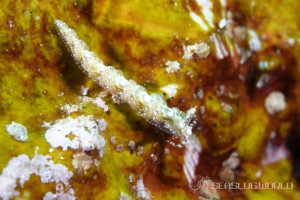
Photos of Sclerodoris apiculata

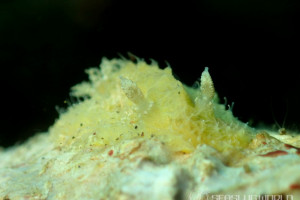

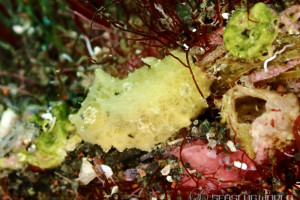

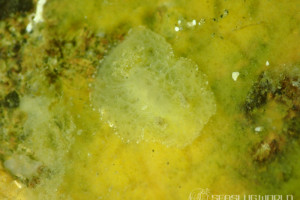

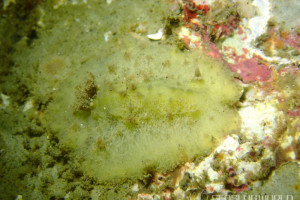
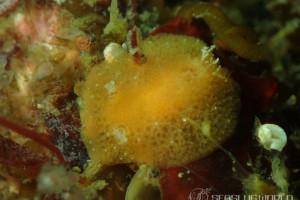

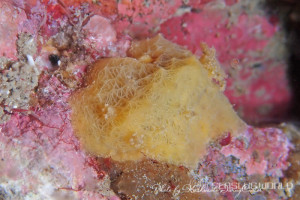

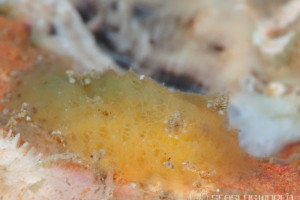

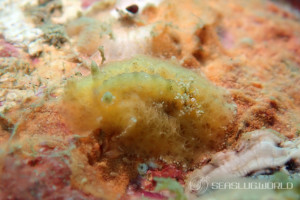

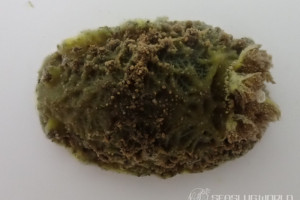

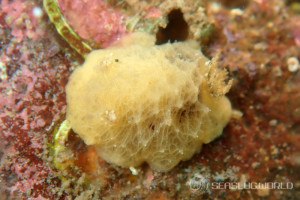
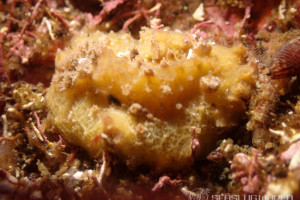

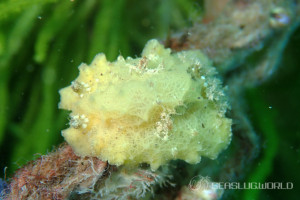

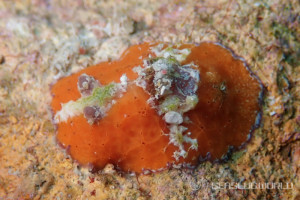
Same Genus Nudibranchs
Similar Colors Nudibranchs

Academic Database
Sea slug observation data is available in international marine biodiversity databases.