Gastropteron chacmol Gosliner, 1989
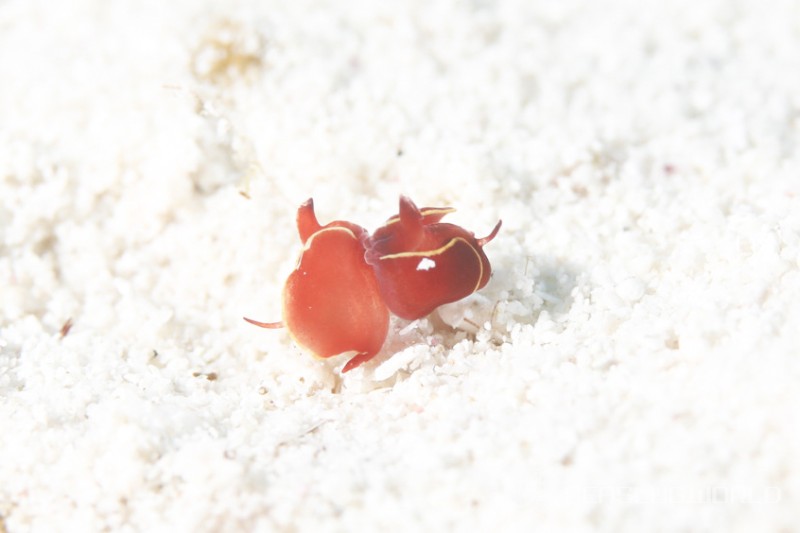
- Location
- Cozumel, Pennsula de Yucatn, Mexico
- Date
- 2025/11/06
- Length
- ??mm
- Depth
- ??m
- Water temperature
- ??℃
Description
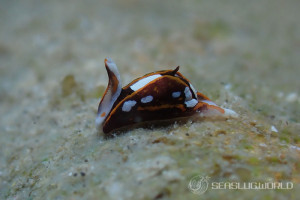
A small gastropteridean cephalaspidean reaching 3–7 mm in length, capable of active and sustained swimming through the water column using its elongate, expanded parapodia. The general body color is deep red to plum, and some specimens have minute yellow spots scattered over the surface. The parapodial margin bears a conspicuous bright yellow band that runs around the body and is the most striking external feature of the species. The head shield is rounded and bilobed anteriorly, with a deeply emarginate medial cleft; it tapers posteriorly into an involuted siphonal margin. An elongate, filiform flagellum projects from the right side of the body between the gill and the posterior end of the visceral hump. The gill, situated on the right side, is large and consists of 7–10 simply plicate leaflets.Distribution
Tropical western Atlantic and Caribbean Sea. The type locality is in front of Hotel La Ceiba, Puerto Morelos, Quintana Roo, Mexico, at 3–8 m depth on the eastern coast of the Yucatán Peninsula. The original description also reported specimens from Key Biscayne (Florida), Grand Cayman Island, and Caracas Islands (Venezuela). Earlier records of "Gastropteron rubrum" from Texas, Florida, the West Indies, and Brazil, based on Caribbean and tropical western Atlantic material previously identified with the Mediterranean G. rubrum, are referable to this species. Subsequent records extend the known distribution to the Bahamas, San Andrés Island (Colombia), and the Brazilian coast.Etymology
The specific epithet chacmol refers to the reclining stone figures present at several Mayan sites on the Yucatán Peninsula, which are believed to have served as altars for ritual offerings. The species was named in reference to these statues because of its geographical proximity to them on the Yucatán Peninsula and because of its blood-red body color.Remarks
One of the six new species described in Gosliner's (1989) revision of the Gastropteridae. The species is collected from coarse sandy bottoms among turtle grass (Thalassia testudinum) and green algae in shallow water. In coloration and external form it resembles the Mediterranean Gastropteron rubrum and the eastern Atlantic Gastropteron vespertilium Gosliner & Armes, 1984, both of which had been confused with Caribbean populations in earlier literature. G. rubrum is paler red with whitish or yellowish marginal lines on the parapodia and siphon, and G. vespertilium is grayish to purplish black; G. chacmol is distinguished by its deeper, richer red ground color and the uniformly bright yellow parapodial band.References
A Kindle field guide by the site author

Kimoto N. (2026). Sea Slugs of Japan & the Indo-Pacific, 2nd Edition.
Kindle Edition
View on Amazon PR (Amazon Associates)Seasonality
Shooting Locations
Loading shooting locations...
Photos of Gastropteron chacmol

Same Genus Nudibranchs

Similar Colors Nudibranchs
Color:
Brown
Academic Database
Sea slug observation data is available in international marine biodiversity databases.