Geitodoris lutea Baba, 1937
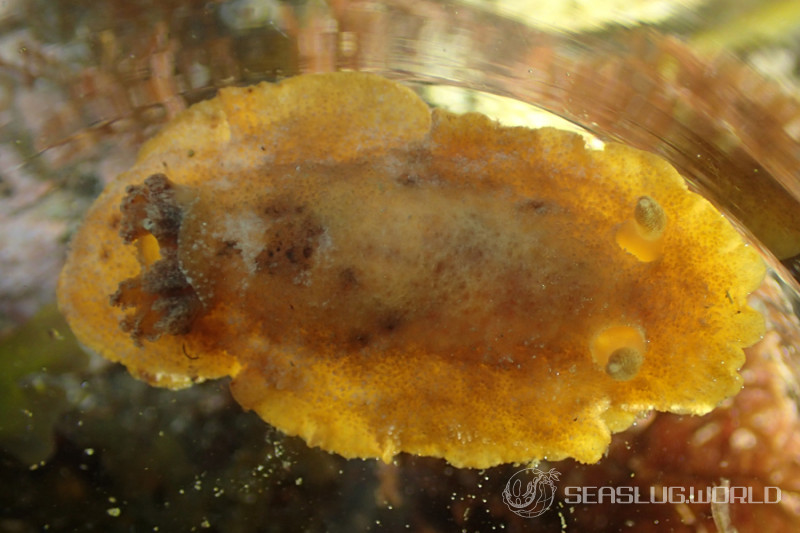
- Location
- Joukesaki Coast, kada, Wakayama, Japan
- Date
- 2018/05/31
- Length
- 40mm
- Depth
- 0.2m
- Water temperature
- 20.0℃
Description
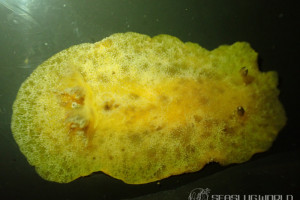
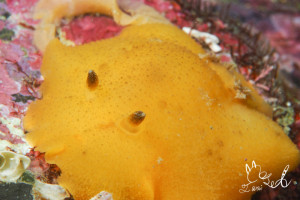
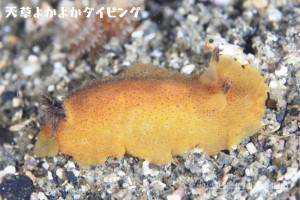
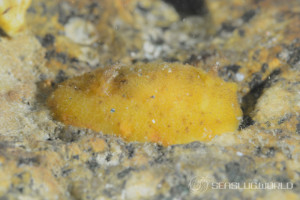
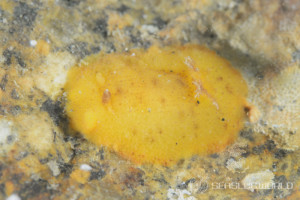
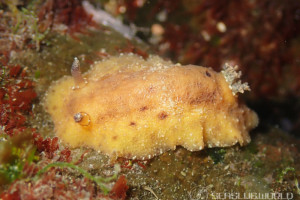
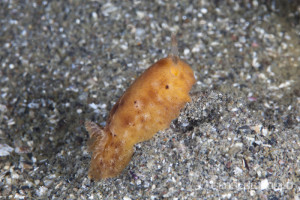
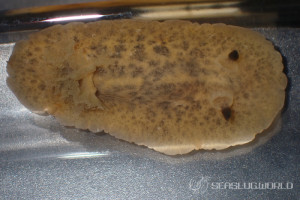
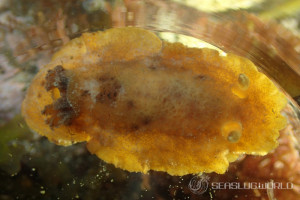
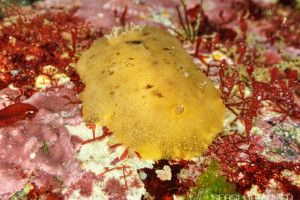
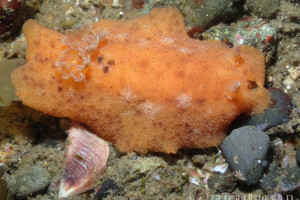
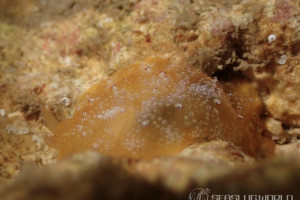
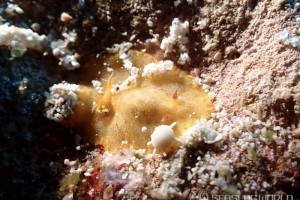
Body length about 32 mm. Doridiform and somewhat flattened, with the mantle projecting beyond the foot all around. The back is closely covered with tiny granules; all granule tips and the rhinophore clavi are dark brown. The rhinophore sheath has a granulated margin. Six branchial plumes form a circle around the anal papilla (three on each side, the last pair bifurcated), and can be withdrawn into a cavity with a granulated margin. The oral tentacles are digitate. The foot is elongate-oval, the bilabiate front end is rounded off and the hinder end comes to a blunt point. General colour of the back yellow with a darker shade towards the centre; underside also yellow.Distribution
Type locality: near Tomioka, Amakusa (Kumamoto Pref., Japan).Etymology
The specific epithet lutea is the Latin adjective for "yellow", in reference to the yellow body ground colour.Remarks
All original specimens were collected on a yellow sponge. Allied to Geitodoris capensis in colour and general form, but distinguished by the closely-set granules on the dorsum.References
A Kindle field guide by the site author
Kimoto N. (2026). Sea Slugs of Japan & the Indo-Pacific, 2nd Edition.
Kindle Edition
View on Amazon PR (Amazon Associates)Seasonality
Shooting Locations
Loading shooting locations...
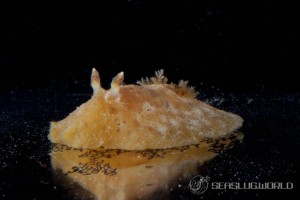
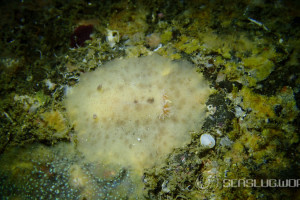
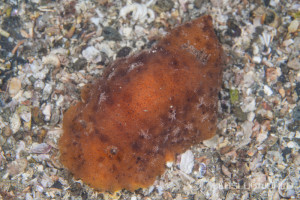
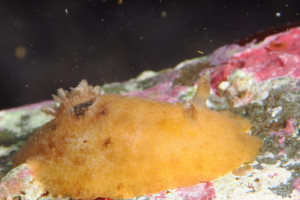
Photos of Geitodoris lutea









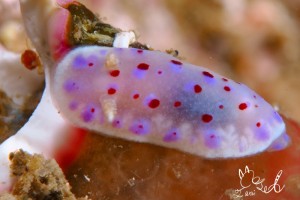
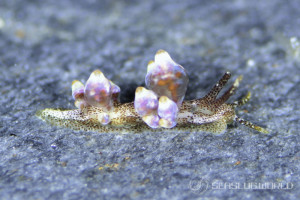
Same Genus Nudibranchs
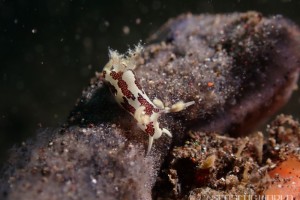
Similar Colors Nudibranchs

Academic Database
Sea slug observation data is available in international marine biodiversity databases.