Janolus incrustans Pola & Gosliner, 2019
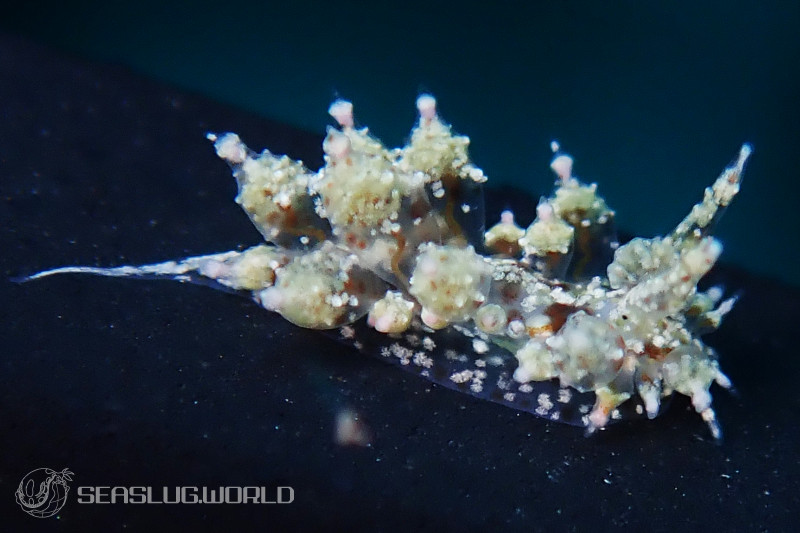
- Location
- Gerombong, Tulamben, Pulau Bali, Indonesia
- Date
- 2017/11/09
- Length
- 7mm
- Depth
- 20.0m
- Water temperature
- 28.0℃
Description
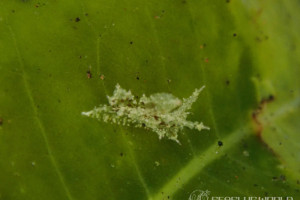
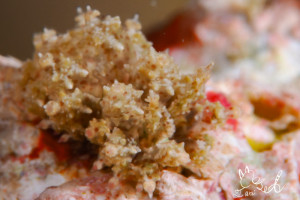
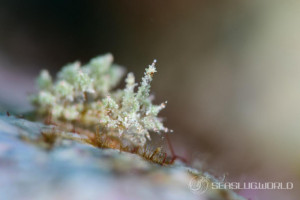
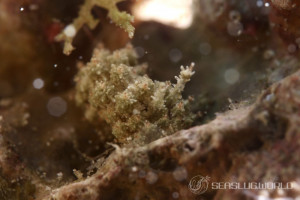
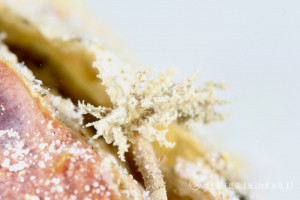
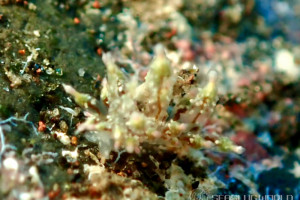
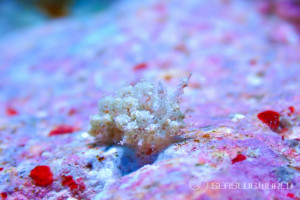
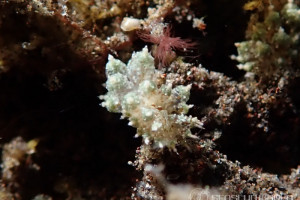
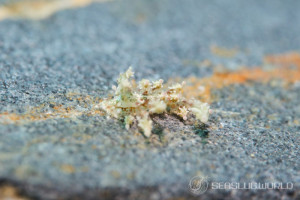
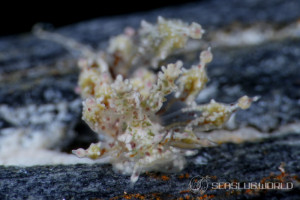
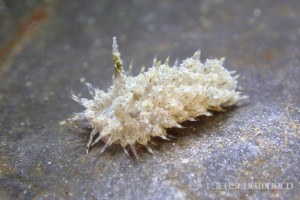
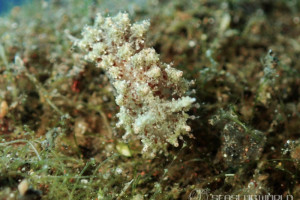
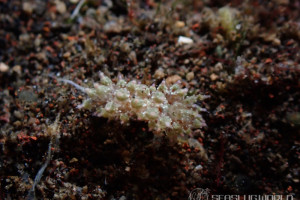
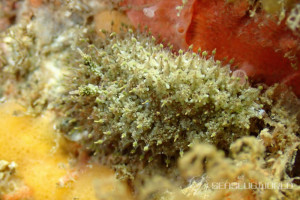
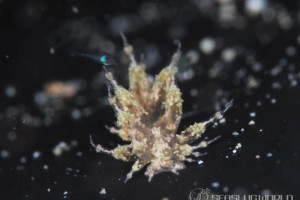
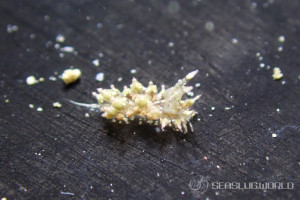
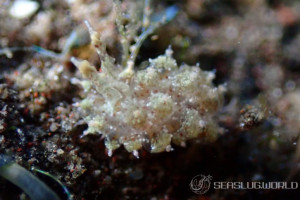
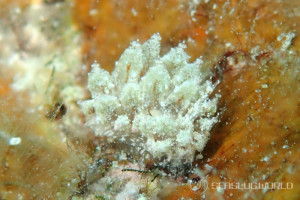
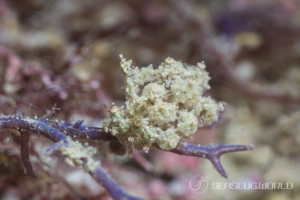
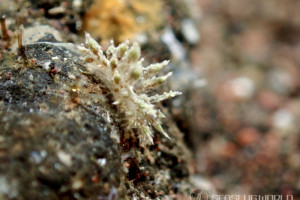
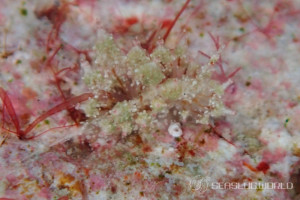
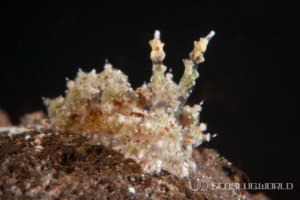
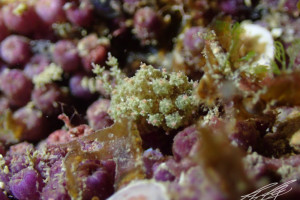
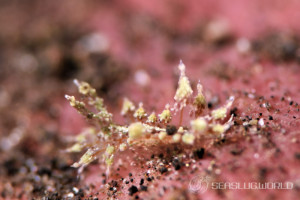
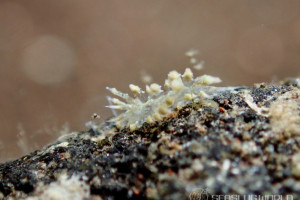
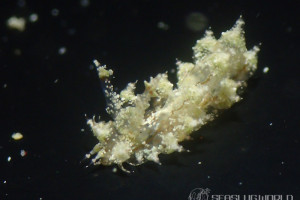
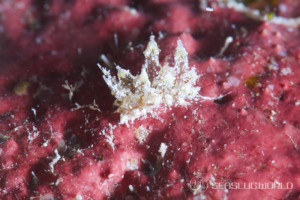
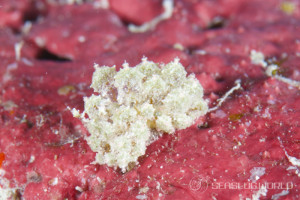
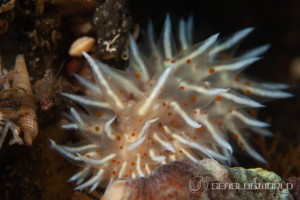
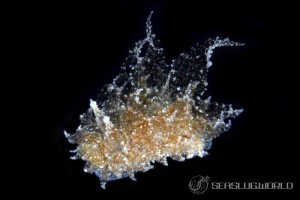
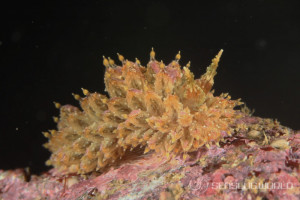
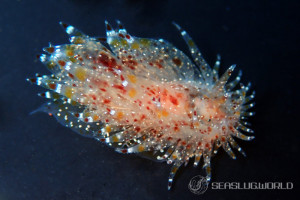
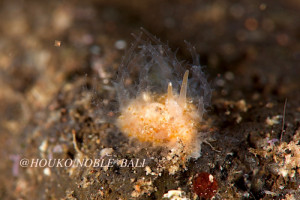
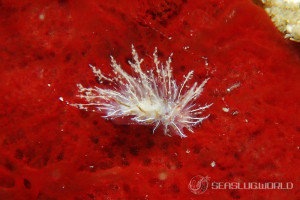
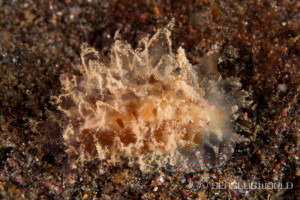
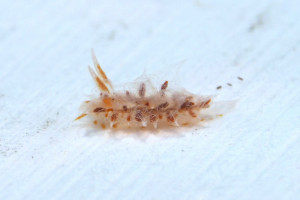
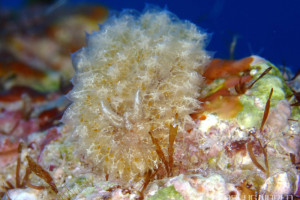
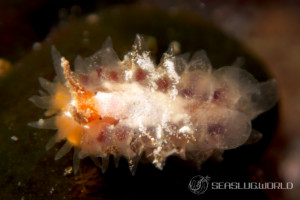
Living specimens reach 18 mm in length. The body is broadest anteriorly and tapers to an elongate posterior extension of the foot well beyond the notum. Rhinophores are elongate without distinct lamellae, covered by series of irregular tubercles over most of their length. A well-developed caruncle is present between the rhinophores, consisting of a series of irregular papillae. The eyes appear as two small black dots immediately behind the rhinophores. A swollen cardiac area is located near the middle of the notum, immediately posterior to the rhinophores. A pair of short, digitiform oral tentacles extends from either side of the head.Cerata are elongate, very globose apically, and densely covered with numerous white papillae; each ceras bears a pointed tubercle apically. Cerata are distributed over the entire body in 11–13 rows, with 2–3 cerata per row. The digestive gland inserts into most of the cerata at the base; the digestive duct is very narrow and elongate, extending to the tip of each ceras and bifurcating in the upper half of the ceras. The anteriormost cerata also contain extensions of the digestive gland. The anus opens mid-dorsally near the posterior end of the notum; anal glands are absent. The gonopore is on the right side at the middle of the body.
Background coloration is translucent white. The entire body is covered with opaque white markings, especially prominent on the middle part of the head and notum. The caruncle is opaque white. Opaque white pigment is also present on the posterior rachis of the rhinophores and on many of the ceratal tubercles. Branches of the digestive gland inside the cerata are orange to brown. The rhinophores are almost the same color as the cerata, and the posterior end of the foot is opaque white.
The buccal mass is large and muscular with an oval opening, with a pair of large, highly dendritic salivary glands extending anteriorly from the stomach. Paired jaws are large, strong, and thick with an entirely smooth masticatory border. The radula is broad and well developed, with a formula of 17 × 20.1.20 in one specimen (CASIZ 182193). Rachidian teeth are narrow, elongate, and lack denticles; the inner lateral teeth on each side of the rachidian are evenly curved and lack denticles. Middle lateral teeth have a broad base with curved apex and likewise lack denticles. Hook-shaped outer lateral teeth have a long base but a shorter cusp than the middle laterals; outer laterals are smooth and sharply arched and lack denticles. The reproductive system is androdiaulic, with an elongate, narrow ampulla bearing few curves; the ampulla narrows into the bifurcation of the vas deferens and oviduct. The oviduct is short and connects to a small, rounded receptaculum seminis, and continues to enter the female gland mass near the albumen gland. The vas deferens is short, with a single loop, and prostatic throughout its length, terminating at a thick, wide, unarmed penial sac. A distinct bursa copulatrix enters the female atrium near the junction with the vagina, with the bursa curved near its distal end.
Distribution
Marshall Islands and Indonesia.Etymology
The specific epithet incrustans is Latin for "encrusting", referring to the opaque white pigment that appears to encrust the body.Remarks
Originally described as Janolus incrustans Pola & Gosliner, 2019 from Bigej-Meck Reef, Kwajalein Atoll, Marshall Islands (Pola, Hallas & Gosliner, 2019). Before formal description the species was figured as Janolus sp. 11 (Gosliner et al., 2015). It has been collected under coral rubble and in Halimeda beds at 2–10 m depth, and a specific prey association has not yet been documented.Externally, the species is clearly different from any other described Janolus: the cerata and rhinophores are intensely papillate and opaque white pigment covers the body. Its long rhinophores at first suggest a similarity to Janolus mirabilis Baba & Abe, 1970, but J. incrustans lacks the distinct gap between anterior and posterior clusters of cerata seen in J. mirabilis. Reproductive anatomy also differs from related species: the ampulla and vas deferens are clearly shorter and less convoluted than in J. flavoanulatus, J. tricellariodes and J. savinkini, and J. incrustans is the only species with the bursa copulatrix curved near its distal end and a rounded rather than elongate receptaculum seminis.
Pola et al. 2019 reinstated Janolidae Pruvot-Fol, 1933 as a valid family separate from Proctonotidae. Within Janolidae, J. incrustans belongs to the Indo-Pacific clade characterised by tuberculate or papillate cerata and denticulate radular teeth, sister to the Atlantic and eastern Pacific clade for which Antiopella Hoyle, 1902 was resurrected. Phylogenetic analyses place J. incrustans as sister to a clade containing J. flavoanulatus, J. tricellariodes and J. savinkini, although COI sequences could not be amplified for this species so quantitative pairwise distances are unavailable.
References
- ハナサキコヤナギウミウシ(新称), 小野篤司. (2004). 沖縄のウミウシ. ラトルズ.
- Janolus sp. 11, Terrence Gosliner, Ángel Valdés and David Behrens. (2015). Nudibranch and Sea Slug Identification Indo-Pacific. New World Pubns Inc.
- Janolus sp. 12, Terrence Gosliner, Ángel Valdés and David Behrens. (2018). Nudibranch and Sea Slug Identification Indo-Pacific 2nd Edition. New World Pubns Inc.
- Janolus incrustans sp. nov., Pola M., Hallas J.M. & Gosliner T.M. (2019). Welcome back Janolidae and Antiopella : Improving the understanding of Janolidae and Madrellidae (Cladobranchia, Heterobranchia) with description of four new species. Journal of Zoological Systematics and Evolutionary Research. 57(2): 345-368. https://doi.org/10.1111/jzs.12257
Featured in this book
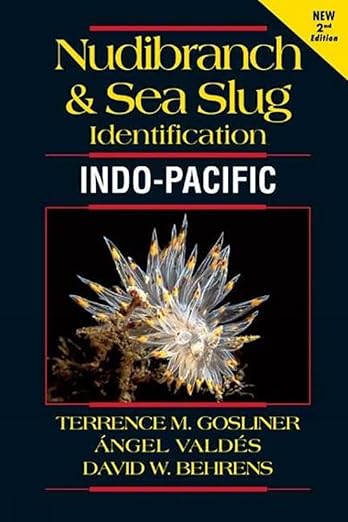
Terrence Gosliner, Ángel Valdés and David Behrens. (2018). Nudibranch and Sea Slug Identification Indo-Pacific 2nd Edition. New World Pubns Inc.
New World Publications
This species, Janolus incrustans, is included in the book.
View on Amazon PR (Amazon Associates)Seasonality
Shooting Locations
Loading shooting locations...
Photos of Janolus incrustans





















Same Genus Nudibranchs
Academic Database
Sea slug observation data is available in international marine biodiversity databases.