Peltodoris atromaculata Bergh, 1880
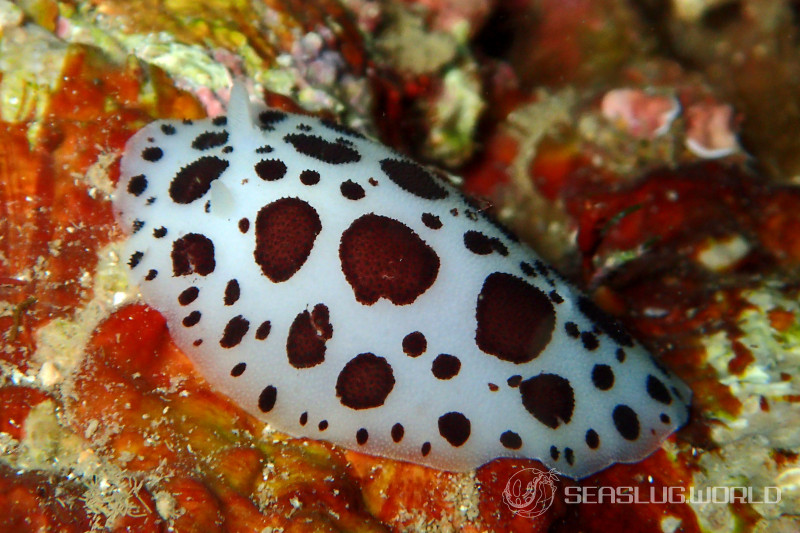
- Location
- L'Estartit, Costa Brava, Spain
- Date
- 2017/08/28
- Length
- 40mm
- Depth
- 10.0m
- Water temperature
- 20.0℃
Description
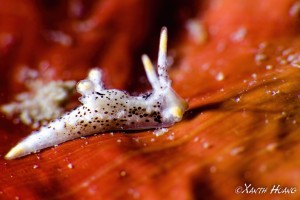
A medium- to large-sized dorid 4-7 cm in body length, oval and somewhat depressed, with a leathery, firm body. Ground colour is milky white, with the dorsum, mantle margin and upper foot scattered with large rounded to angular black to dark-brown spots. The "leopard-spotted" pattern, with black spots so large that they nearly displace the white ground colour, is the most conspicuous diagnostic feature. The rhinophores are white to pale yellow-white with about 22 lamellae. Six tripinnate gill plumes form the branchial circle; the gill leaves are white but with the inner surface of each rachis blackened. The animal can autotomise pieces of the mantle margin when disturbed.Distribution
Widespread and common throughout the Mediterranean Sea. Type locality: Bay of Naples. The species inhabits shaded rocky environments, caves, and overhangs.Etymology
The specific epithet atromaculata combines Latin ater ("black") and maculatus ("spotted"), meaning "with black spots", in reference to the large black spots on the milky-white dorsum.Remarks
The type species of the genus Peltodoris Bergh, 1880; the genus name combines Greek peltē ("shield") with Doris, alluding to the shield-like, leathery body. Peltodoris atromaculata is sponge-feeding and is best known as a specialist predator of the Mediterranean brown encrusting sponge Petrosia ficiformis. Bergh based the original description on a living specimen provided to him by Dr. Anton Dohrn, director of the Stazione Zoologica di Napoli, during a visit to the station in May 1880. The species is one of the most familiar and easily recognised dorid nudibranchs encountered by divers in the Mediterranean.References
- Peltodoris atromaculata Bgh., n. sp., Bergh R. (1880). Über die Gattung Peltodoris. Mittheilungen aus der Zoologischen Station zu Neapel. 2: 222-232, Taf. XI.
A Kindle field guide by the site author
Kimoto N. (2026). Sea Slugs of Japan & the Indo-Pacific, 2nd Edition.
Kindle Edition
View on Amazon PR (Amazon Associates)Seasonality
Shooting Locations
Loading shooting locations...
Photos of Peltodoris atromaculata

Same Genus Nudibranchs
Similar Colors Nudibranchs

Academic Database
Sea slug observation data is available in international marine biodiversity databases.