Phyllaplysia viridis (Bergh, 1905)
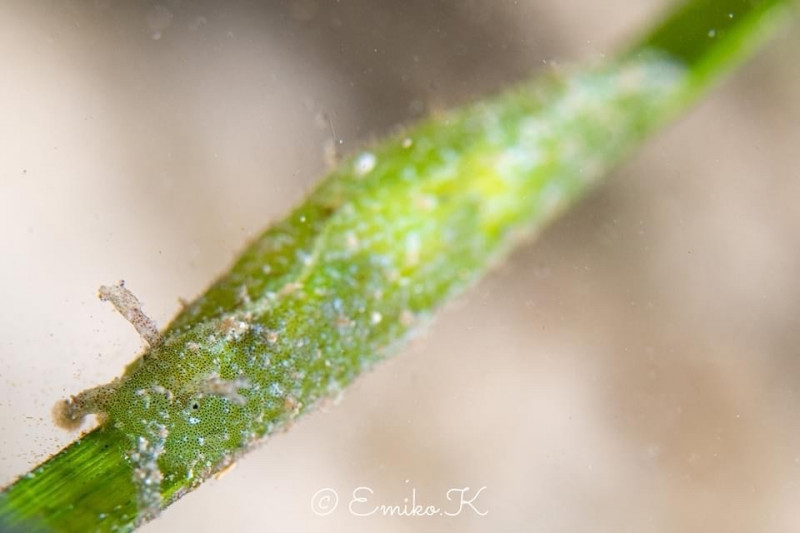
- Location
- Chowder Bay, New South Wales, Australia
- Date
- 2020/06/17
- Length
- 20mm
- Depth
- 5.0m
- Water temperature
- 18.0℃
Description
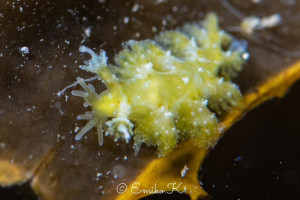
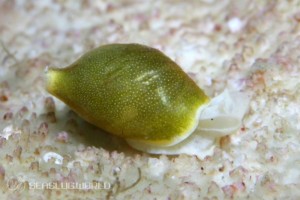
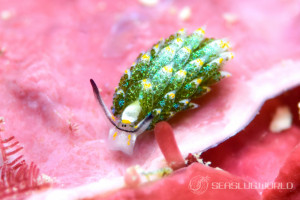
A small leaf-like sea hare, 30 mm long in life, with a maximum width of about 7 mm and a strongly flattened body. The living dorsum is bright green, densely covered with clearly bordered small nodules. A pale yellow longitudinal furrow (the genital groove) runs submedially along the anterior dorsum; the mantle plate is whitish, and the rhinophores are yellow. The rhinophores are twice as tall as the oral tentacles. Two fine dendritic processes about 2 mm tall stand on each side near the upper edge of the parapodial flap, with several more along the posterior mid-dorsum. The gill consists of about ten leaves. The foot is fairly broad, only slightly set off from the dorsal margin and rounded anteriorly.Distribution
Type locality: anchorage east of Sailus Besar Island, Paternoster Islands, Indonesia. The species is now reported across the Indo-West Pacific. Phyllaplysia species are small, leaf-like sea hares typically found cryptically on seaweeds or seagrass blades; this species is presumed to share that ecology.Etymology
The specific epithet viridis is Latin for "green", in reference to the bright green live coloration of the dorsum.Remarks
Originally described in Aplysiella, which was later subsumed as a synonym of Phyllaplysia (the parentheses in the author citation reflect this generic transfer).References
- Aplysiella viridis Bgh. n. sp., Bergh R. (1905). Die Opisthobranchiata der Siboga-expedition. https://doi.org/10.5962/bhl.title.11223
- Phyllaplysia viridis, Nimbs M.J., Wilson N.G., Limmon G.V. & Smith S.D.A. (2020). Redescription of the Sea Hare Phyllaplysia viridis (Bergh, 1905) (Gastropoda: Heterobranchia: Aplysiida). Malacologia. 63(1): 11. https://doi.org/10.4002/040.063.0102
A Kindle field guide by the site author

Kimoto N. (2026). Sea Slugs of Japan & the Indo-Pacific, 2nd Edition.
Kindle Edition
View on Amazon PR (Amazon Associates)Seasonality
Shooting Locations
Loading shooting locations...
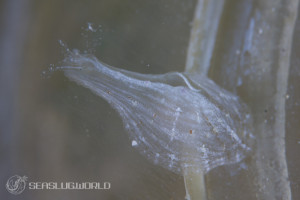
Photos of Phyllaplysia viridis

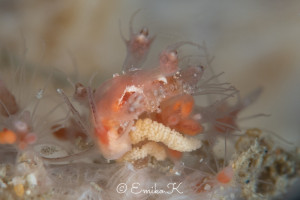
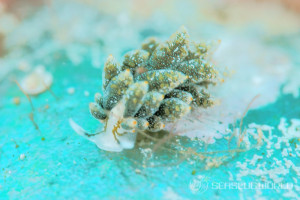
Same Genus Nudibranchs
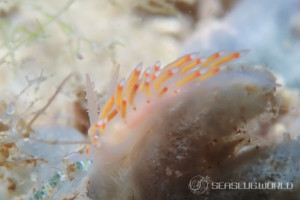
Similar Colors Nudibranchs

Academic Database
Sea slug observation data is available in international marine biodiversity databases.