Protaeolidiella atra Baba, 1955
Description
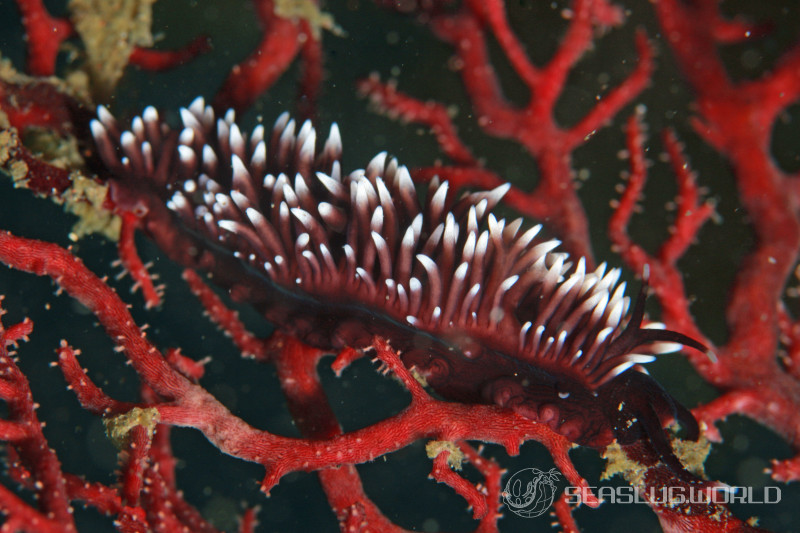
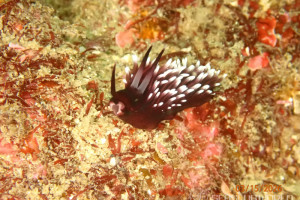
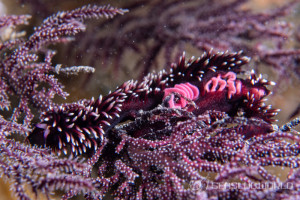
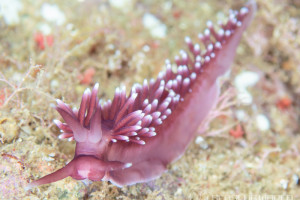
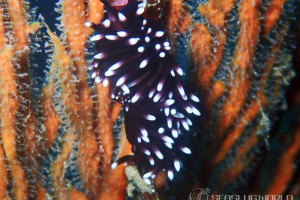
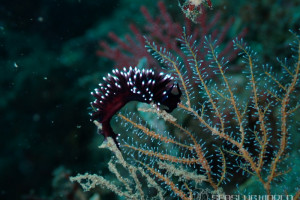
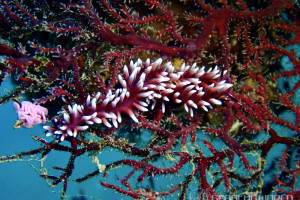
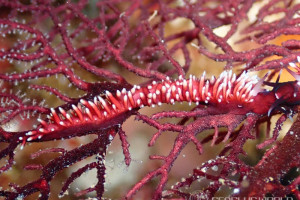
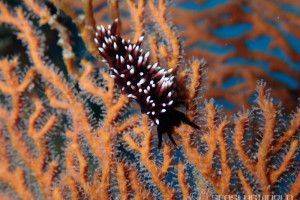
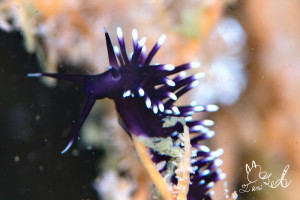
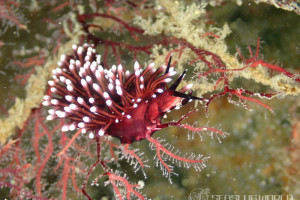
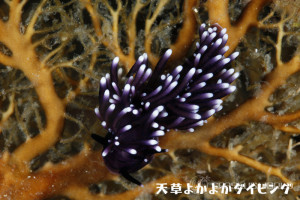
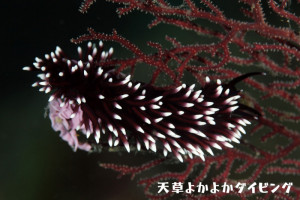
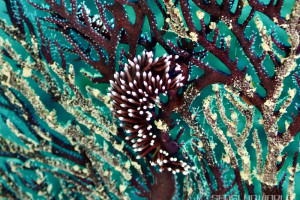
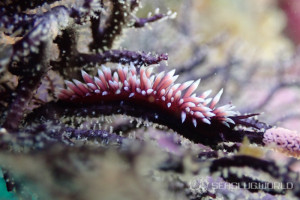
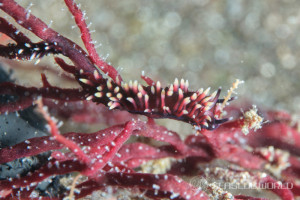
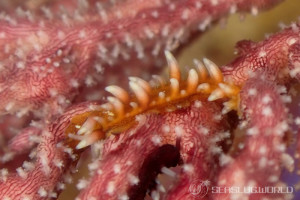
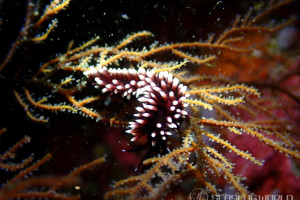
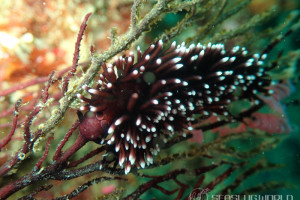
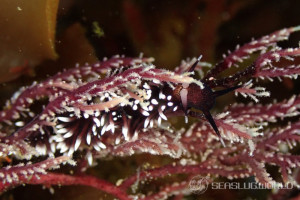
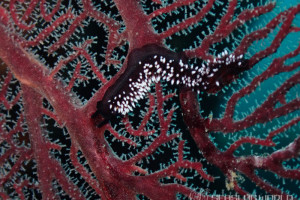
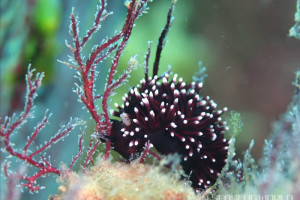
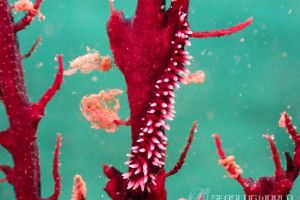
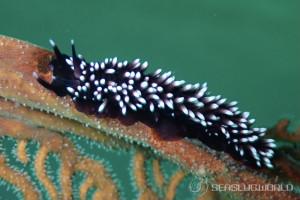
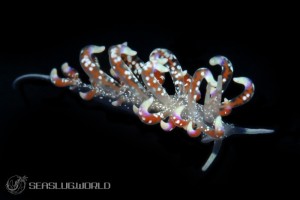
A relatively large Aeolidacea, total length up to 35 mm. Type species of the new genus Protaeolidiella Baba, 1955. Genus diagnosis: Rhinophores simple. Foot broad with rounded anterior corners. The dorsal margin is not sharply demarcated from the body sides, and the cerata are densely and irregularly arranged along the dorsal margin (not easily detached). Anus posteriorly displaced. Masticatory edge of the jaw plate smooth. The central radular tooth is arch-shaped with a median notch, flanked on each side by many comb-like denticles — most closely related to Aeolidiella. Species characters: Body uniformly deep black (sole white), cerata also black with a single white ring near the apex. Cerata long fusiform, not flattened, and not easily detached. Genital orifice on the right anterior; anus opens directly below the dorsal margin on the right where the cerata arise. Masticatory edge of the jaw plate smooth. Radula formula 32-35×0.1.0. The central tooth is broadly arch-shaped, with up to 140 comb-like denticles in a row along the anterior edge.Distribution
Type locality is Kasashima, Sagami Bay (14-16 m depth, July 1953, 3 specimens) and Hayama-Samejima, Sagami Bay (12-14 m depth, July 1953, 1 specimen). The original description (Baba, 1955) records the species only from Sagami Bay.Etymology
The specific epithet atra is Latin for black. The original description does not give an explicit etymology paragraph; the descriptive sense reflects the deep-black body colour. The Japanese name "Sumi-zome-mino-umiushi" (ink-dyed aeolid) likewise refers to the colour.Remarks
Originally described as a new genus and species, Protaeolidiella atra Baba, 1955. Most closely related to Aeolidiella, but distinguished by (1) the densely and irregularly arranged cerata, (2) the cerata being not easily detached, and (3) the posteriorly displaced anus. Rudman 1990 examined possible conspecificity with Pleurolidia juliae (Burn, 1966).References
- スミゾメミノウミウシ(新稱), 生物學御研究所編. (1955). 相模湾産後鰓類図譜〈補遺〉. 岩波書店.
- スミゾメミノウミウシ, 小野篤司. (1999). ウミウシガイドブック. TBSブリタニカ.
- スミゾメミノウミウシ, 鈴木敬宇. (2000). ウミウシガイドブック〈2〉. TBSブリタニカ.
- 高岡生物研究会. (2002). 日本海のウミウシ. 第2版.
- スミゾメミノウミウシ, 小野篤司. (2004). 沖縄のウミウシ. ラトルズ.
- スミゾメミノウミウシ, 中野理枝. (2004). 本州のウミウシ. ラトルズ.
- スミゾメミノウミウシ, 小野篤司 & 加藤昌一. (2009). ウミウシ. 誠文堂新光社.
A Kindle field guide by the site author

Kimoto N. (2026). Sea Slugs of Japan & the Indo-Pacific, 2nd Edition.
Kindle Edition
View on Amazon PR (Amazon Associates)Seasonality
Shooting Locations
Loading shooting locations...
Photos of Protaeolidiella atra
Tag:



















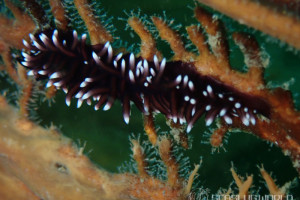

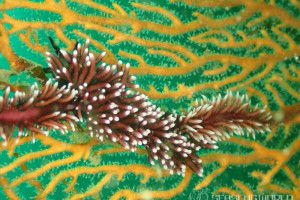

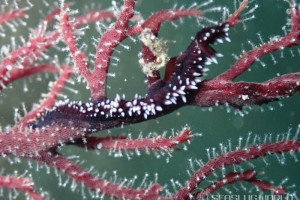
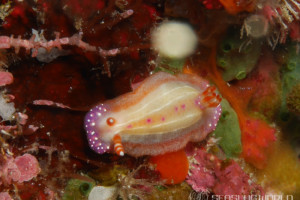
Similar Colors Nudibranchs
Academic Database
Sea slug observation data is available in international marine biodiversity databases.