Pleurolidia juliae Burn, 1966
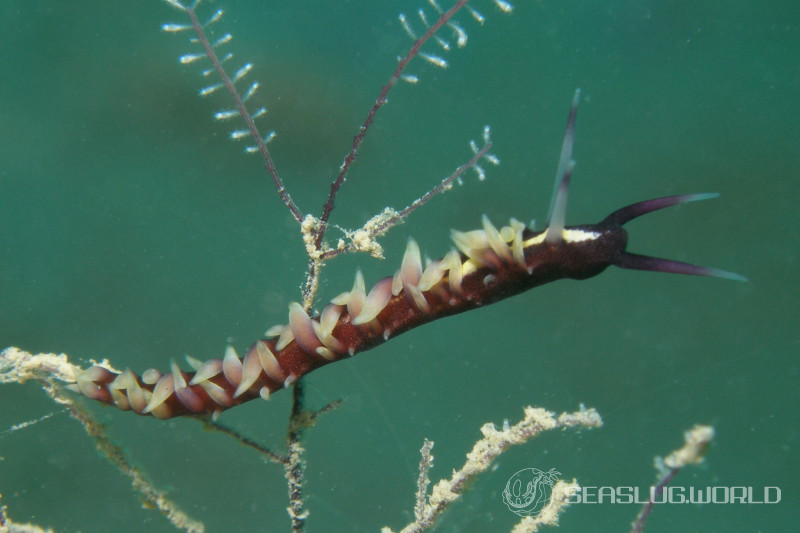
- Location
- Red Beach, Okinawa Island (East coast), Okinawa, Japan
- Date
- 2006/02/28
- Length
- 15mm
- Depth
- 10.0m
- Water temperature
- 20.0℃
Description
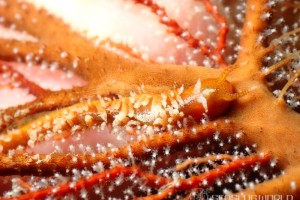
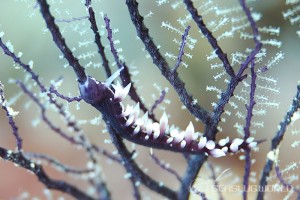
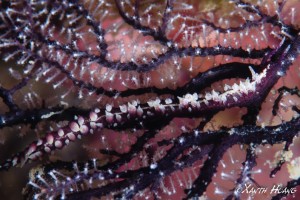
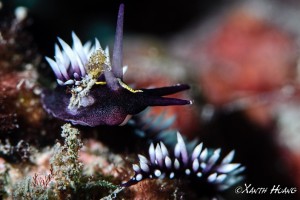
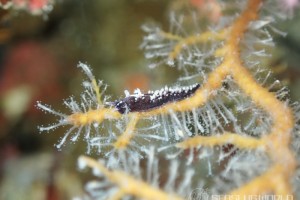
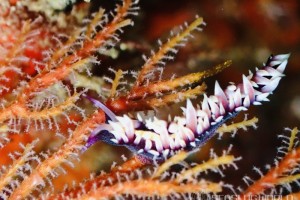
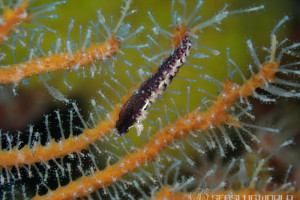
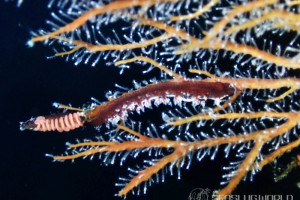
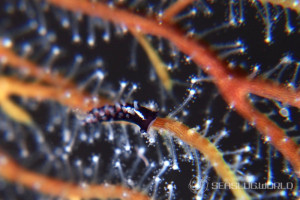
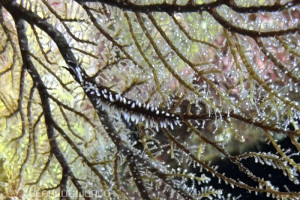
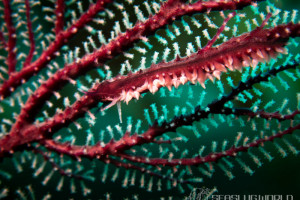
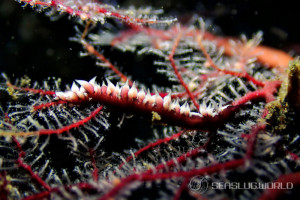
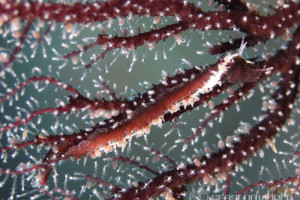
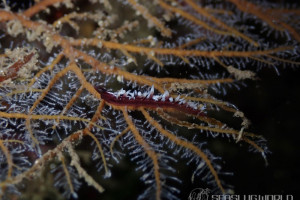
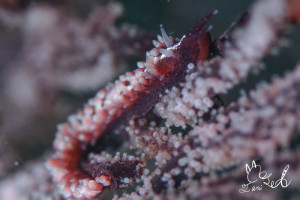
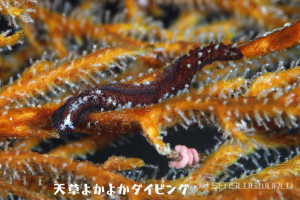
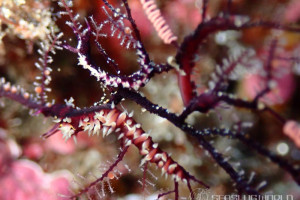
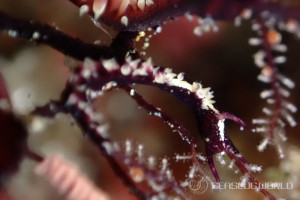
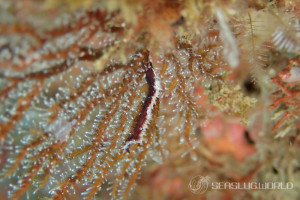
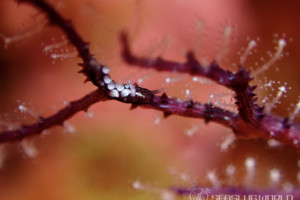
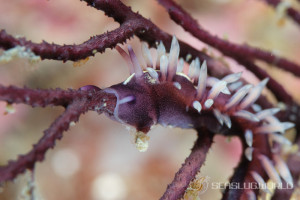
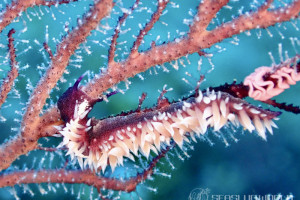
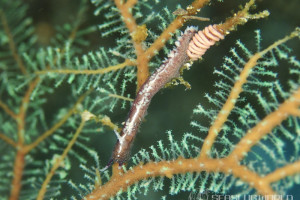
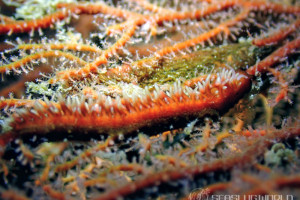
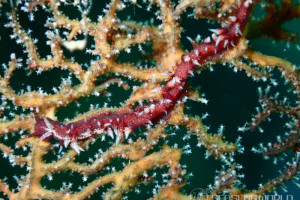
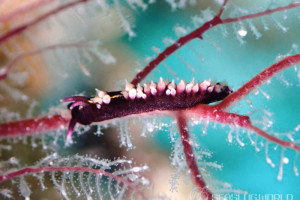
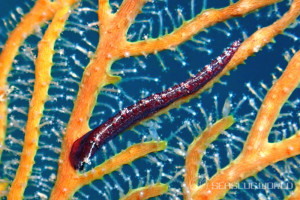
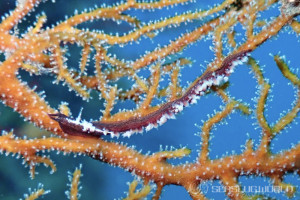
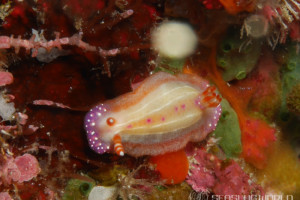
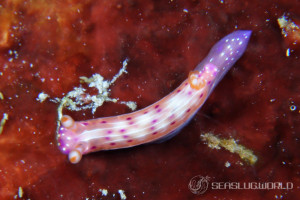
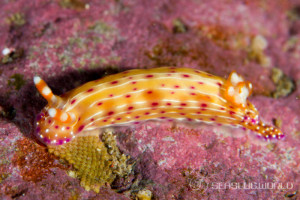
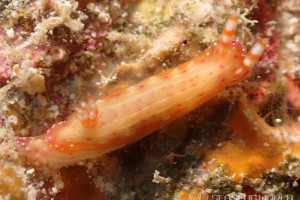
A narrow, elongate aeolid reaching about 30 mm. Ground colour blackish-brown, the dorsum scattered with fine yellowish-white to white dots and bearing a yellowish-white to white longitudinal midline stripe. The cerata are short, with bases matching the body ground colour and apices grading to yellowish-white or white. Rhinophores smooth, translucent white. Oral tentacles also smooth, with bases of body-colour and translucent white tips. Distinguished from the otherwise similar Phestilla lugubris (スミゾメミノウミウシ) by the presence of the white dorsal midline stripe.Distribution
Indian Ocean and western Pacific. Records include Madagascar, Australia, Papua New Guinea, Indonesia, the Philippines, Palau and Japan. The type locality is Lord Howe Island, off New South Wales (Tasman Sea).Etymology
The specific epithet juliae is a Latin feminine genitive form, honouring a person named Julia or Julie; the original paper does not state explicitly to whom the species is dedicated.Remarks
Originally described in "Descriptions of Australian Eolidacea (Mollusca: Opisthobranchia). 4. The genera Pleurolidia, Fiona, Learchis and Cerberilla from Lord Howe Island" (Journal of the Malacological Society of Australia 1(10): 21-34, 1966). The genus Pleurolidia Burn, 1966 and the family Pleurolidiidae Burn, 1966 were erected in the same paper for this species, which was later treated within Aeolidiidae in a 1990 revision and most recently within Aeolidiidae sensu lato by Carmona et al. 2013.References
A Kindle field guide by the site author
Kimoto N. (2026). Sea Slugs of Japan & the Indo-Pacific, 2nd Edition.
Kindle Edition
View on Amazon PR (Amazon Associates)Seasonality
Shooting Locations
Loading shooting locations...
Photos of Pleurolidia juliae
Tag:























Similar Colors Nudibranchs
Academic Database
Sea slug observation data is available in international marine biodiversity databases.