Thecacera pacifica (Bergh, 1884)
- Location
- Nakanosimachaneru, Miyakojima, Okinawa, Japan
- Date
- 2018/04/26
- Length
- 12mm
- Depth
- 10.0m
- Water temperature
- 24.0℃
Description
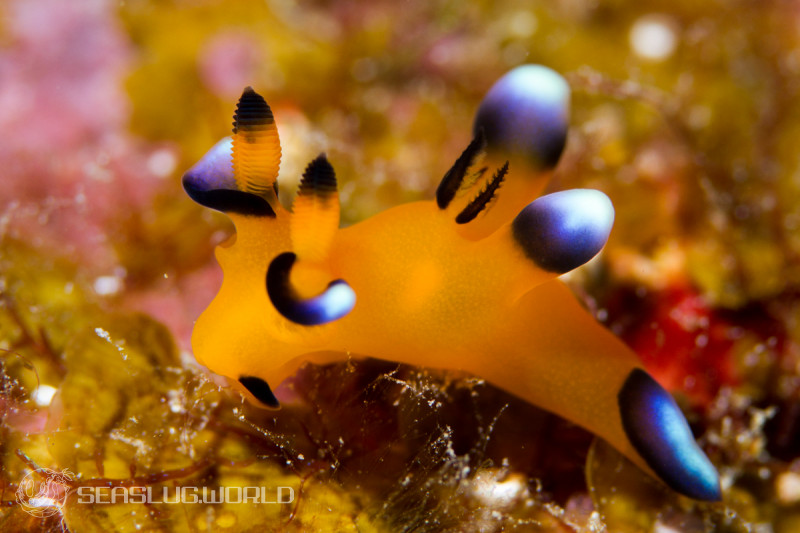
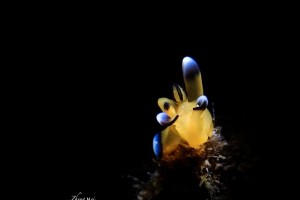
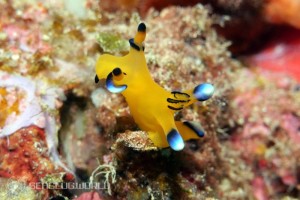
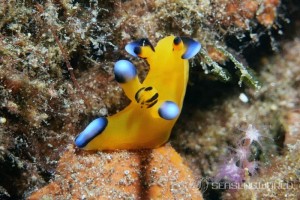
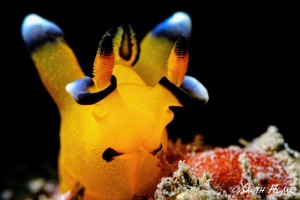
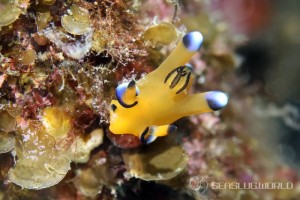
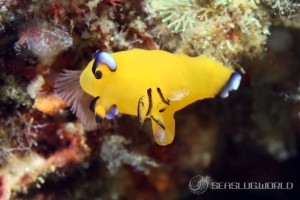
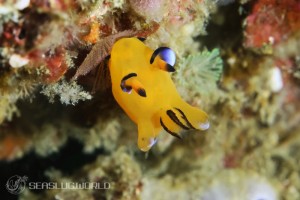
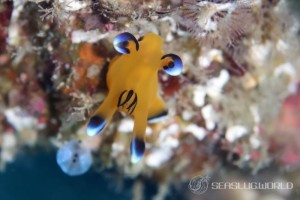
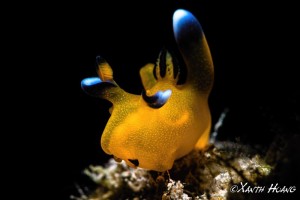
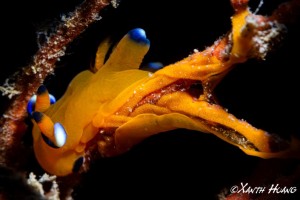
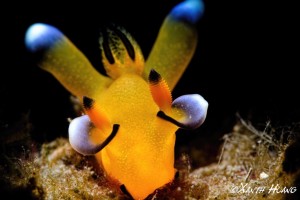
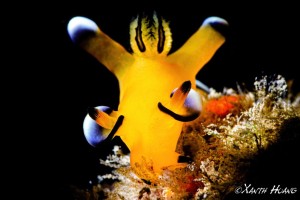
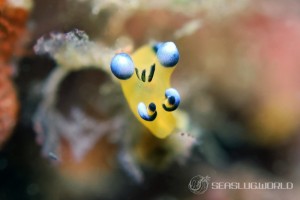
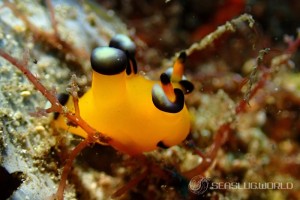
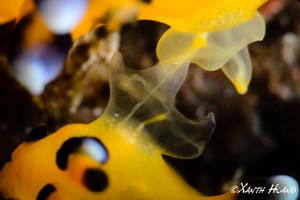
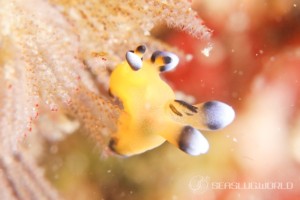
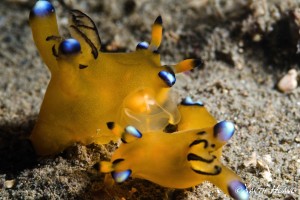
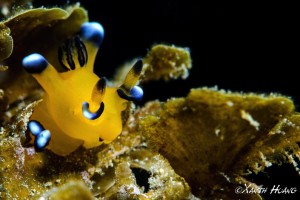
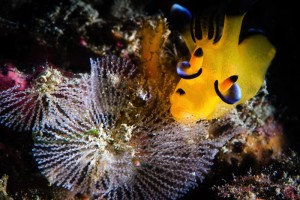
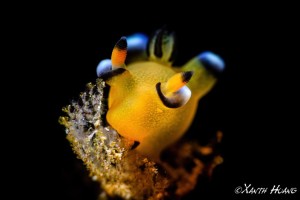
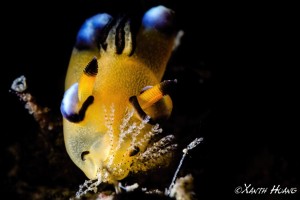
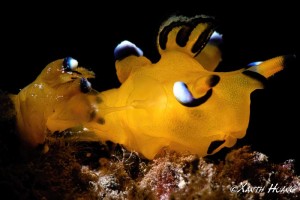
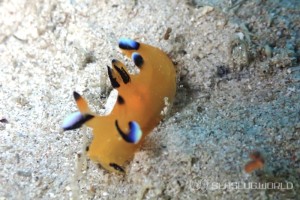
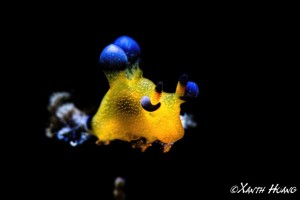
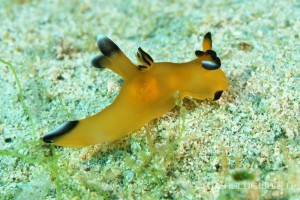
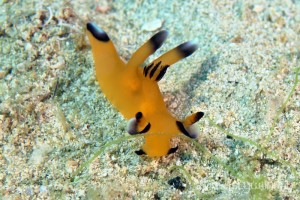
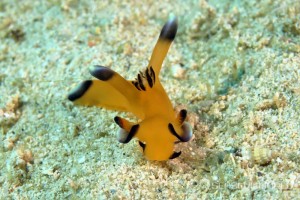
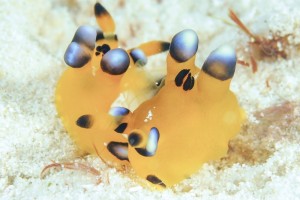
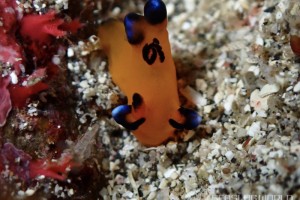
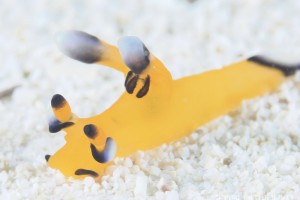
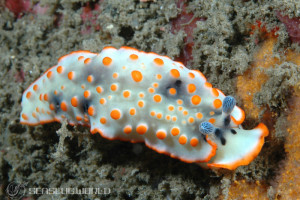
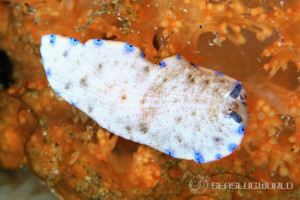
Body color is yellow to deep orange-yellow, with a translucent orange surface. A pair of large finger-like cerata flanks the gills, with the cerata and tail tip showing a gradient from black to sky blue. The rhinophore sheaths fade from black at the front to sky blue posteriorly, while the rhinophore tips and the outer axis of the gills are black. Reaches up to 50 mm in body length.Pikachu Nudibranch
"Pikachu nudibranch" is the widely-circulated English nickname for the yellow, black-tipped Thecacera complex, named after the Pokémon character. In Japan, divers have long called T. pacifica the "Pikachu sea slug" (ピカチュウウミウシ). Outside Japan, however, the species that overseas divers usually photograph and label "Pikachu" is the closely related Thecacera pikachu (formally named after the same character) — a different species described from East Timor. The two are separable on rhinophore-sheath colour pattern. T. pacifica is common in Japanese waters but rare elsewhere in the Indo-Pacific.Distribution
Type locality is the Arafura Sea. Commonly encountered along the temperate-to-subtropical coasts of Japan. The species has also been reported from elsewhere in the Indo-West Pacific, but it is uncommon outside Japan, and many of those older records likely include the morphologically similar T. pikachu. Records from the Gulf of Mexico and the Caribbean (Western Atlantic) are similarly under reassessment as possible distinct species.Etymology
The specific epithet pacifica is the Latin adjective for "of the Pacific Ocean," referring to the species' Pacific origin (including the Arafura Sea type locality).Remarks
Thecacera inhacae is recognized as a junior synonym.The yellow body and black-tipped projections evoke the Pokémon character Pikachu, and Japanese divers have long known this species by the affectionate nickname Pikachu-umiushi. The formal Japanese vernacular Ude-furi-tsuno-zaya-umiushi refers instead to the way the cerata wave like arms (ude-furi) and to the shape of the horn-sheaths (tsuno-zaya) on the rhinophores.
Thecacera pikachu (type locality East Timor) was recently described as a new species; it had already been known in Japan under the vernacular name Kanna-tsuno-zaya-umiushi as an undescribed taxon. The animal that divers outside Japan have been calling "Pikachu" is this T. pikachu, a different species from T. pacifica (= Ude-furi-tsuno-zaya-umiushi) that Japanese divers nickname "Pikachu" domestically. T. pacifica is common in Japan but uncommon elsewhere, so the animals that overseas divers photograph and call "Pikachu" are almost always T. pikachu rather than this species.
References
- Ohola pacifica n. sp., Bergh L.S.R. (1884). Report on the Nudibranchiata collected by H.M.S. Challenger during the years 1873-1876. Report on the Scientific Results of the Voyage of H.M.S. Challenger during the years 1873-76, Zoology. 10(part 26): 1-154, pls 1-14.
- ウデフリツノザヤウミウシ(新称), 益田一ほか. (1996). 海岸動物 (フィールド図鑑). 補訂版第2版. 東海大学出版会.
- Thecacera pacifica (Bergh, 1883), Terrence Gosliner, Ángel Valdés and David Behrens. (2015). Nudibranch and Sea Slug Identification Indo-Pacific. New World Pubns Inc.
- Thecacera pacifica (Bergh, 1884), Pola, M., Paz-Sedano, S., Guisado Martín, P., Warren, L., Noble, K. & Martín-Hervás, M.R. (2026). The most wanted! Gorgeous, delicate and surprising description of three new polycerid species (Mollusca, Heterobranchia) from East Timor. Zootaxa, 5793(1), 193-217.
Featured in this book

Terrence Gosliner, Ángel Valdés and David Behrens. (2018). Nudibranch and Sea Slug Identification Indo-Pacific 2nd Edition. New World Pubns Inc.
New World Publications
This species, Thecacera pacifica, is included in the book.
View on Amazon PR (Amazon Associates)Seasonality
Shooting Locations
Loading shooting locations...
Photos of Thecacera pacifica
Tag:








Same Genus Nudibranchs
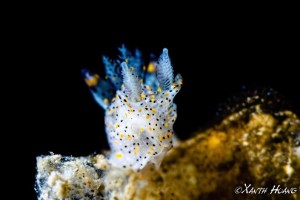
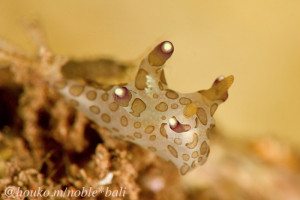
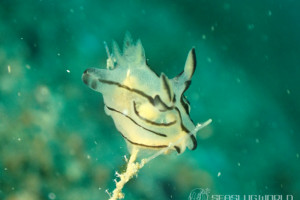
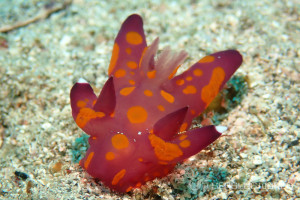

Similar Colors Nudibranchs
Academic Database
Sea slug observation data is available in international marine biodiversity databases.