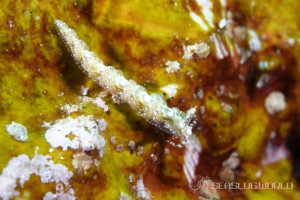
Acanthodoris atrogriseata O'Donoghue, 1927
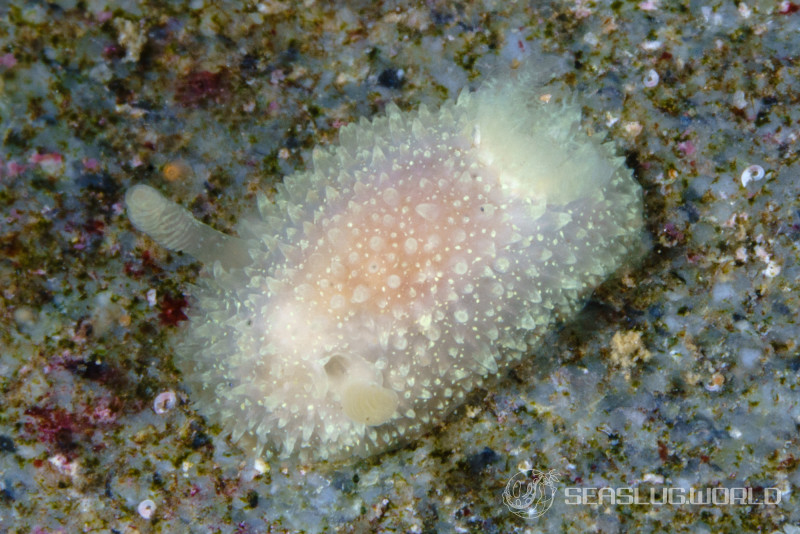
- Location
- Oyashirazu, Niigata, Japan
- Date
- 2022/04/22
- Length
- 14mm
- Depth
- ??m
- Water temperature
- 12.0℃
Description
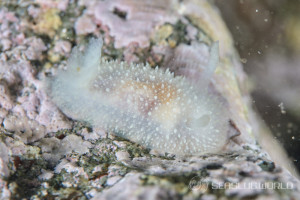
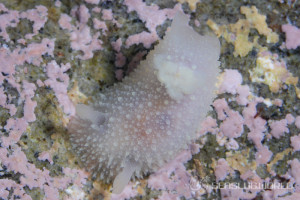
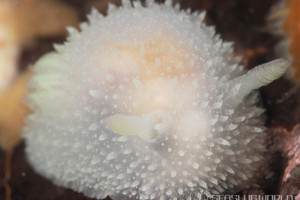
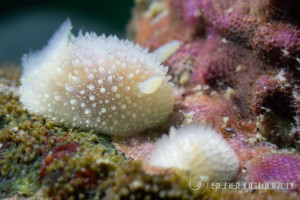
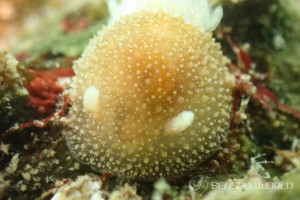
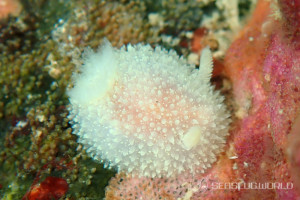
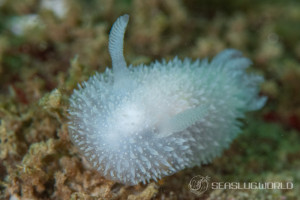
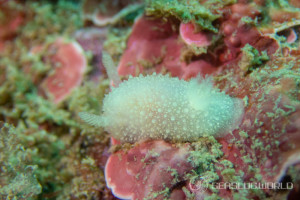
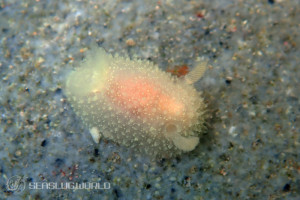
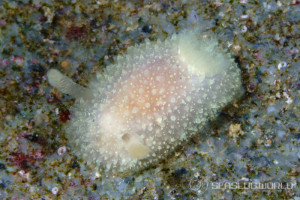
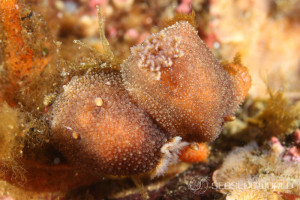
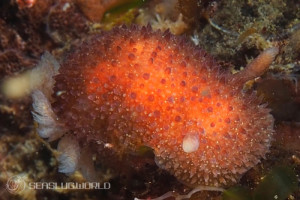
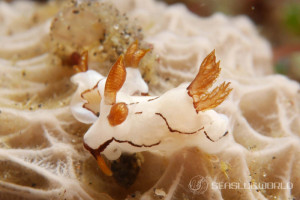
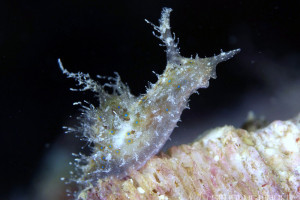
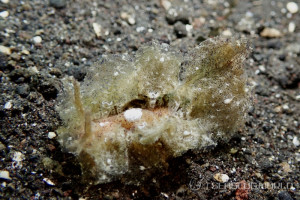
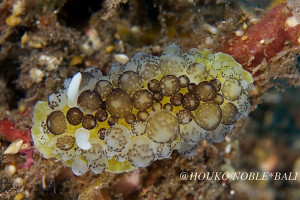
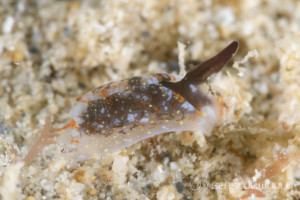
Body coloration is highly variable, ranging from yellowish-white to gray, smoky gray, black, and golden brown. The dorsum is densely covered with conical papillae tipped with yellow, a feature that reflects the generic name Acanthodoris ("spiny Doris"). The rhinophores are long and bend backwards. The non-retractile gill circle is set well back on the body. Adults typically measure around 30 mm in length, with the largest individuals reaching about 50 mm. It occurs from the lower intertidal zone into shallow rocky habitats, on bryozoan-encrusted substrates.Distribution
Northeastern Pacific, recorded from Kiska Island in the Aleutians, Alaska, south to Morro Bay, California. The type locality is False Narrows, Nanaimo, Vancouver Island, Canada; WoRMS lists a neotype from Puget Sound, Washington. Some North Pacific records previously assigned to Acanthodoris pilosa, including specimens from waters around northern Japan, are now considered likely referable to this species.Etymology
From Latin atro- ("dark, black") and griseata ("gray"), referring to the smoky gray to dark coloration documented in the original description.Remarks
A bryozoan-feeder, found on encrusting bryozoan colonies on rocks and floats. The species was long treated as a synonym of the trans-boreal Acanthodoris pilosa (Abildgaard, 1789). A 2016 revision showed through molecular phylogenetics that the northeastern Pacific population represents a distinct lineage, reinstating A. atrogriseata, originally described by O'Donoghue in 1927 from material treated together with the Laguna Beach nudibranch fauna. The Japanese name "Toge-umiushi", first proposed by Kikutaro Baba in 1957 for North Japanese material then identified as A. pilosa, has carried over to this species under the current taxonomy.References
- Acanthodoris atrogriseata, Baba, K. 1935c. The fauna of Akkeshi Bay. I. Opisthobranchia. Journal of the Faculty of Science, Hokkaido Imperial University, series 6, Zoology 4(3):115-125, pls. 7-8.
- Acanthodoris pilosa (Abildgaard) Toge-umiushi (n. n.), Baba, K. 1957. A revised list of the species of Opisthobranchia from the northern part of Japan, with some additional descriptions. J. Fac. Sci., Hokkaido Univ.,ser. 6, Zool. 13(1-4):8-14.
- トゲウミウシ, 中野理枝. (2004). 本州のウミウシ. ラトルズ.
- Fahey S. & Valdés A. (2005). A review of Acanthodoris Gray, 1850 with a Phylogenetic Analysis of Onchidorididae Alder and Hancock, 1845 (Mollusca, Nudibranchia).
- Martynov A.V., Sanamyan N.P. & Korshunova T.A. (2015). Review of the opisthobranch mollusc fauna of Russian Far Eastern seas: Pleurobranchomorpha, Doridida and Nudibranchia. Bulletin of Kamchatka State Technical University, 34, 62-87. https://doi.org/10.17217/2079-0333-2015-34-62-87
- Hallas J.M., Brian Simison W. & Gosliner T.M. (2016). Dating and biogeographical patterns in the sea slug genus Acanthodoris Gray, 1850 (Mollusca, Gastropoda, Nudibranchia). Molecular Phylogenetics and Evolution. 97: 19-31. https://doi.org/10.1016/j.ympev.2015.12.018
- ハイイロトゲウミウシ(新称), 中野理枝. (2018). 日本のウミウシ. 文一総合出版.
Featured in this book

中野理枝. (2019). 日本のウミウシ. 第二版. 文一総合出版.
文一総合出版
This species, Acanthodoris atrogriseata, is included in the book.
View on Amazon PR (Amazon Associates)Seasonality
Shooting Locations
Loading shooting locations...
Photos of Acanthodoris atrogriseata
Tag:










Same Genus Nudibranchs

Similar Colors Nudibranchs
Academic Database
Sea slug observation data is available in international marine biodiversity databases.