Antonietta janthina Baba & Hamatani, 1977
- Location
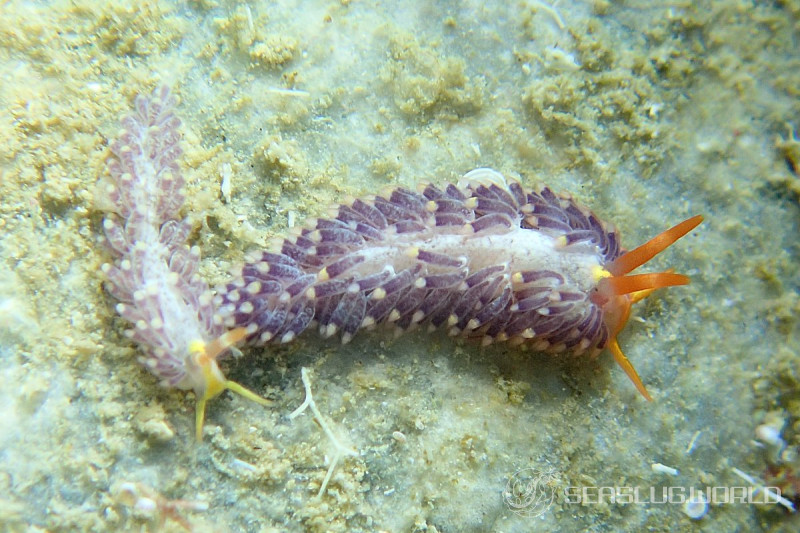
- Ishikiri(Awa), Okinawa Island (Motobu and Northern area), Okinawa, Japan
- Date
- 2016/03/28
- Length
- 15mm
- Depth
- 1.0m
- Water temperature
- 21.0℃
Description
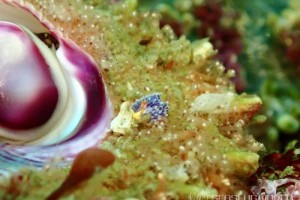
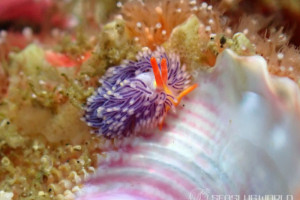
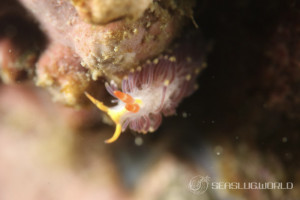
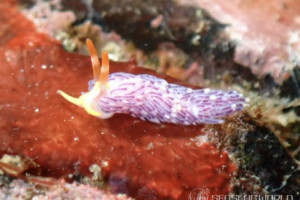
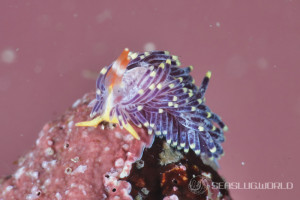
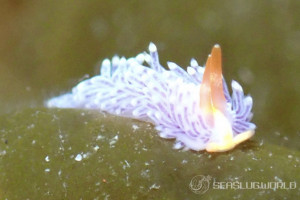
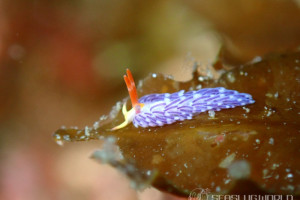
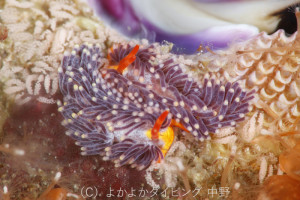
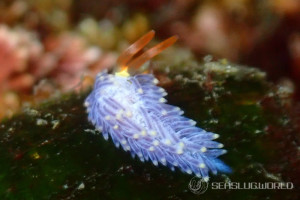
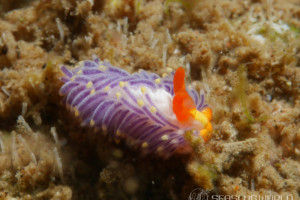
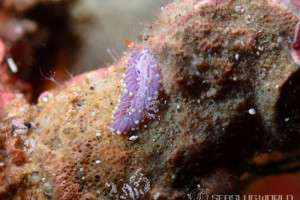
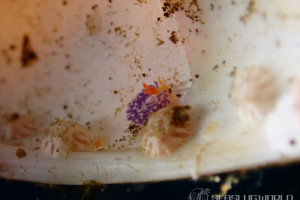
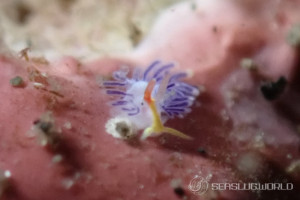
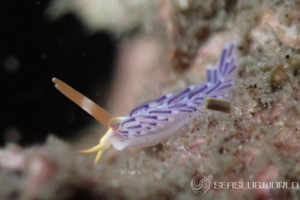
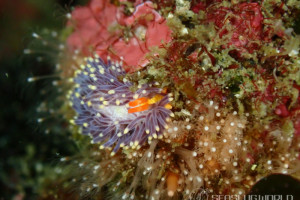
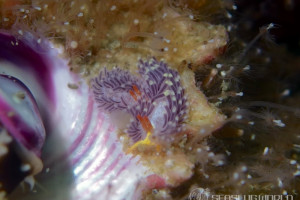
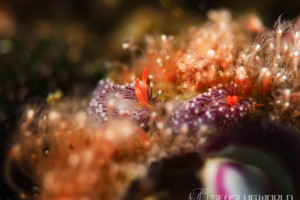
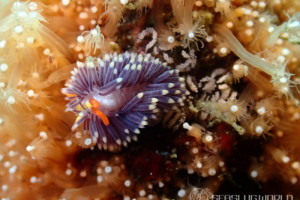
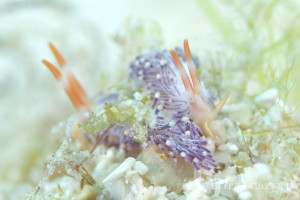
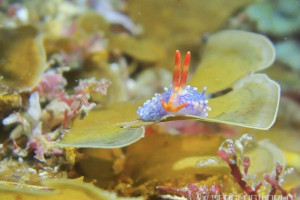
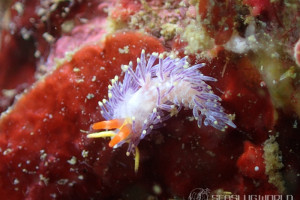
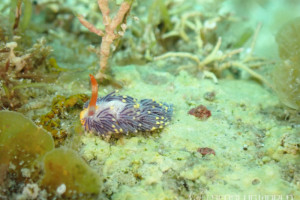
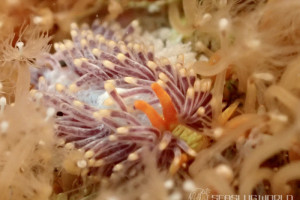
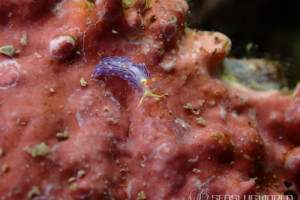
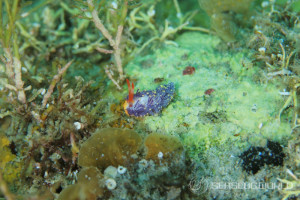
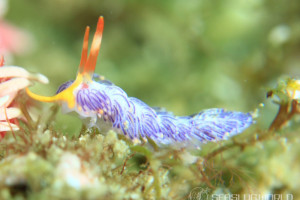
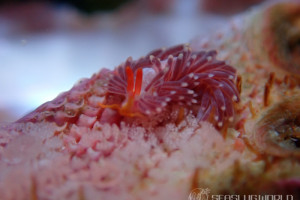
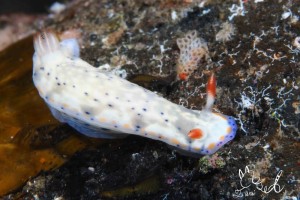
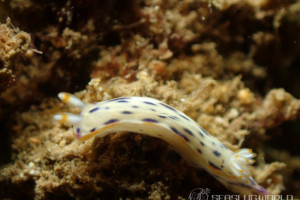
A slender facelinid aeolid with elongate oral tentacles and shorter, smooth rhinophores. The ground colour of the body is fleshy white, with irregular opaque white mottling along the dorsal midline and an opaque white pericardial prominence. The median part of the head is tinged orange yellow, and the oral tentacles are also orange yellow, becoming more intense towards the tip. The rhinophores are prominently vermilion, the colour fading near their midlength. Each cerata bears a purple liver diverticulum extending throughout its length, capped with pale yellow at the tip; no distal black pigment spot is present. The anterior margin of the foot is faintly orange yellow and the tapering tail is colourless. The holotype measures 10 mm in length.Distribution
Known from the Pacific coast of central and southern Japan (Hayama in Sagami Bay; Seto, Kii Peninsula; Tomioka, Amakusa) and from the Sea of Japan coast of central Japan (Ushitsu and Hime, Toyama Bay).Etymology
The specific epithet janthina is derived from Latin janthinus (violet, purple), in reference to the conspicuous purple liver diverticula of the cerata. Baba and Hamatani highlighted the species as "especially distinctive in the vermilion rhinophores and purple diverticula of the branchial papillae", and the Japanese name Murasaki-mino-umiushi ("purple aeolid") echoes the same character.Remarks
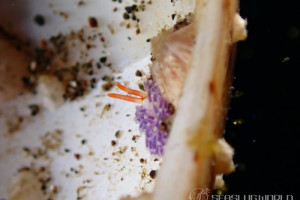
Baba and Hamatani tentatively placed the species in Antonietta Schmekel, 1966 (type species A. luteorufa from Naples) on the basis of the horseshoe-shaped composition of the left posterior liver, the non-indented jaws, and the unarmed conical penis lacking an accessory gland, while noting minor differences in the genital systems of the two species. The first specimen was collected by Baba in March 1937 at Magarizaki, Amakusa, where the animal was found feeding on a light brown hydroid colony (cf. Hydractinia epiconcha) overgrowing a hermit-crab shell. The holotype was collected by Hamatani at Yuzaki near the Seto Marine Biological Laboratory on 15 August 1962.References
- Antonietta janthina, Baba, K. & Hamatani, I. (1977): A new species tentatively referred to Antonietta, Antonietta janthina, from Japan (Nudibranchia: Eolidoidea: Facelinidae). The Veliger 20(1): 9-13.
- Antonietta janthina, Baba K. & Hamatani I. (1977). A new species tentatively referred to Antonietta, Antonietta janthina, from Japan (Nudibranchia: Eolidoidea: Facelinidae). The Veliger 20(1): 9-13.
- ムラサキミノウミウシ, 鈴木敬宇. (2000). ウミウシガイドブック〈2〉. TBSブリタニカ.
- 高岡生物研究会. (2002). 日本海のウミウシ. 第2版.
- ムラサキミノウミウシ, 中野理枝. (2004). 本州のウミウシ. ラトルズ.
- ムラサキミノウミウシ, 小野篤司 & 加藤昌一. (2009). ウミウシ. 誠文堂新光社.
A Kindle field guide by the site author
Kimoto N. (2026). Sea Slugs of Japan & the Indo-Pacific, 2nd Edition.
Kindle Edition
View on Amazon PR (Amazon Associates)Seasonality
Shooting Locations
Loading shooting locations...
Photos of Antonietta janthina
Tag:






















Same Genus Nudibranchs
Similar Colors Nudibranchs

Academic Database
Sea slug observation data is available in international marine biodiversity databases.