Hypselodoris lacuna Gosliner & R. F. Johnson, 2018
- Location
- Otchogahama, Hachijo Island, Tokyo, Japan
- Date
- 2018/10/10
- Length
- 15mm
- Depth
- 8.0m
- Water temperature
- 26.0℃
Description
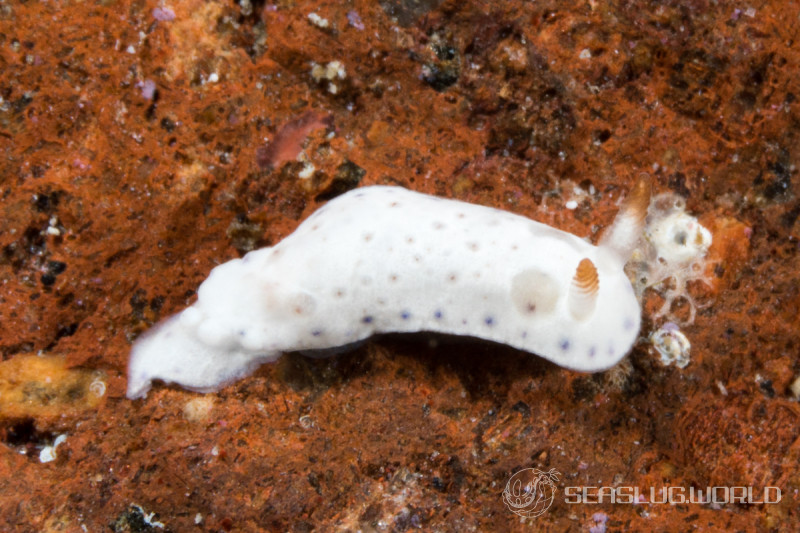
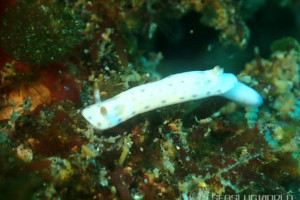
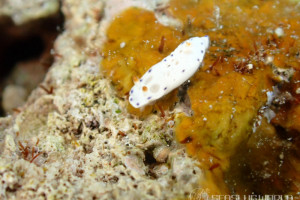
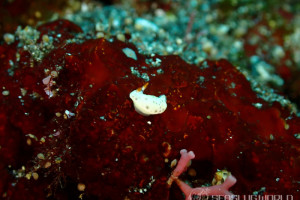
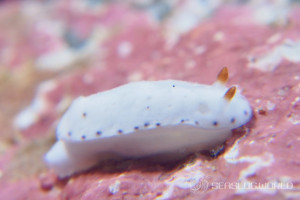
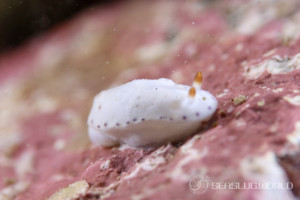
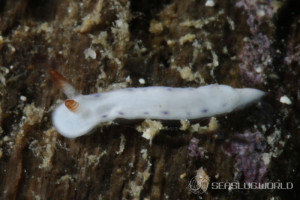
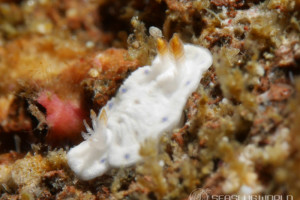
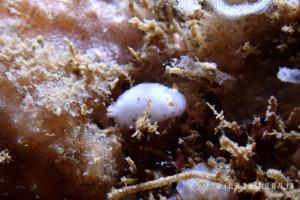
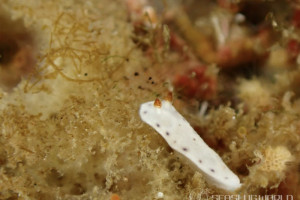
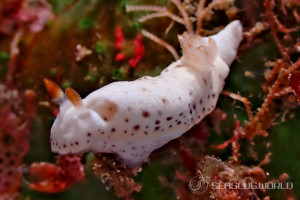
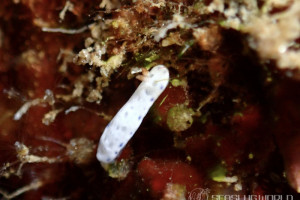
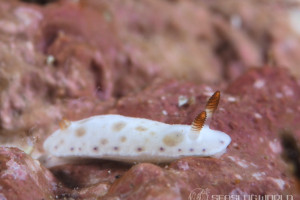
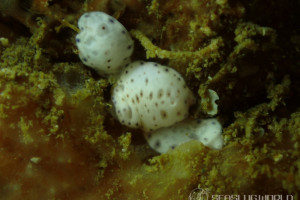
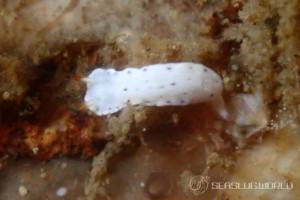
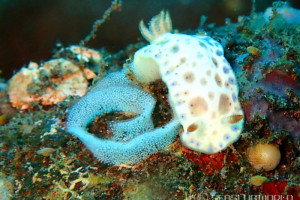
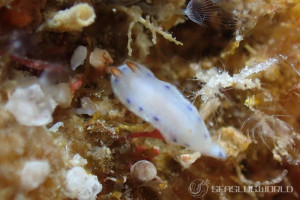
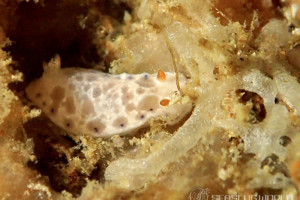
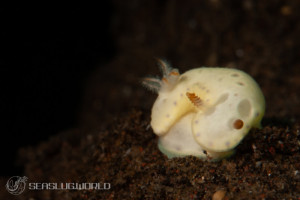
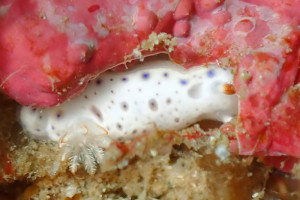
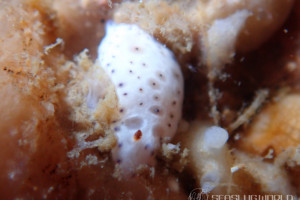
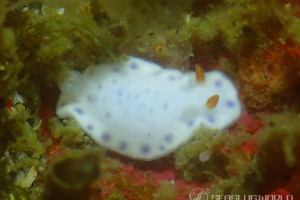
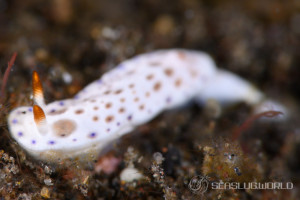
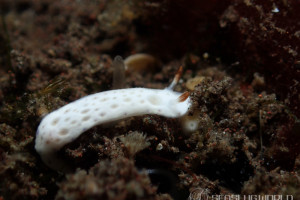
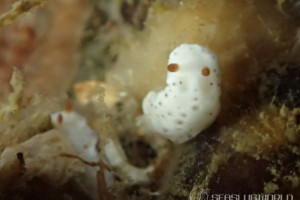
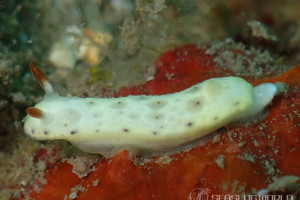
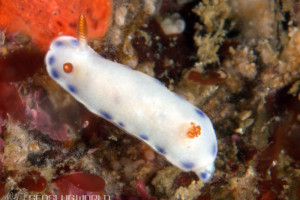
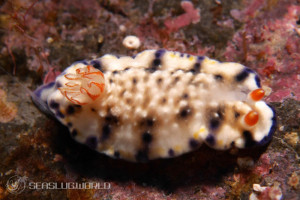
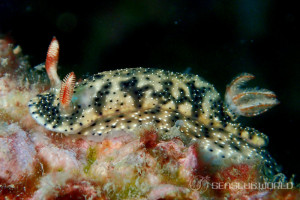
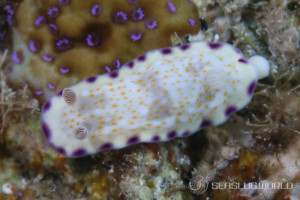
Living animals are small, reaching 12 mm in length. The body is opaque white with round translucent areas on the notum that resemble holes in the body wall. Two large translucent circles lie posterior to the rhinophores, and smaller circles are scattered over the surface of the notum. A small black spot lies in the centre of each translucent circle, with smaller translucent circles in the outer diffuse area. A ring of blue spots lies along the submarginal area of the notum, and additional blue spots occur on the posterior end of the foot. Seven unipinnate gill branches are white with reddish tips. Perfoliate rhinophores are white basally and bright red apically, with about eight or nine densely arranged lamellae.Distribution
Known from the western Indian Ocean (Aldabra Atoll) to the western Pacific (Vanuatu, Indonesia, Papua New Guinea, the Philippines and Japan). Type locality: Bethlehem, Tingloy, Batangas, Philippines, 13.6 m depth.Etymology
Verbatim from the original description (Epstein, Hallas, Johnson, Lopez & Gosliner, 2019, Zoological Journal of the Linnean Society 186: p.150):This species is named Hypselodoris lacuna based on the translucent areas on the notum that resemble holes in the body wall.
Remarks
Hypselodoris lacuna is unique among members of this genus in having translucent circles together with a ring of small blue spots along the submarginal area of the notum. Its colour pattern resembles that of Chromodoris aspersa, but H. lacuna has red rather than orange rhinophore and gill pigment. H. lacuna sits at the base of a large clade that includes Hypselodoris iba, Hypselodoris reidi, Hypselodoris regina, Hypselodoris jacksoni, Hypselodoris cerisae and Hypselodoris krakatoa, and is the only species in this clade that lacks an elevated gill pocket and lateral mantle glands; only six to 12 small posterior mantle glands are present.References
- Hypselodoris sp. 20, Terrence Gosliner, Ángel Valdés and David Behrens. (2015). Nudibranch and Sea Slug Identification Indo-Pacific. New World Pubns Inc.
- アオウミウシ属の1種 11, 中野理枝. (2018). 日本のウミウシ. 文一総合出版.
- Hypselodoris lacuna, Terrence Gosliner, Ángel Valdés and David Behrens. (2018). Nudibranch and Sea Slug Identification Indo-Pacific 2nd Edition. New World Pubns Inc.
- Hypselodoris lacuna sp. nov., Epstein H.E., Hallas J.M., Johnson R.F., Lopez A. & Gosliner T.M. (2019). Reading between the lines: revealing cryptic species diversity and colour patterns in Hypselodoris nudibranchs (Mollusca: Heterobranchia: Chromodorididae). Zoological Journal of the Linnean Society. 186(1): 116-189. https://doi.org/10.1093/zoolinnean/zly048
- クボミイロウミウシ(新称), 中野理枝. (2019). 日本のウミウシ. 第二版. 文一総合出版.
Featured in this book
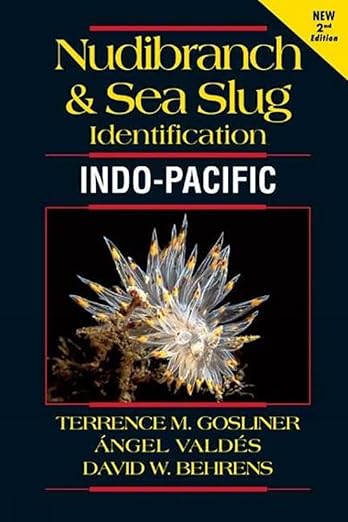
Terrence Gosliner, Ángel Valdés and David Behrens. (2018). Nudibranch and Sea Slug Identification Indo-Pacific 2nd Edition. New World Pubns Inc.
New World Publications
This species, Hypselodoris lacuna, is included in the book.
View on Amazon PR (Amazon Associates)Seasonality
Shooting Locations
Loading shooting locations...
Photos of Hypselodoris lacuna
Tag:




























Same Genus Nudibranchs

Similar Colors Nudibranchs

Academic Database
Sea slug observation data is available in international marine biodiversity databases.