Armina variolosa (Bergh, 1904)
Description
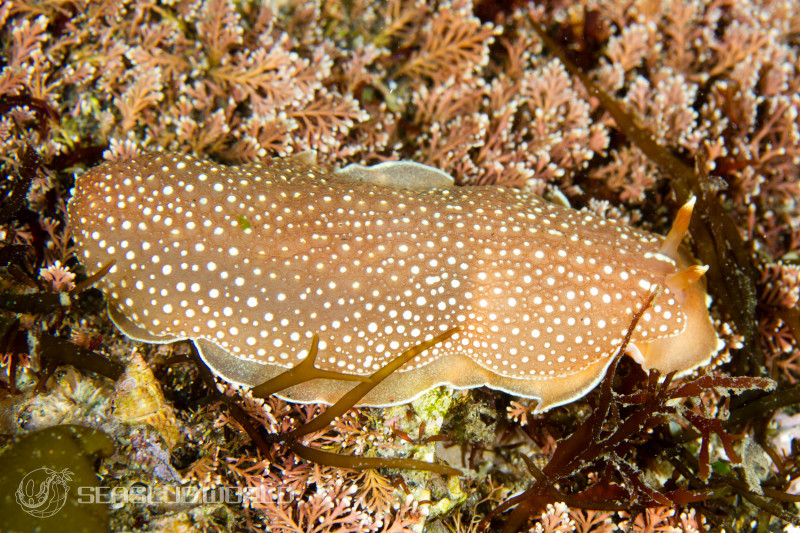
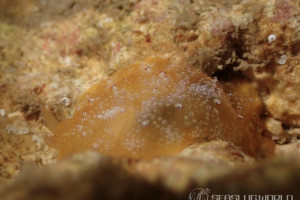
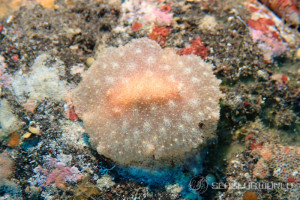
A flattened arminid, 4.3 cm long, 2.4 cm wide and 1.6 cm high in alcohol. The dorsum is light yellow throughout, covered with numerous whitish pustule-like nodules up to 1.5 mm in diameter, each with a small central rounded, slightly yellowish depression at the apex. The mantle and tentacular-shield margins are whitish; the underside is a stronger yellow; the foot edge is whitish.The front of the tentacular shield is smooth with only fine wrinkles, the back face bearing a small number of whitish nodules. The two adjacent rhinophores, 4 mm tall, sit in separate hollows; the club bears about 22 longitudinally split leaves. The slightly convex dorsum is everywhere covered with very fine granules which, especially anteriorly, form longitudinal folds. Lives buried in sandy bottoms.
Distribution
Type locality: Tonsang Harbour, Chinese seas. Subsequently recorded from Japan, Hong Kong, the Philippines, and other parts of the western Pacific.Etymology
The specific epithet is built from Latin variola ("smallpox, small blister, pustule") and the suffix -osus (feminine -osa, "rich in, full of"), meaning "covered with pustules", in reference to the white pustule-like nodules on the dorsum.Remarks
The original generic placement was Linguella, which is now subsumed in Armina; the parentheses in the author citation reflect this transfer. The Japanese vernacular name samehada-shita-umiushi ("shark-skin sole sea slug") refers to the shark-skin-like texture of the densely packed pustular nodules on the dorsum.References
- Linguella variolosa Bgh. n. sp., Bergh R. (1904). Malacologische Untersuchungen. In: Semper, C. Reisen im Archipel der Philippinen. Wissenschaftliche Resultate. Theil VI, Lieferung 1 (Nudibranchiata). Wiesbaden: C. W. Kreidel's Verlag, pp. 1-56, Taf. I-IV.
- サメハダシタウミウシ(新稱), 生物學御研究所編. (1955). 相模湾産後鰓類図譜〈補遺〉. 岩波書店.
- 高岡生物研究会. (2002). 日本海のウミウシ. 第2版.
A Kindle field guide by the site author
Kimoto N. (2026). Sea Slugs of Japan & the Indo-Pacific, 2nd Edition.
Kindle Edition
View on Amazon PR (Amazon Associates)Seasonality
Shooting Locations
Loading shooting locations...
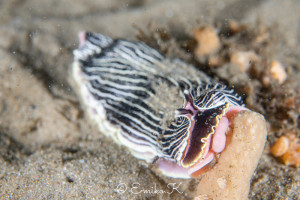
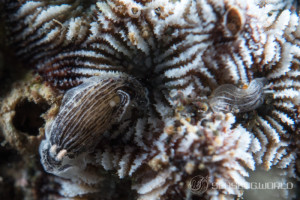
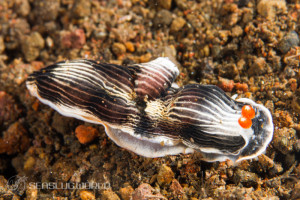
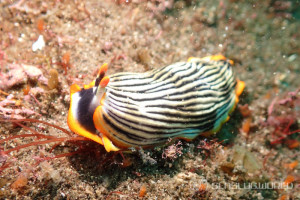
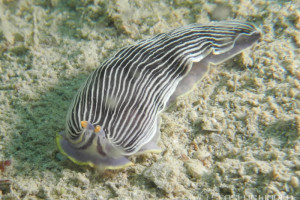
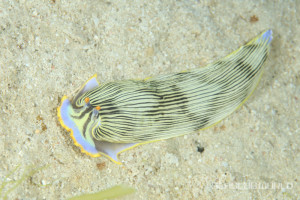
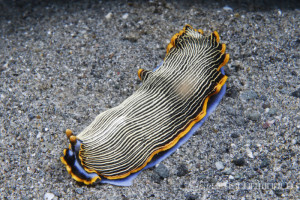
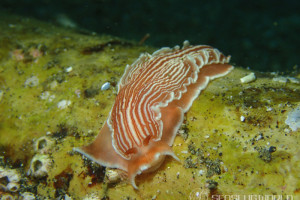
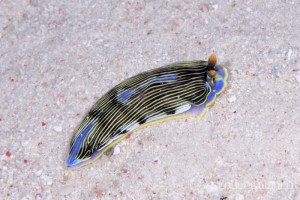
Photos of Armina variolosa

Same Genus Nudibranchs

Similar Colors Nudibranchs

Academic Database
Sea slug observation data is available in international marine biodiversity databases.