Armina major Baba, 1949
Description
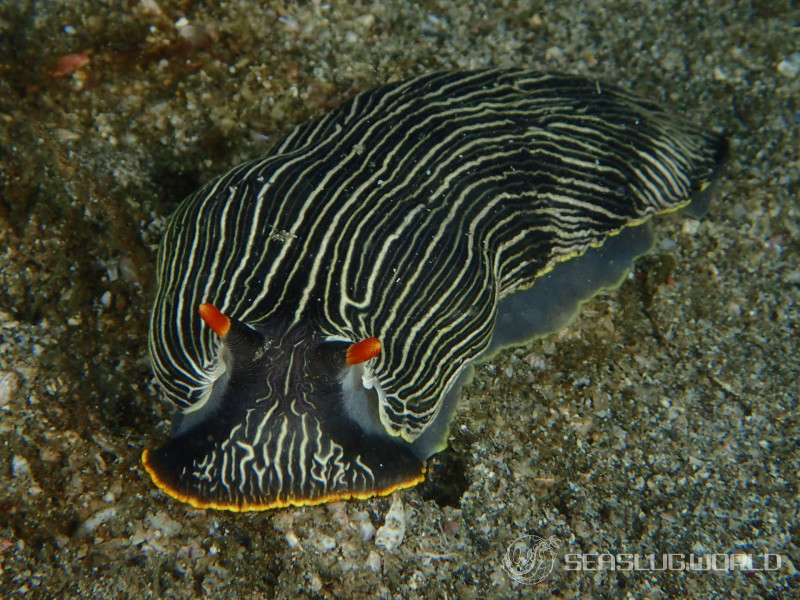
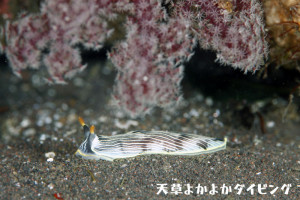
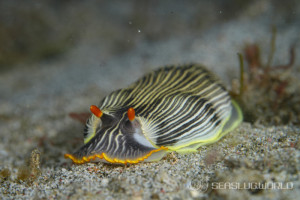
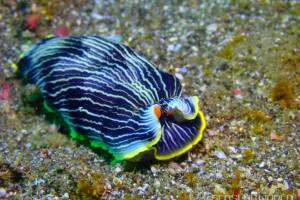
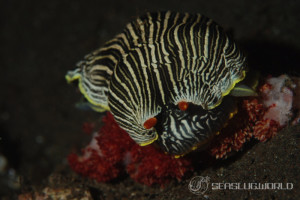
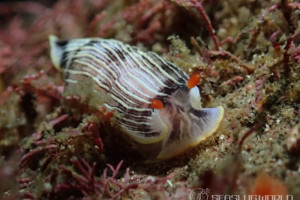
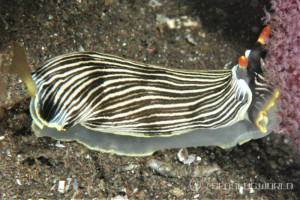
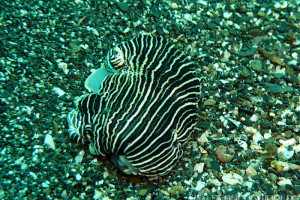
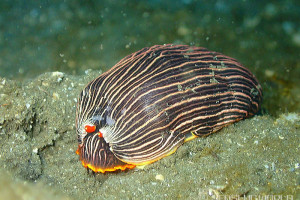
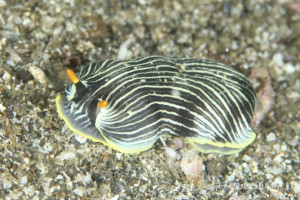
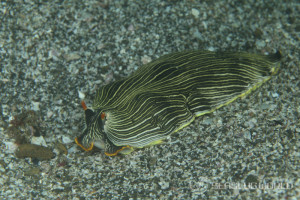
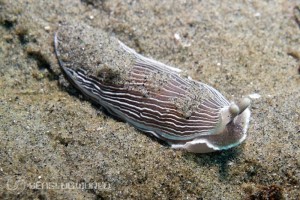
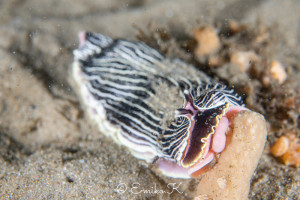
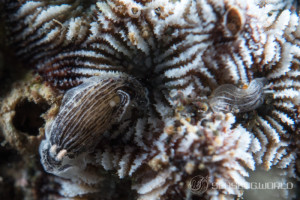
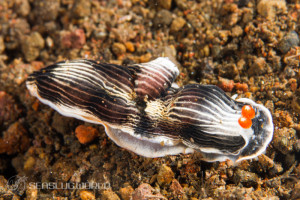
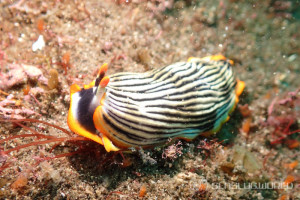
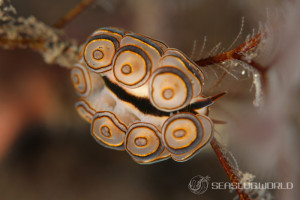
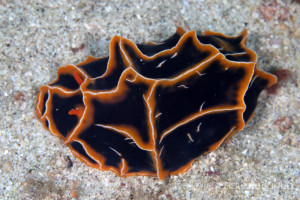
A large Arminidae, body length 8-10 cm. Superficially resembling Armina japonica, but the species is diagnosed by having longitudinal folds on the head veil similar to those on the dorsum. Lateral plates 6-12 per side, in a longitudinal row. The genital orifice lies just behind the anterior gill. Anterior foot corner claw-shaped. The dorsum (including the head veil) is black with white longitudinal folds. The head veil, mantle, and foot margins are all bordered by a fine yellow line. Rhinophore lamellae vermilion. The masticatory edge of the jaw plate bears many rows of denticulate scales. Radula formula 50×105-115.1.1.1.105-115. The first lateral bears about 10 denticles, with the number decreasing toward the outer laterals.Distribution
Type locality is off Mosaki, Sajima Island, Sagami Bay (14 m depth, September 1935, single specimen). The original description (Baba, 1949) records the species only from the type locality.Etymology
The specific epithet major is Latin for greater or larger. The original description does not give an explicit etymology paragraph; the descriptive sense reflects the large body size (8-10 cm) within the genus. The Japanese name "Daiō-tatejima-umiushi" (great-king striped sea slug) likewise reflects the large size.Remarks
Distinguished from sympatric Armina japonica by the presence of longitudinal folds on the head veil; the head veil is smooth in Armina japonica.References
- Armina major (genus Armina), Rafinesque C.S. (1814). Précis des découvertes et travaux somiologiques de Mr. C.S. Rafinesque-Schmaltz entre 1800 et 1814. Royale Typographie Militaire, Palerme. 56 pp.
- Armina major Baba, 1949, Baba K. (1949). Opisthobranchia of Sagami Bay collected by His Majesty the Emperor of Japan (相模湾産後鰓類図譜). Iwanami Shoten, Tokyo. 4+2+194+7 pp., pls. 1-50.
A Kindle field guide by the site author
Kimoto N. (2026). Sea Slugs of Japan & the Indo-Pacific, 2nd Edition.
Kindle Edition
View on Amazon PR (Amazon Associates)Seasonality
Shooting Locations
Loading shooting locations...
Photos of Armina major
Tag:









Same Genus Nudibranchs
Similar Colors Nudibranchs


Academic Database
Sea slug observation data is available in international marine biodiversity databases.