Doriopsilla miniata (Alder & Hancock, 1864)
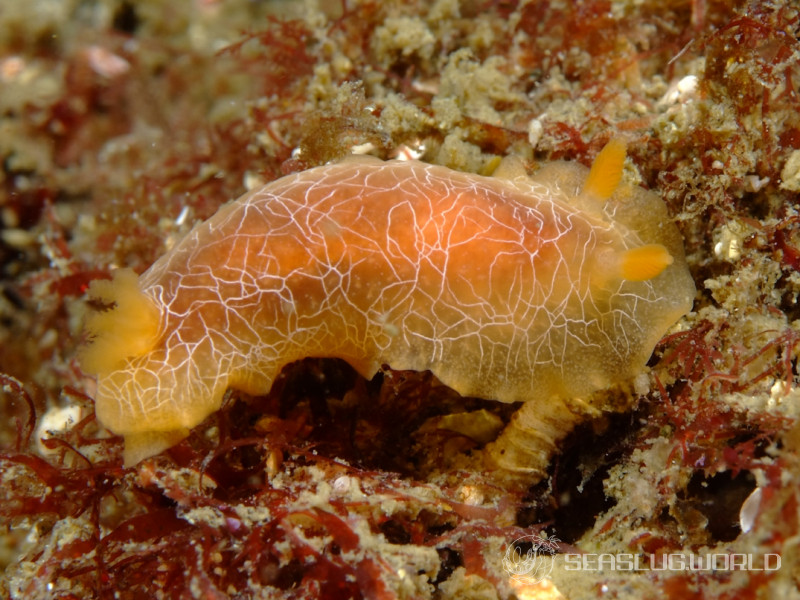
- Location
- Gontarouiwaoki, Hayama, Kanagawa, Japan
- Date
- 2007/04/25
- Length
- 15mm
- Depth
- 10.0m
- Water temperature
- 15.0℃
Description
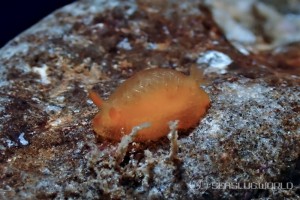
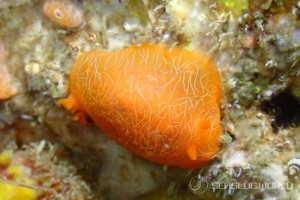
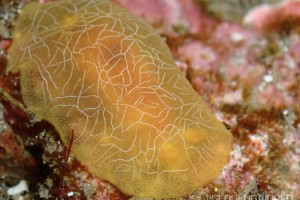
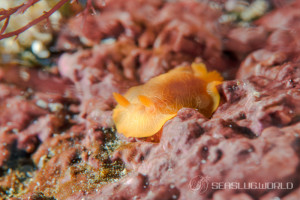
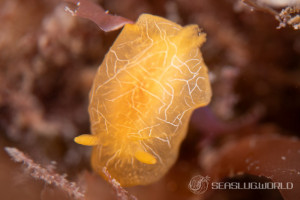
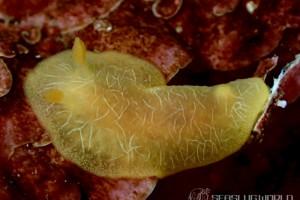
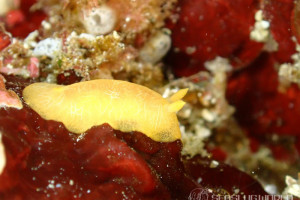
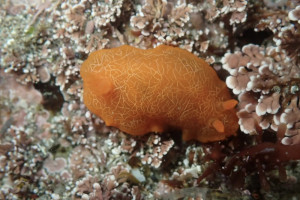
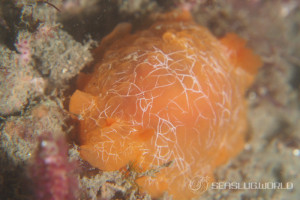
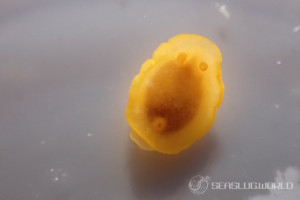
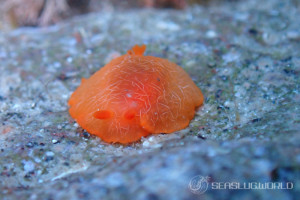
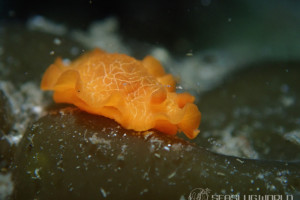
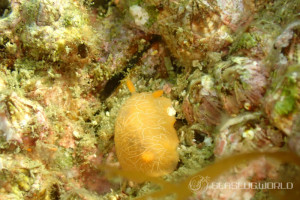
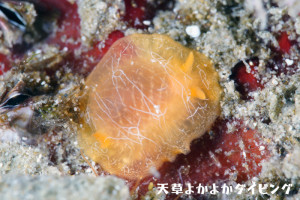
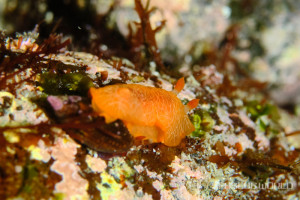
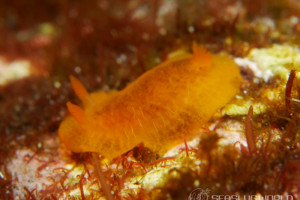
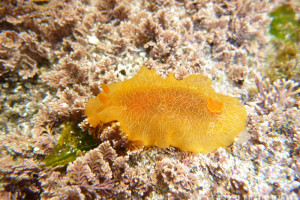
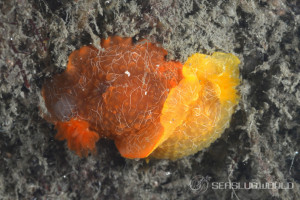
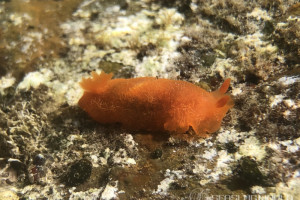
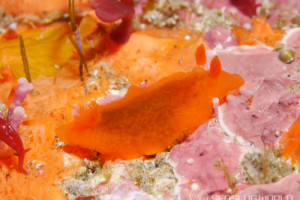
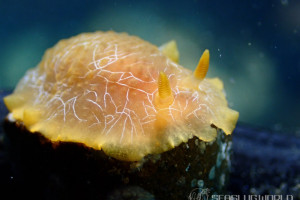
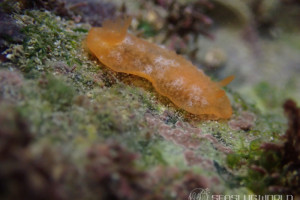
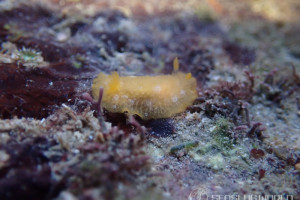
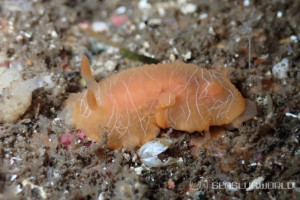
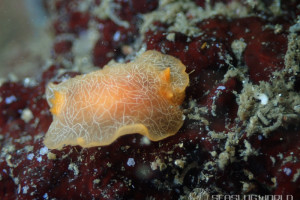
A medium-sized dorid reaching 1.3 inches (ca. 3.3 cm) in body length. The body is oval, much depressed. The mantle is vermilion-coloured, paler at the edges, and covered with rather distant, rounded tubercles of nearly equal size, becoming smaller towards the margin. The dorsal tentacles are conical, with numerous dark laminae, only divided in front by a delicate ridge; the apex is rather blunt, and the margin of the cavity is slightly raised. The branchial plumes are five, tripinnate, scarlet, two in front and three behind; the anus is excentric, terminating on the left side close to the root of the left anterior plume. The head is very indistinct, indicated by an arched ridge immediately in front of the foot; the mouth is very minute, opening in a cleft on the anterior margin of the foot. The foot is scarlet, nearly equally and sharply rounded at both ends; the smooth anterior area very limited. A variety is of a much paler colour, with the centre of the back nearly black. The spawn is scarlet, forming an irregularly convoluted riband. The species is remarkable on account of the excentric position of the anus at the side of the branchial plumes — a character observed in some degree in Doridopsis pustulosa and D. atromaculata, where the presence of a central posterior plume occasions a slight displacement of the anal opening.Distribution
Type locality: Waltair, near Vizagapatam, Coromandel coast, Madras Presidency, India (now Visakhapatnam, Andhra Pradesh). Based on four or five specimens collected by Walter Elliot in 1853–1854 (Alder & Hancock note: "Common: four or five specimens are in the collection"). The species has subsequently been recorded from South Africa, India, Australia, and Japan, across the Indo-West Pacific.Etymology
The specific epithet miniata is Latin for "coloured with vermilion / cinnabar-red", in reference to the brilliant scarlet-vermilion ground colour of the mantle and gills.Remarks
In the original description Alder & Hancock placed the species in Doridopsis (= modern Doriopsis) and erected the new family Doridopsidae. The species was later transferred to Doriopsilla Bergh, 1880 (the parentheses in the author citation reflect this generic transfer). Doriopsilla is a closely related genus separated from Doriopsis for sponge-feeding dorids. The Japanese name "ダイダイウミウシ" ("daidai-orange slug") refers to the brilliant orange-red body colour reminiscent of the daidai citrus fruit.References
- Doridopsis miniata n. sp., Alder J. & Hancock A. (1864). Notice of a collection of nudibranchiate Mollusca made in India by Walter Elliot Esq., with descriptions of several new genera and species. Transactions of the Zoological Society of London. 5(3): 113-147.
- ダイダイウミウシ, Baba K. (1949). Opisthobranchia of Sagami Bay collected by His Majesty the Emperor of Japan (相模湾産後鰓類図譜). Iwanami Shoten, Tokyo. 4+2+194+7 pp., pls. 1-50.
- 高岡生物研究会. (2002). 日本海のウミウシ. 第2版.
A Kindle field guide by the site author
Kimoto N. (2026). Sea Slugs of Japan & the Indo-Pacific, 2nd Edition.
Kindle Edition
View on Amazon PR (Amazon Associates)Seasonality
Shooting Locations
Loading shooting locations...
Photos of Doriopsilla miniata
Tag:




















Same Genus Nudibranchs
Similar Colors Nudibranchs
Academic Database
Sea slug observation data is available in international marine biodiversity databases.