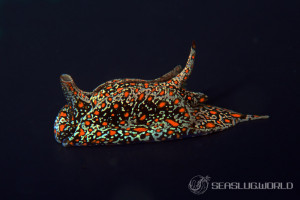
Gastropteron bicornutum Baba & Tokioka, 1965
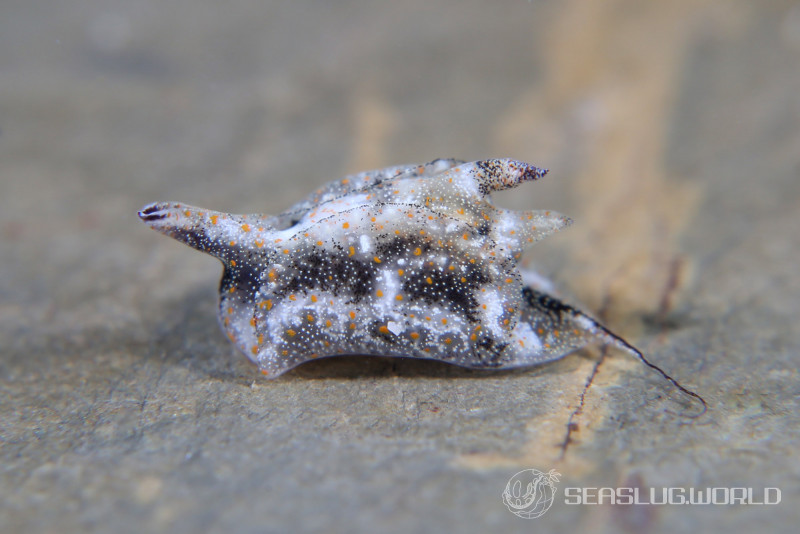
- Location
- Dragon Lady, Kerama(Zamami・Amuro・Gahi・Agenashiku), Okinawa, Japan
- Date
- 2014/12/12
- Length
- 10mm
- Depth
- 13.0m
- Water temperature
- 23.0℃
Description
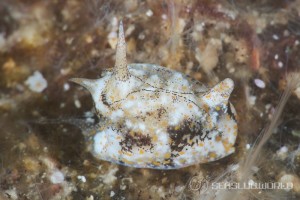
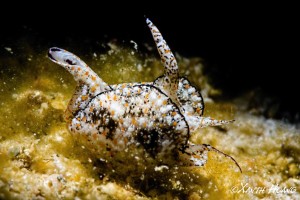
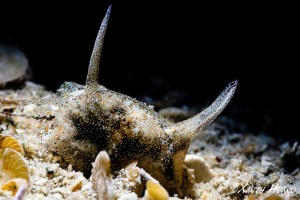
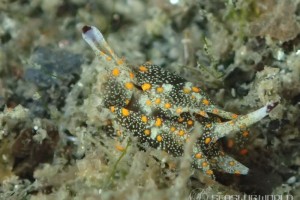
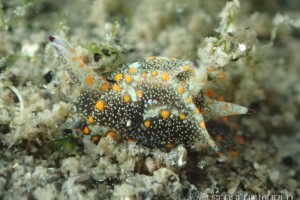
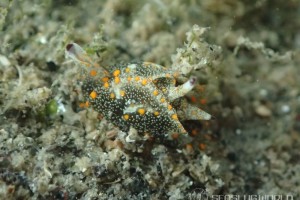
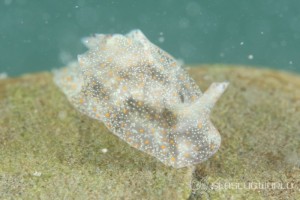
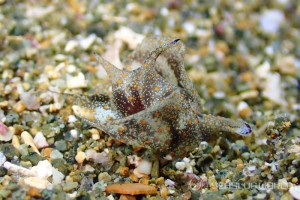
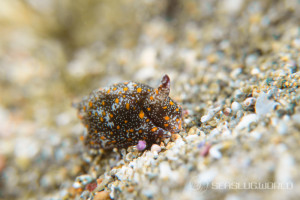
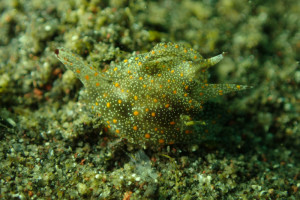
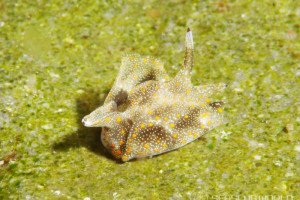
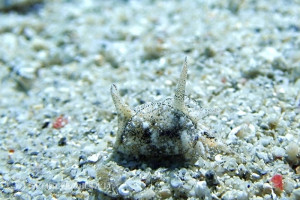
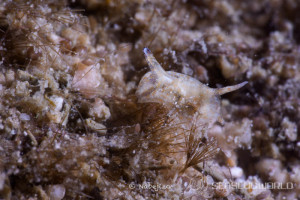
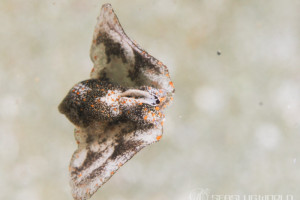
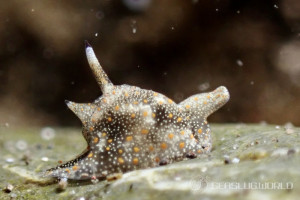
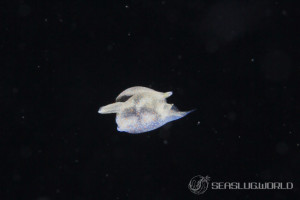
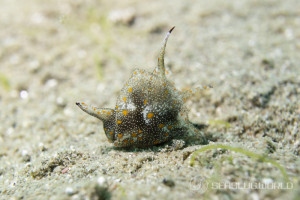
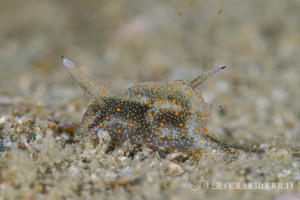
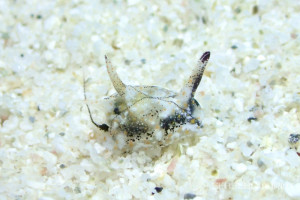
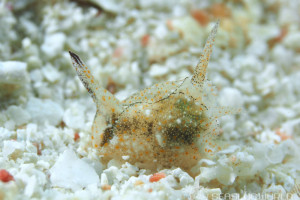
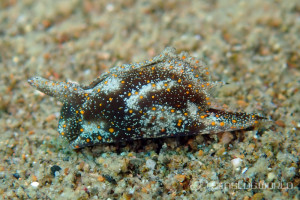
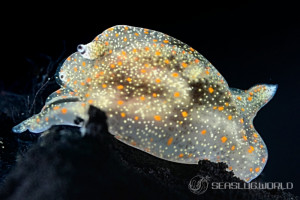
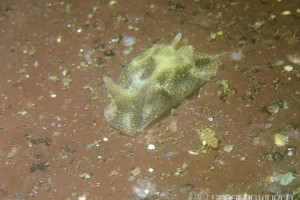
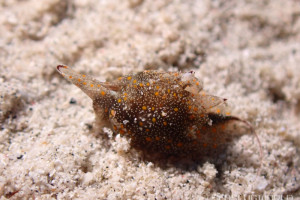
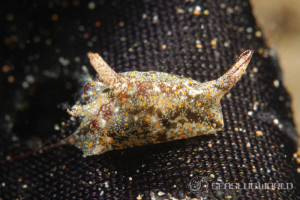
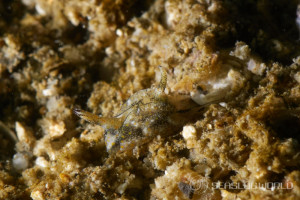
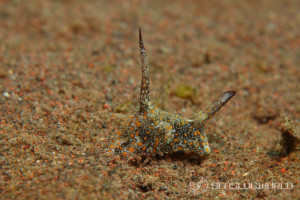
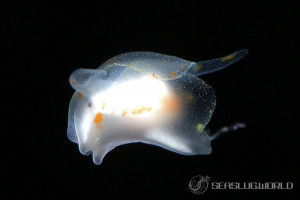
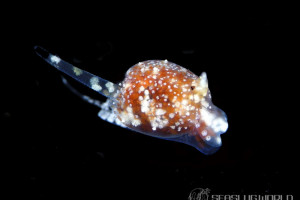
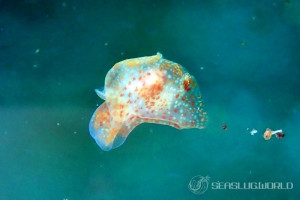
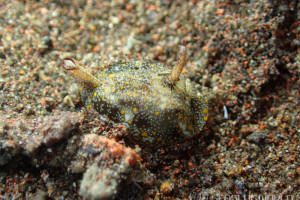
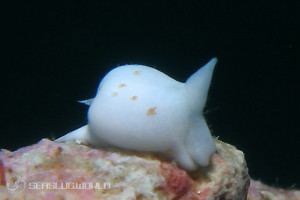
A small gastropterid, typically 5–15 mm in length. Body coloration is highly variable, ranging from translucent white to dark brown, overlaid with irregular cloud-like white or yellowish-white blotches and scattered yellow, orange, white and black spots; some individuals lack the white and black spots. The head shield is broad and triangular, terminating posteriorly in an involuted siphon without a central ridge. The well-developed parapodia allow the animal to swim for extended periods. At the posteromedial end of the visceral hump there is a large conical flagellar process, immediately dorsal to which is a second, slightly more elongate flagellar process. This pair of flagella, unique within the family, gives the species its name. The ctenidium is large, with 13 primary filaments. The foot is broad and tapers posteriorly into a narrow elongate "tail" bearing a black median line.Distribution
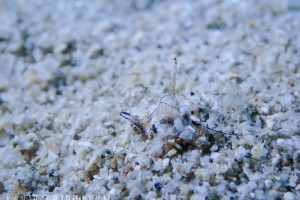
Distributed in the tropical and subtropical western and southern Pacific. The type locality is Japan (vicinity of the Seto Marine Biological Laboratory). Records include Japan, Papua New Guinea, Australia, Indonesia and New Caledonia. The species inhabits shallow subtidal sandy or coarse-sand slopes, frequently among the seagrass Halophila.Etymology
The specific epithet derives from Latin bicornutus, meaning "two-horned," in reference to the pair of flagellar processes at the posterior end of the visceral hump.Remarks
The species was originally described from eight preserved specimens (Baba & Tokioka, 1965). A 1970 study subsequently described the living animal and penial morphology. A 1989 revision reported the species for the first time outside Japan, based on material collected from Madang, Papua New Guinea, and supplemented the anatomical description. Gastropteron bicornutum closely resembles a sympatric undescribed Chelidonura species and an undescribed haminoeid; Gosliner & Behrens 1989 suggested that the three taxa form a Müllerian mimicry complex.References
- Amakusa-umikotyo, Baba K. & Tokioka T. (1965). TWO MORE NEW SPECIES OF GASTROPTERON FROM JAPAN, WITH FURTHER NOTES ON G. FLAVUM T. & B. (GASTROPODA : OPISTHOBRANCHIA). Publications of the Seto Marine Biological Laboratory. 12(5): 363-378. https://doi.org/10.5134/175379
- Gastropteron bicornutum Baba & Tokioka, 1965, Gosliner T.M. (1989). Revision of the Gastropteridae (Opisthobranchia: Cephalaspidea) with descriptions of a new genus and six new species. The Veliger 32(4): 333-381.
- 高岡生物研究会. (2002). 日本海のウミウシ. 第2版.
A Kindle field guide by the site author
Kimoto N. (2026). Sea Slugs of Japan & the Indo-Pacific, 2nd Edition.
Kindle Edition
View on Amazon PR (Amazon Associates)Seasonality
Shooting Locations
Loading shooting locations...
Photos of Gastropteron bicornutum
Tag:






















Same Genus Nudibranchs

Similar Colors Nudibranchs

Academic Database
Sea slug observation data is available in international marine biodiversity databases.