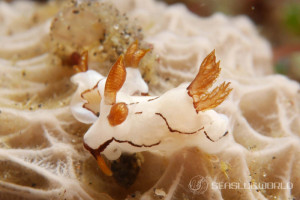
Cerberilla asamusiensis Baba, 1940
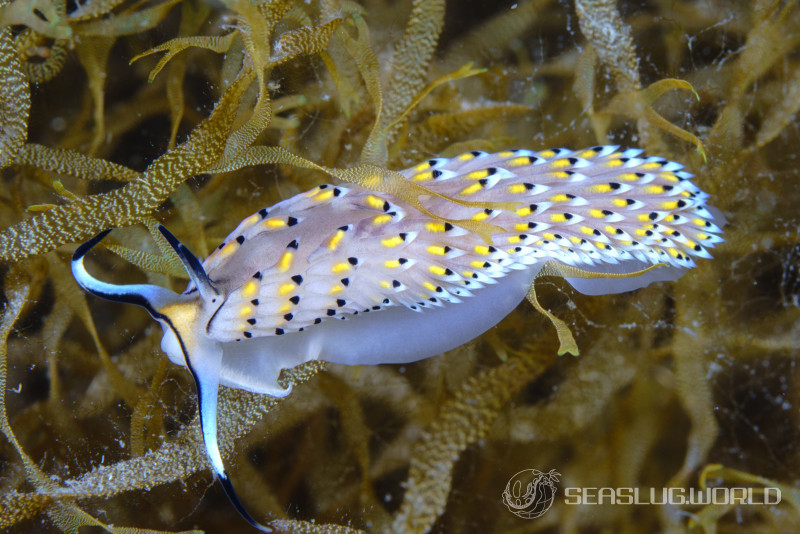
- Location
- Shinsuigogan park, Minamata, Kumamoto, Japan
- Date
- 2021/04/30
- Length
- 70mm
- Depth
- 10.0m
- Water temperature
- 17.0℃
Description
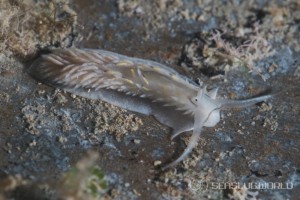
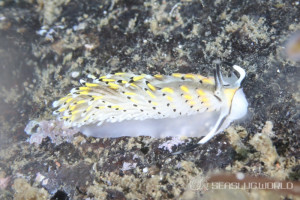
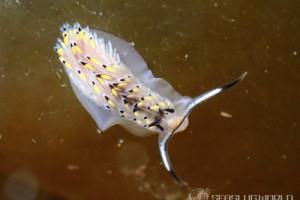
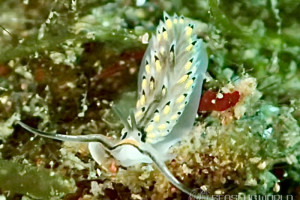
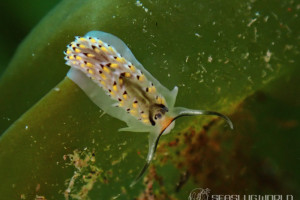
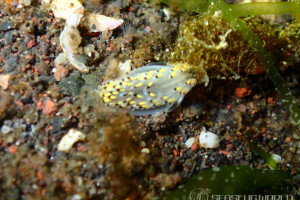
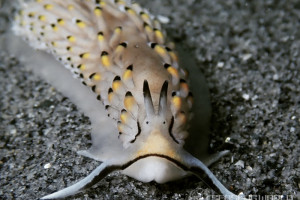
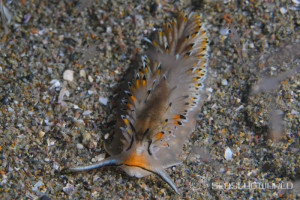
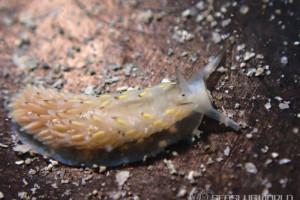
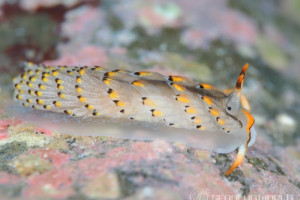
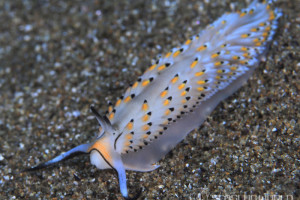
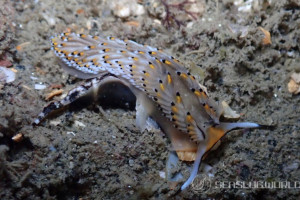
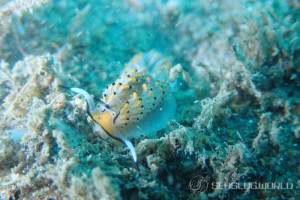
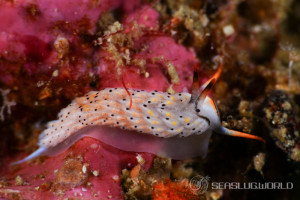
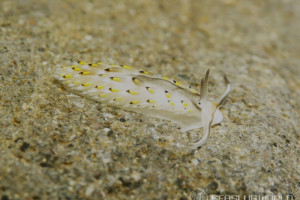
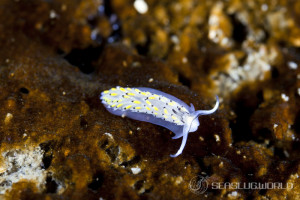
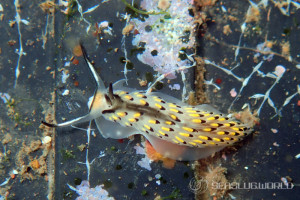
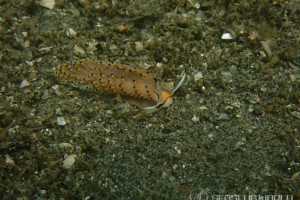
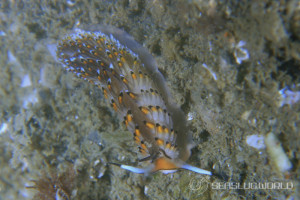
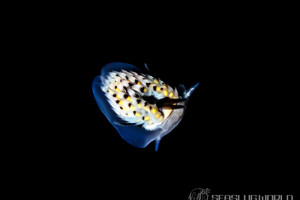
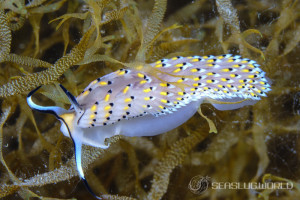
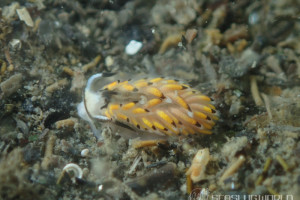
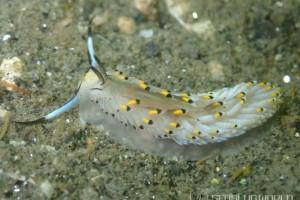
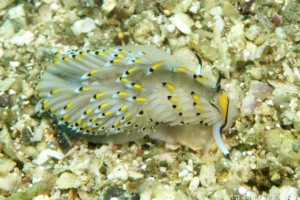
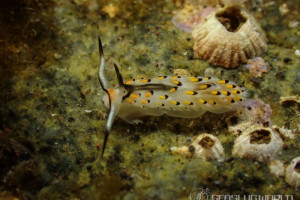
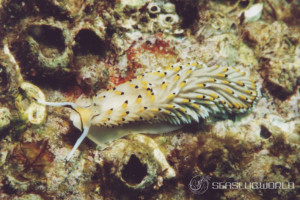
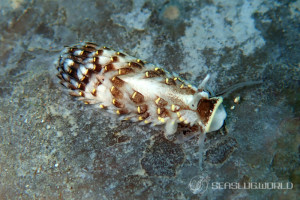
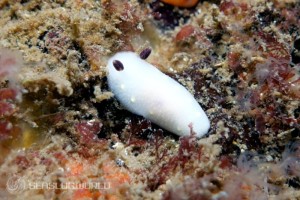
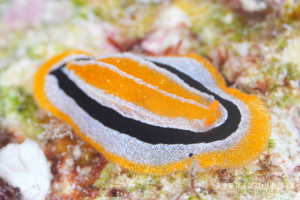
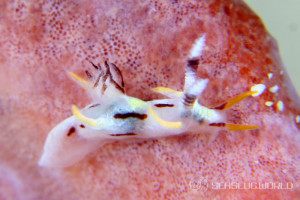
Ground color is translucent white. A black line crosses the anterior border of the head and extends to the bases of the oral tentacles on each side. The rhinophores are black to the tip when viewed from the rear, with an additional black line on each outer side. Each ceras carries a black spot near the apex on the outer surface, often accompanied by a small yellow marking just below it. The top of the head and the anterior margin of the foot are tinted yellow, while the bare middle strip of the back is slightly dark. The rest of the body is colorless. The cerata are arranged in simple oblique rows on each side, numbering up to 16 in the largest row. Living animals reach about 22 mm in length. The animal burrows into soft sandy substrata.Distribution
Widely distributed along the Pacific coast of Japan. The type locality is Asamushi in Mutsu Bay, Aomori Prefecture. Additional records come from various stations in Sagami Bay and from Tomioka, Amakusa.Etymology
The specific epithet asamusiensis combines the place name Asamushi (the type locality in Aomori Prefecture, Japan) with the Latin suffix -ensis, meaning 'belonging to', indicating the species was collected at Asamushi.Remarks
The species was originally described by Baba 1940 from material collected at Asamushi. In a review of the Japanese Cerberilla (Baba, 1976) the species was redescribed from Sagami Bay specimens, the living coloration was re-established, and the range was extended along the Pacific coast of Japan. Cerberilla asamusiensis is closely allied to Cerberilla ambonensis from Amboina and to Cerberilla bernadettae from the Atlantic coast of France in sharing a black spot on each ceras and the general radular form, but it differs from both in possessing well-developed accessory denticles on the radular teeth.References
- Cerberilla asamusiensis Baba Kasumi-minoumiushi (n. n.), Baba, K. 1957. A revised list of the species of Opisthobranchia from the northern part of Japan, with some additional descriptions. J. Fac. Sci., Hokkaido Univ.,ser. 6, Zool. 13(1-4):8-14.
- Marcus E. (1964). Additions to the nudibranch fauna of the east Pacific and the Gulf of California. Transactions of the San Diego Society of Natural History. 13: 377-396. https://doi.org/10.5962/bhl.part.9602
- Cerberilla asamusiensis Baba, 1940, Baba K. (1976). The genus Cerberilla of Japan, with the description of a new species (Nudibranchia: Eolidoidea: Aeolidiidae). The Veliger. 18(3): 272-280.
- 高岡生物研究会. (2002). 日本海のウミウシ. 第2版.
A Kindle field guide by the site author

Kimoto N. (2026). Sea Slugs of Japan & the Indo-Pacific, 2nd Edition.
Kindle Edition
View on Amazon PR (Amazon Associates)Seasonality
Shooting Locations
Loading shooting locations...
Photos of Cerberilla asamusiensis
Tag:
























Same Genus Nudibranchs
Similar Colors Nudibranchs

Academic Database
Sea slug observation data is available in international marine biodiversity databases.