Dendrodoris arborescens (Collingwood, 1881)
Description
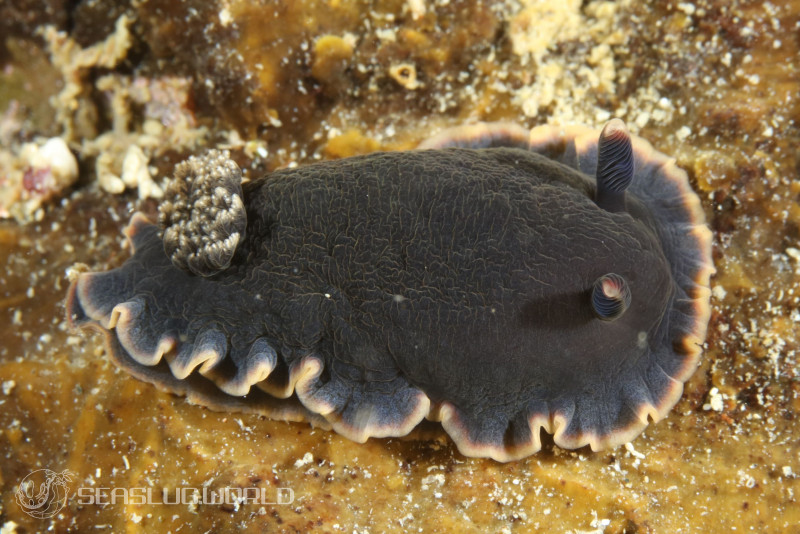
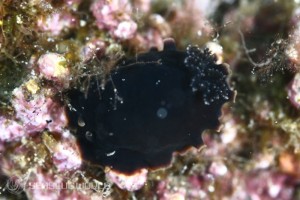
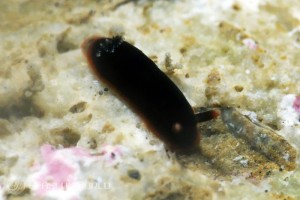
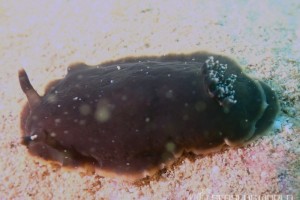
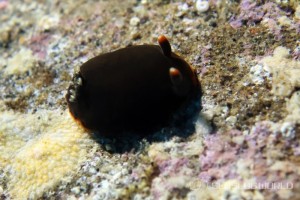
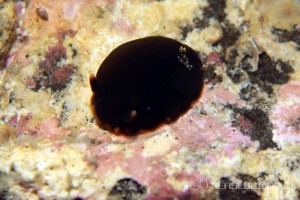
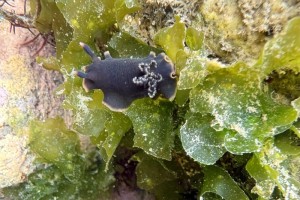
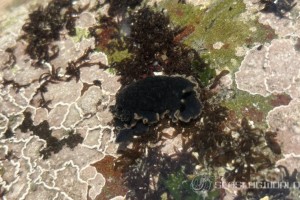
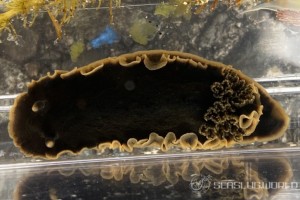
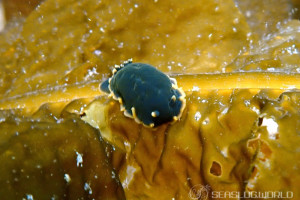
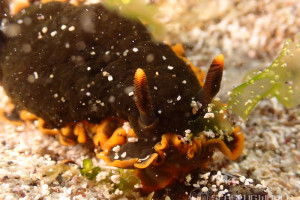
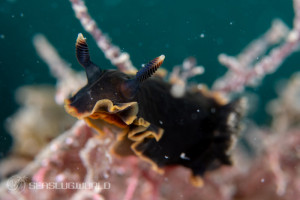
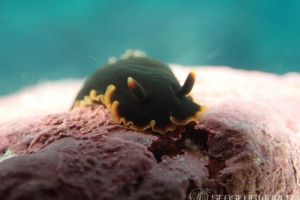
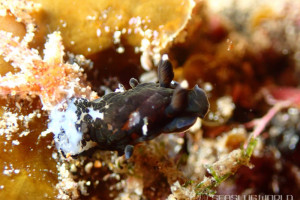
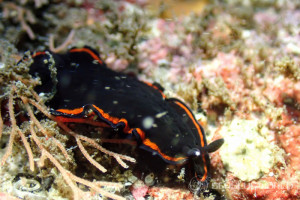
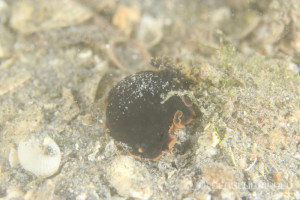
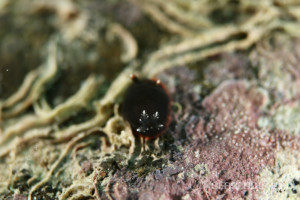
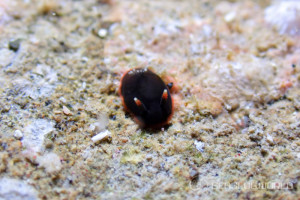
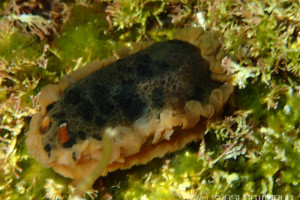
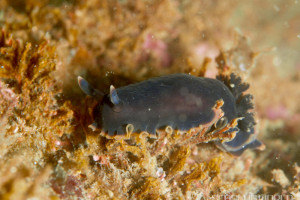
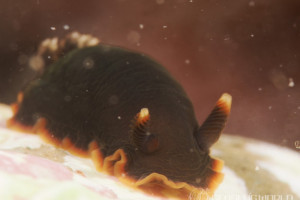
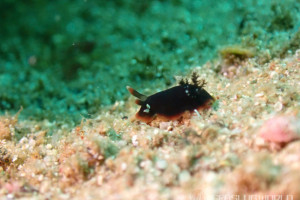
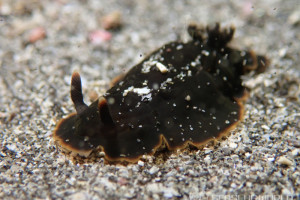
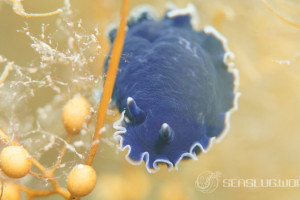
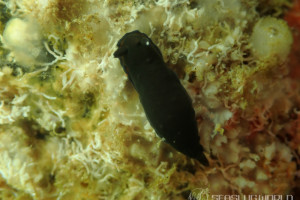
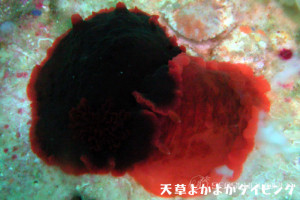
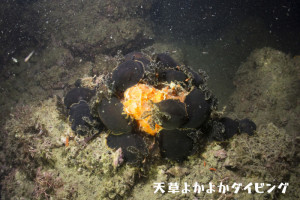
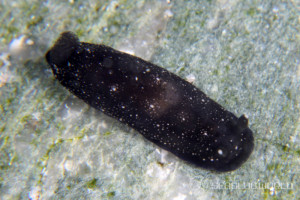
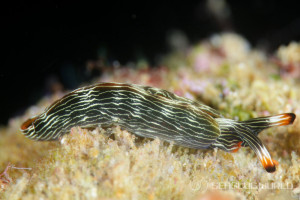
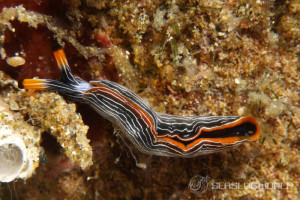
Body is uniformly black with a finely tuberculate notum. The mantle margin is rimmed by a narrow flesh-coloured to orange band that contrasts strongly with the dark ground colour. The rhinophores are black with flesh-coloured tips, and the gill pinnae are likewise black with paler tips. The branchial plume consists of approximately five large, much-branched (arborescent) gill leaves — the most diagnostic external feature. Adults reach about 80 mm in length. As in all Dendrodoris, the radula and jaws are absent; feeding on sponges is achieved by an eversible suctorial pharynx.Distribution
Known from southern China, Hong Kong, Taiwan, Japan (Honshu to the Ryukyus), the Philippines, and tropical Australia (Queensland to Western Australia), broadly across the East Asian and Indo-West Pacific tropical belt. The type locality is the south coast of China, where Collingwood collected the type material during his "eastern seas" voyage. It occurs from the lower intertidal to about 10 m on rocky and rubble substrates.Etymology
The specific epithet arborescens is Latin for "tree-like" or "branching", referring to the conspicuously arborescent branchial plume.Remarks
The species has long been confused with the externally similar Dendrodoris nigra and was for a time treated as a colour form of Dendrodoris fumata. A 2006 paper re-established its validity by combining external morphology with larval characters, showing it to be a porostome species with large intracapsular veligers. Externally, D. nigra bears numerous small gill leaves arranged in a tight ring, whereas D. arborescens has the few large, much-branched leaves typical of the D. fumata group. Specimens from northern Honshu reported by the 1957 study as Dendrodoris (Dendrodoris) nigra are now considered referable to this species.References
- くろしたなしうみうし(新稱), 内田清之助ほか. (1927). 日本動物圖鑑. 北隆館.
- クロシタナシウミウシ, Baba K. (1949). Opisthobranchia of Sagami Bay collected by His Majesty the Emperor of Japan (相模湾産後鰓類図譜). Iwanami Shoten, Tokyo. 4+2+194+7 pp., pls. 1-50.
- Dendrodoris (Dendrodoris) nigra (Stimpson) Kuroshitanashiumiushi, Baba, K. 1957. A revised list of the species of Opisthobranchia from the northern part of Japan, with some additional descriptions. J. Fac. Sci., Hokkaido Univ.,ser. 6, Zool. 13(1-4):8-14.
- 高岡生物研究会. (2002). 日本海のウミウシ. 第2版.
- Dendrodoris arborescens (compared), Millen S.V. & Bertsch H. (2005). Two New Species of Porostome Nudibranchs (Family Dendrodorididae) from the Coasts of California (USA) and Baja California (Mexico). Proceedings of the California Academy of Sciences, Series 4. 56(18): 189-199.
A Kindle field guide by the site author
Kimoto N. (2026). Sea Slugs of Japan & the Indo-Pacific, 2nd Edition.
Kindle Edition
View on Amazon PR (Amazon Associates)Seasonality
Shooting Locations
Loading shooting locations...
Photos of Dendrodoris arborescens
Tag:



















Same Genus Nudibranchs
Similar Colors Nudibranchs

Academic Database
Sea slug observation data is available in international marine biodiversity databases.