Dendrodoris elongata Baba, 1936
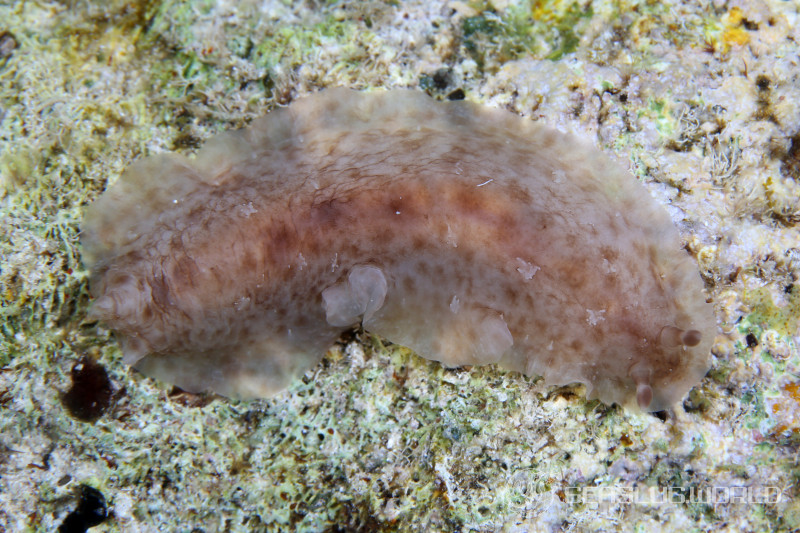
- Location
- Cape Maeda, Okinawa Island (Onna and Yomitan area), Okinawa, Japan
- Date
- 2015/05/15
- Length
- 60mm
- Depth
- 3.0m
- Water temperature
- 24.0℃
Description
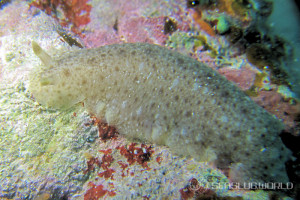
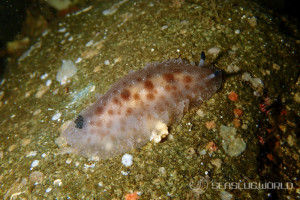
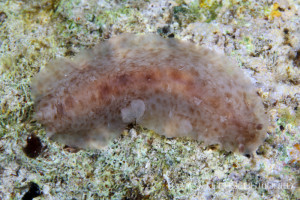
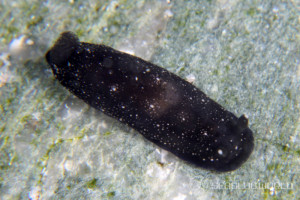
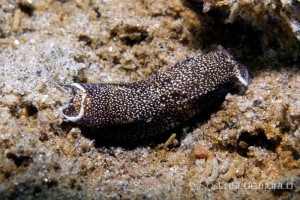
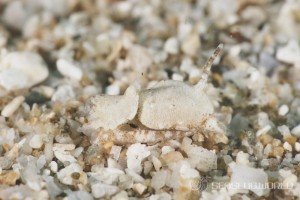
The body is conspicuously elongate and narrow, almost cylindrical and somewhat sea-cucumber-like in overall shape. The rhinophores are placed near the anterior extremity and the gills near the posterior extremity, with a notably wide gap between them; this is the most distinctive feature of the species. The ground color is grayish white to translucent white, becoming darker chocolate-brown along the mid-dorsal line, with scattered chocolate-brown spots of irregular size and shape over the entire dorsum. The dorsal mantle is soft and covered with low granular tubercles, while the ventral surface and foot sole are smooth. Chocolate-brown spots are also present on the rhinophoral clavi, gill plumes, the underside of the mantle, and the foot sole. Recorded length reaches about 70 mm.Distribution
Widely distributed in tropical to warm-temperate waters of the central and south-western Pacific. The type locality is Ishigaki-jima, Okinawa, Japan. In Japan it has been recorded from Ishigaki-jima, Sagami Bay and Sado Island, with additional records from New Caledonia, Vietnam, Hawaii, the Marshall Islands, Western Australia, Hainan Island (China) and elsewhere across the eastern Indian Ocean and western Pacific.Etymology
From the Latin elongatus meaning "elongate", referring to the unusually long and narrow body of the species. The Japanese name "Namako-umiushi" likewise alludes to the cylindrical, elongate body that recalls a sea cucumber (namako).Remarks
Within the genus Dendrodoris, this species is readily separated from its congeners by its strikingly elongate body. Like other dendrodoridids it lacks a radula and feeds on sponges using a long extensible oral tube (proboscis). The animal also shows a characteristic leech-like locomotion in life: it anchors the posterior part of the foot as a temporary sucker and then extends the anterior end forward in inchworm-like steps. Baba 1994 provided an anatomical redescription based on a 70 mm specimen from Sado Island, documenting the long proboscis and the armed vas deferens that functions as a penis. Wells & Bryce 1993 suggested that D. elongata might be a junior synonym of Dendrodoris albobrunnea Allan, 1933 from Australia, but Baba 1994 maintained the two as distinct species, citing differences in dorsal sculpture (low white pustules and fine brown streaks in D. albobrunnea).References
- Dendrodoris elongata, Baba K. (1936). Opisthobranchia Of The Ryukyu (Okinawa) Islands. Journal of the Faculty of Agriculture, Kyushu University. 5(1): 1-50. https://doi.org/10.5109/22580
- ナマコウミウシ(新稱), Baba K. (1949). Opisthobranchia of Sagami Bay collected by His Majesty the Emperor of Japan (相模湾産後鰓類図譜). Iwanami Shoten, Tokyo. 4+2+194+7 pp., pls. 1-50.
- Dendrodoris elongata Baba, 1936 (anatomy), Baba, K. (1994). Anatomy of Dendrodoris elongata Baba, 1936 (Mollusca: Nudibranchia: Dendrodorididae) from Sado, Japan. Reports of the Sado Marine Biological Station, Niigata University. 24: 23-27.
- 高岡生物研究会. (2002). 日本海のウミウシ. 第2版.
A Kindle field guide by the site author
Kimoto N. (2026). Sea Slugs of Japan & the Indo-Pacific, 2nd Edition.
Kindle Edition
View on Amazon PR (Amazon Associates)Seasonality
Shooting Locations
Loading shooting locations...
Photos of Dendrodoris elongata


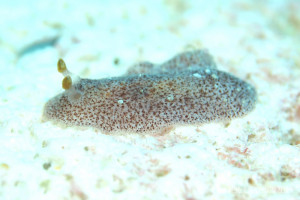

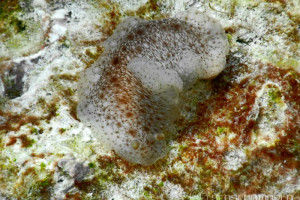

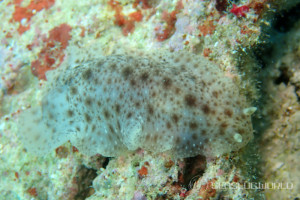

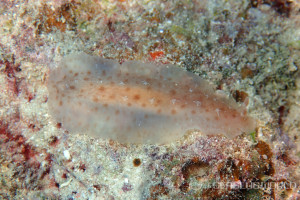



Same Genus Nudibranchs
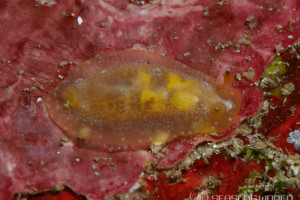
Similar Colors Nudibranchs

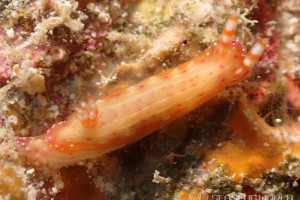
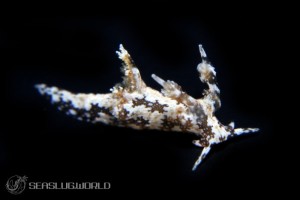
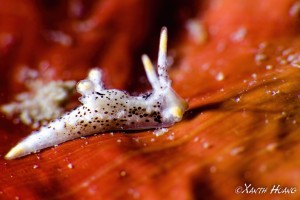
Academic Database
Sea slug observation data is available in international marine biodiversity databases.