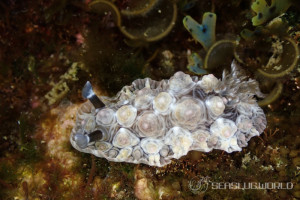
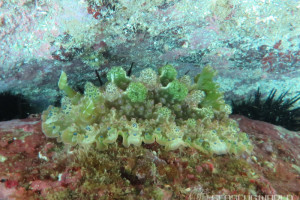
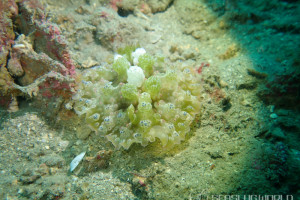
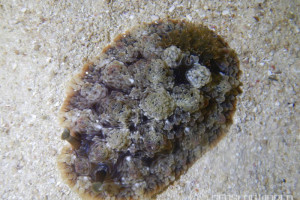
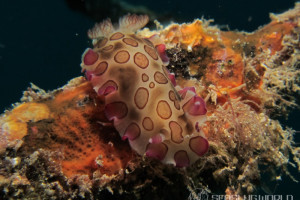
Dendrodoris tuberculosa (Quoy & Gaimard, 1832)
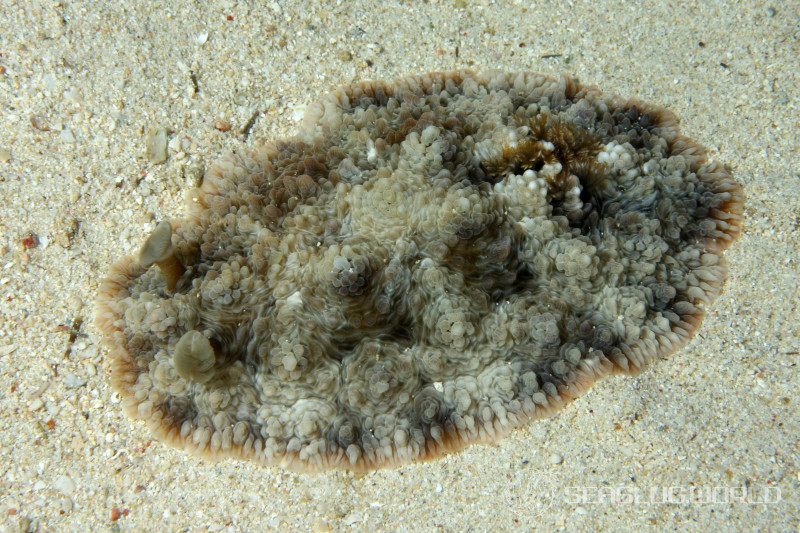
- Location
- Gorilla Chop, Okinawa Island (Motobu and Northern area), Okinawa, Japan
- Date
- 2009/01/16
- Length
- 150mm
- Depth
- 7.0m
- Water temperature
- 20.0℃
Description
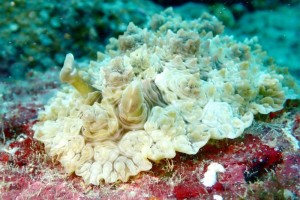
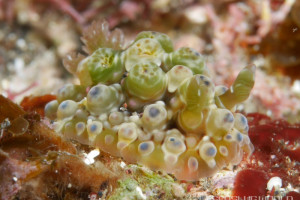
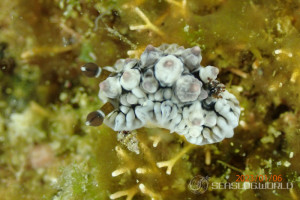
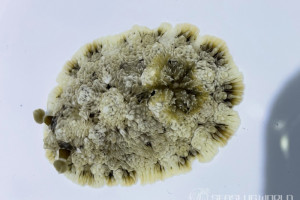
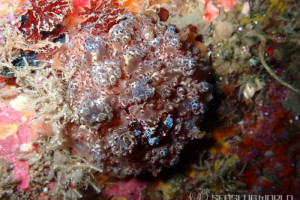
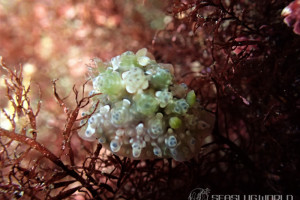
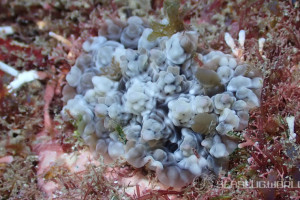
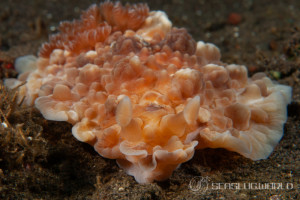
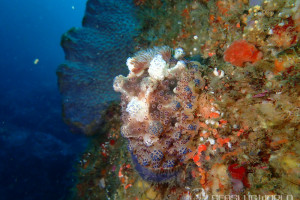
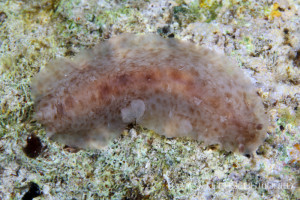
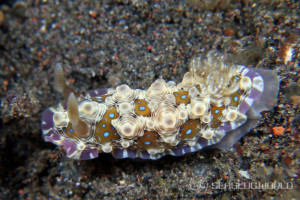
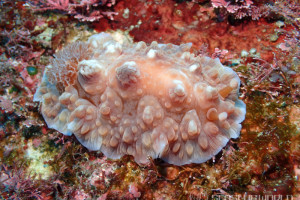
A large, soft-bodied dorid reaching up to 200 mm in length. Body colour is highly variable, ranging from brown and reddish brown through pink, green and grey. The dorsum bears small dense tubercles that aggregate into larger compound knobs. The rhinophores have dark brown stalks with paler, white-flecked clubs that flare out in mushroom shape; the gills follow the same colour pattern. Distinguished from related species by large white circular blotches on the underside of the mantle skirt.Distribution
Indo-Pacific. Records include South Africa, Tanzania, Réunion, the Red Sea, Maldives, India, Thailand, Australia, the Solomon Islands, Papua New Guinea, Indonesia, Malaysia, the Philippines, Korea, Japan, the Marshall Islands and Hawaii. The type locality is Doreh Bay (port Dorey), Manokwari, in what is now West Papua, Indonesia.Etymology
The specific epithet tuberculosa is the Latin feminine of tuberculosus, "tuberculate" (from tuberculum, "small swelling"), referring to the prominent dorsal tubercles. Quoy & Gaimard's diagnosis specifies "tuberculis crassis, longis onusto" — laden with thick, long tubercles.Remarks
Originally described as Doris tuberculosa in Voyage de l'Astrolabe, Zoologie (Paris, Tastu, 1832, T.2 pt.1: 248) from a 5- to 6-inch specimen collected at Doreh Bay during the Astrolabe expedition (1826–1829). Subsequently transferred to Dendrodoris Ehrenberg, 1831.References
- Doris tuberculosa, Quoy J.R.C. & Gaimard J.P. (1832-1834). Mollusques. In: Dumont d'Urville J. (ed.) Voyage de la corvette l'Astrolabe exécuté par ordre du Roi pendant les années 1826-1827-1828-1829, Zoologie. Tome 2, parts 1 (1832) & 2 (1833). J. Tastu, Paris.
- Dendrodoris tuberculosa, Baba, K. 1935. A general sketch of the molluscs inhabiting the coral reefs of Okinawa Islands. Venus 5(2,3):99-102, pls. 7-9.
A Kindle field guide by the site author
Kimoto N. (2026). Sea Slugs of Japan & the Indo-Pacific, 2nd Edition.
Kindle Edition
View on Amazon PR (Amazon Associates)Seasonality
Shooting Locations
Loading shooting locations...
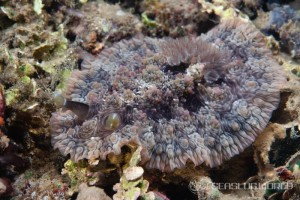
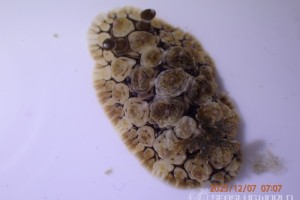
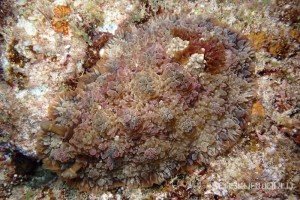
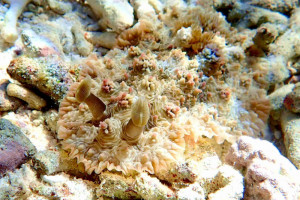
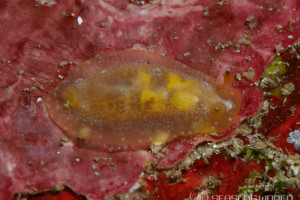
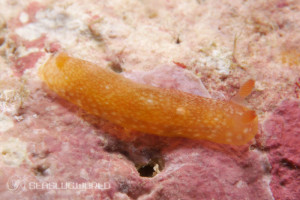
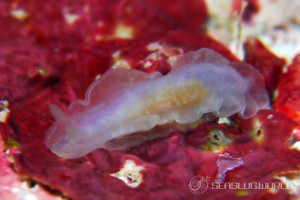
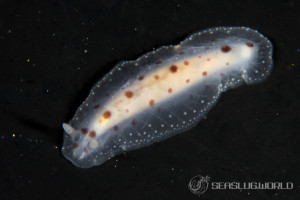
Photos of Dendrodoris tuberculosa

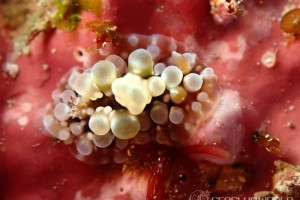





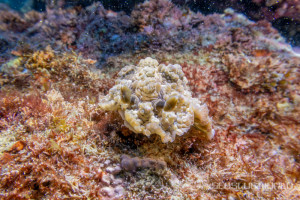
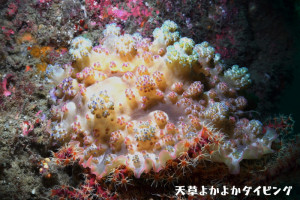

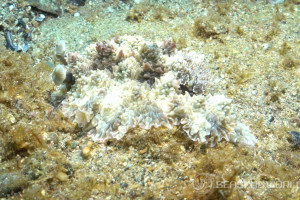
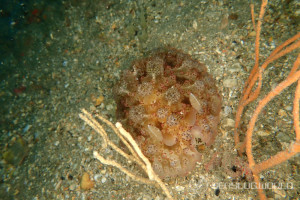

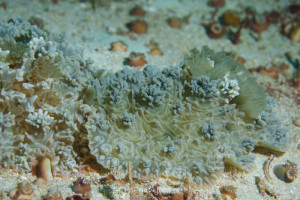

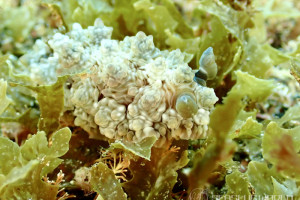

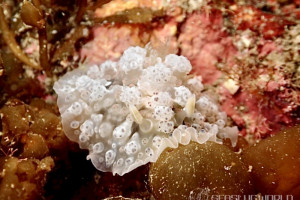

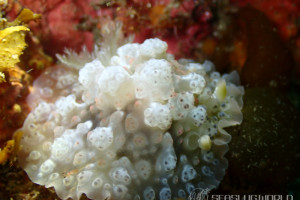







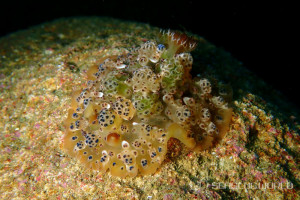

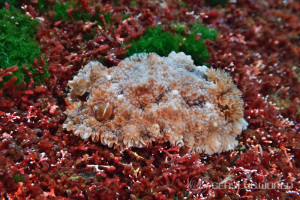

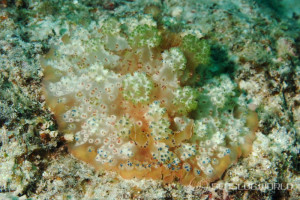
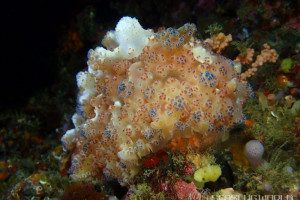

Same Genus Nudibranchs
Academic Database
Sea slug observation data is available in international marine biodiversity databases.