Doriopsis granulosa Pease, 1860
Description
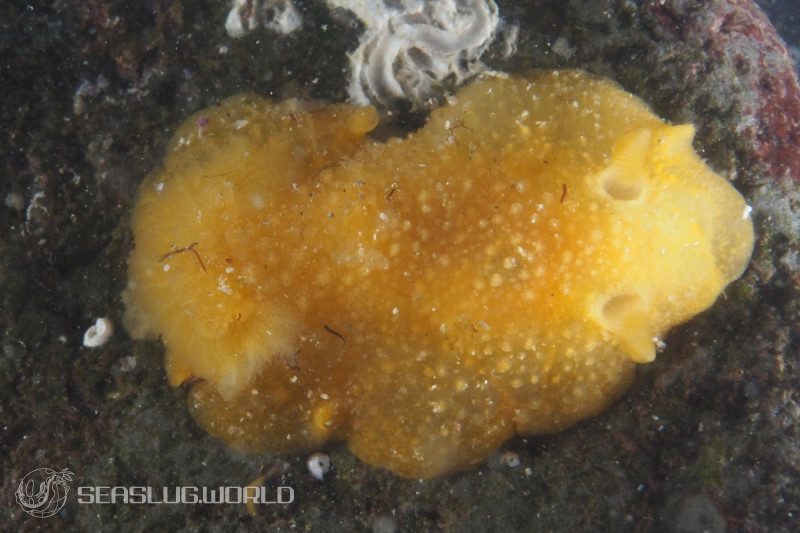
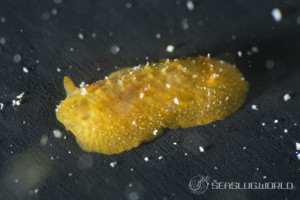
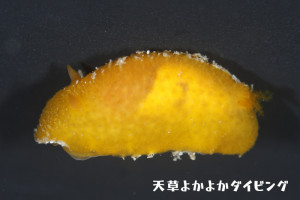
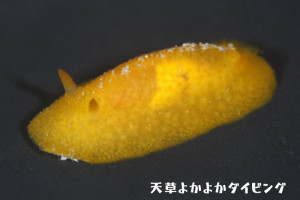
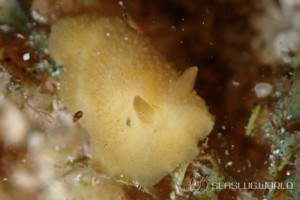
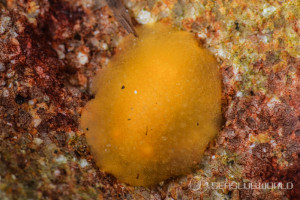
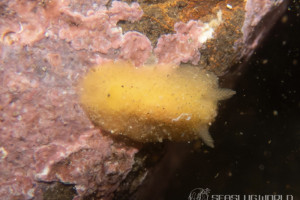
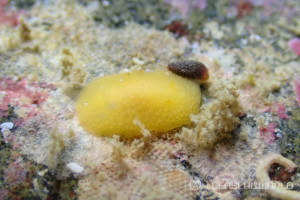
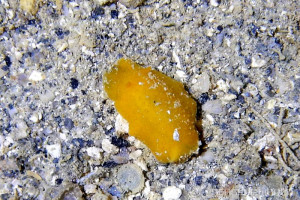
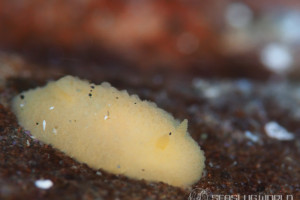
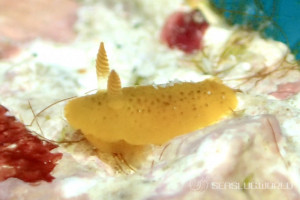
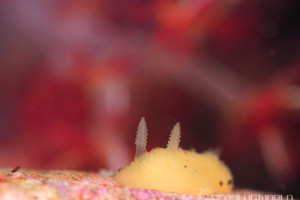
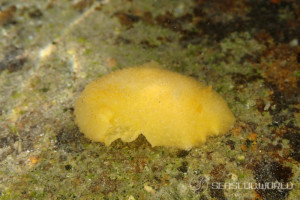
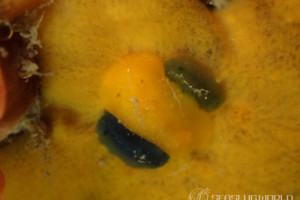
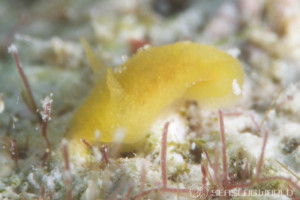
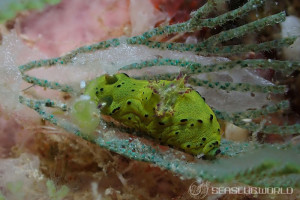
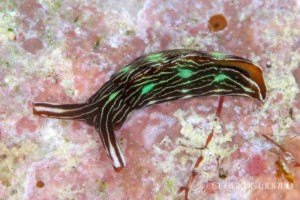
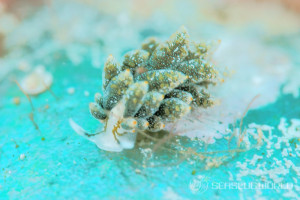
A small to medium-sized dorid reaching about 25 mm in body length. The body is oblong-ovate, papillose, rather rigid and convex above. The mantle is similarly rounded at both ends, entirely conceals the foot, is rather contracted in the middle, and is covered with minute irregularly prominent granules. The rhinophores are small, erect, not pedunculate, ovate, coarsely and obliquely lamellate, retractile into simple cavities. The gill consists of eleven large, coarsely pinnate plumes, increasing in height posteriorly, procumbent, and retractile into a simple semicircular cavity. The muzzle is pale yellow with green papillae. The foot is oblong, rounded at both ends. In life the ground colour is pale yellow, with green papillae on the dorsum. As generic characters Pease noted that the mantle is large and covers both the head and the foot; the rhinophores are two, lamellate, retractile, non-pedunculate; oral tentacles are absent; and the gill leaves are arranged in a semicircle on the posterior part of the back, retractile into a similarly shaped slit with the convex side facing posteriorly. Pease remarked that the species could at first sight be confounded with the small, rigid, granular species of Doris, but is distinguished by the arrangement of the gill and the non-pedunculate rhinophores.Distribution
Central and western Pacific. Type locality: Sandwich Islands (Hawaiian Islands), based on Pease's observations of Hawaiian specimens. Subsequently recorded from the Hawaiian Islands, Johnston Atoll, southern Japan and Taiwan.Etymology
The specific epithet granulosa is the feminine of Latin granulosus ("full of small grains, granular"), in reference to the dense fine granulation of the dorsum. Pease did not state an etymology, but the meaning is consistent with his "covered with minute irregularly prominent granules".Remarks
In the original description Pease erected the new genus Doriopsis and described its generic characters from this Hawaiian species. In a later paper (AJC 6(4):300, 1871) Pease recalled that the genus had been "founded on a species inhabiting the Hawaiian Islands, [and] has been confirmed by two others from southern Polynesia". Doriopsis remains a valid genus, and this species is among the founding members of the genus described by Pease in 1860. The Japanese name "キイロクシエラウミウシ" ("yellow comb-gill slug") refers to the bright yellow body colour and the comb-like arrangement of the gill.References
- Doriopsis granulosa Pease n. sp., Pease W.H. (1860). Descriptions of new species of Mollusca from the Sandwich Islands. Part I. Proceedings of the Zoological Society of London. 28: 18-36.
- Rostanga arbutus, Baba, K. 1937f. Note on the colour variation of a dorid, Rostanga arbutus (Angas, 1864). Venus 7(1):1-4.
- クシエラウミウシ, Baba K. (1949). Opisthobranchia of Sagami Bay collected by His Majesty the Emperor of Japan (相模湾産後鰓類図譜). Iwanami Shoten, Tokyo. 4+2+194+7 pp., pls. 1-50.
- Doriopsis aurantiaca (ELIOT, 1913) Kiiro-kushiera-umi ushi, Baba, K. 1961. On two species of Doriopsis (syn. Ctenodoris) from Japan (Nudibranchia-Dorididae). Publ. Seto Mar. Biol. Lab. 9(1): 63-5.
- グラヌローサ, 小野篤司. (1999). ウミウシガイドブック. TBSブリタニカ.
- 高岡生物研究会. (2002). 日本海のウミウシ. 第2版.
- キイロクシエラウミウシ, 小野篤司. (2004). 沖縄のウミウシ. ラトルズ.
- キイロクシエラウミウシ, 中野理枝. (2004). 本州のウミウシ. ラトルズ.
- キイロクシエラウミウシ, 小野篤司 & 加藤昌一. (2009). ウミウシ. 誠文堂新光社.
- Doris granulosa, Terrence Gosliner, Ángel Valdés and David Behrens. (2015). Nudibranch and Sea Slug Identification Indo-Pacific. New World Pubns Inc.
- Yonow N. & Jensen K.R. (2018). Results of the Rumphius Biohistorical Expedition to Ambon (1990). Part 17. The Cephalaspidea, Anaspidea, Pleurobranchida, and Sacoglossa (Mollusca: Gastropoda: Heterobranchia). Archiv für Molluskenkunde International Journal of Malacology. 147(1): 1-48. https://doi.org/10.1127/arch.moll/147/001-048
Featured in this book
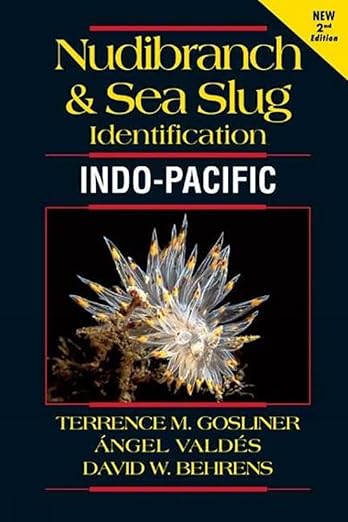
Terrence Gosliner, Ángel Valdés and David Behrens. (2018). Nudibranch and Sea Slug Identification Indo-Pacific 2nd Edition. New World Pubns Inc.
New World Publications
This species, Doriopsis granulosa, is included in the book.
View on Amazon PR (Amazon Associates)Seasonality
Shooting Locations
Loading shooting locations...
Photos of Doriopsis granulosa













Same Genus Nudibranchs
Similar Colors Nudibranchs

Academic Database
Sea slug observation data is available in international marine biodiversity databases.