Eubranchus echizenicus Baba, 1975
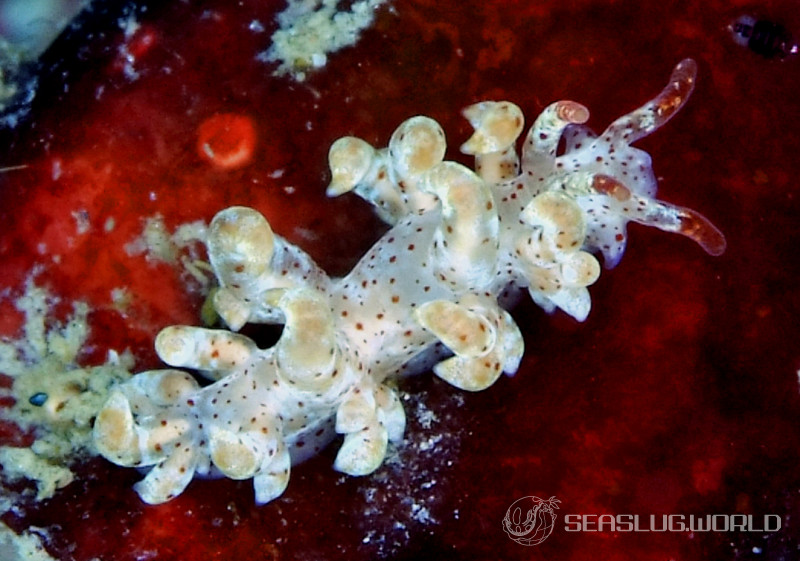
- Location
- Gontarouiwaoki, Hayama, Kanagawa, Japan
- Date
- 2007/07/18
- Length
- 5mm
- Depth
- 8.0m
- Water temperature
- 21.0℃
Description
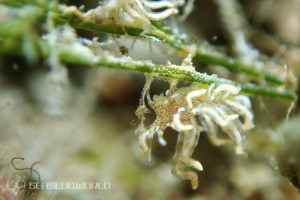
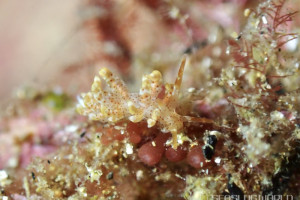
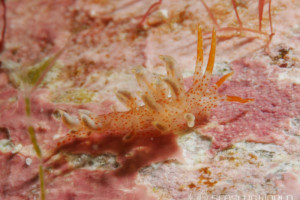
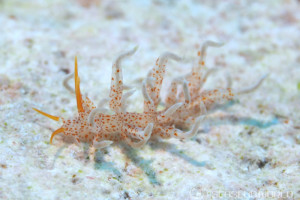
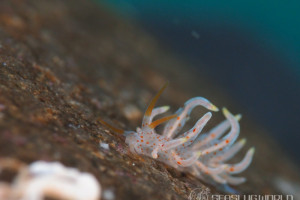
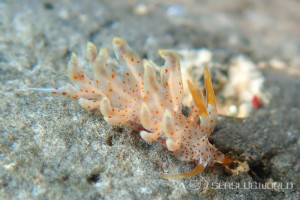
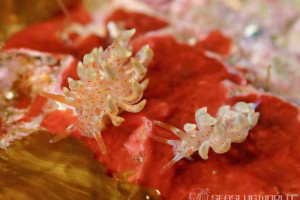
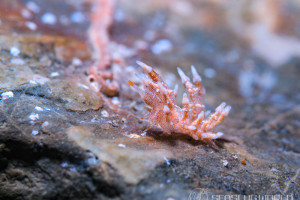
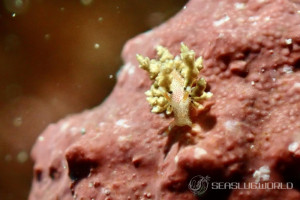
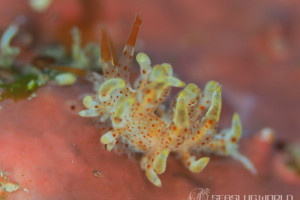
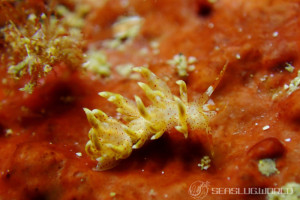
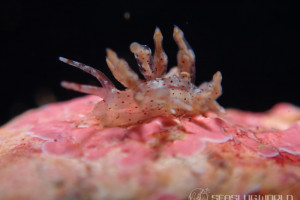
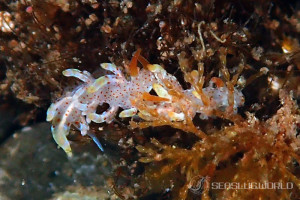
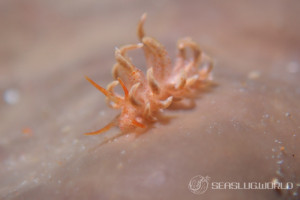
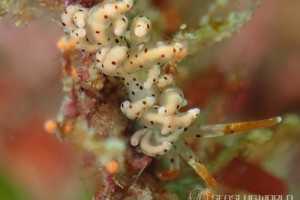
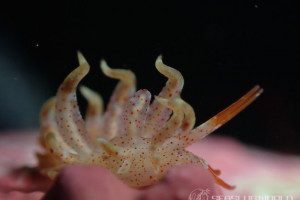
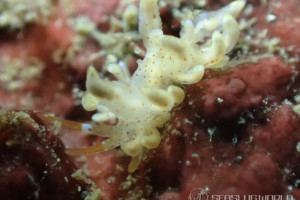
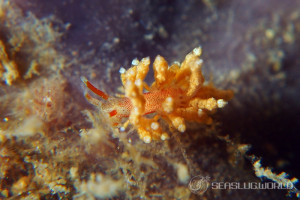
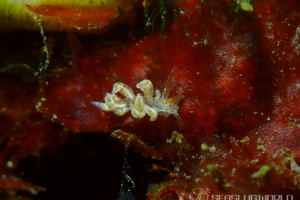
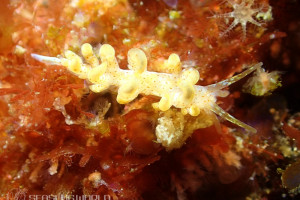
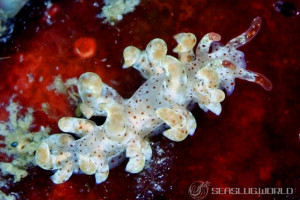
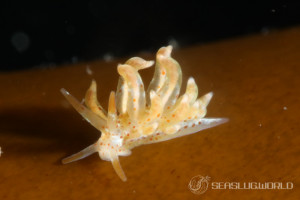
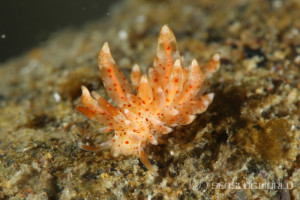
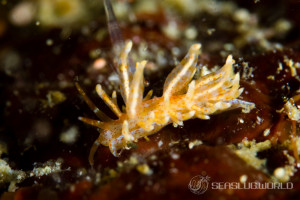
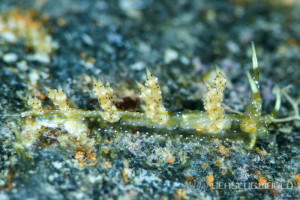
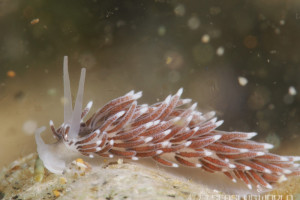
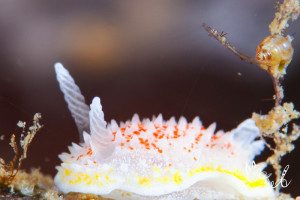
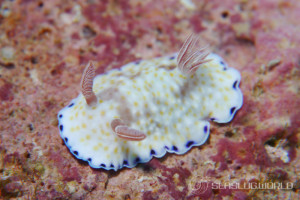
A small aeolid, 5-7 mm in length alive. A diagnostic external feature is the angular, anteriorly projecting foot-corners (rounded in most congeners), combined with strikingly elongate, narrow fusiform cerata (cerata in most congeners are shorter and somewhat swollen). The cerata bear a few small, inconspicuous tubercles on the surface. Oral tentacles equal in length to the rhinophores, the latter simple. Cerata arranged in 6 oblique rows on each side, the largest row containing 3-4 cerata.Ground colour of the skin yellowish white; the head, dorsum, sides and lower half of the cerata surfaces are conspicuously sprinkled with numerous orange-red spots. Oral tentacles fully orange-yellow; rhinophores orange-yellow above and yellowish-white below. Cerata opaque-white on the upper portion with a yellow cap at the tip and yellowish-white below; the central liver canal is greyish yellow and opaque. Sole entirely colourless.
Distribution
Type locality: shallow rocky shore at Ayukawa, Echizen Coast (Fukui City, Japan Sea side of central Honshu, Japan).Etymology
The specific epithet echizenicus ("of Echizen") is a toponymic adjective derived from the Echizen Coast, the type locality.Remarks
Distinguished from congeners by the elongate, narrow fusiform cerata combined with the angular, anteriorly projecting foot-corners. Closely compared with the Tanzanian Eubranchus rubropunctatus, which similarly bears scattered spots on the back, sides and cerata, but in which the spots are yellowish brown rather than orange-red.References
A Kindle field guide by the site author
Kimoto N. (2026). Sea Slugs of Japan & the Indo-Pacific, 2nd Edition.
Kindle Edition
View on Amazon PR (Amazon Associates)Seasonality
Shooting Locations
Loading shooting locations...
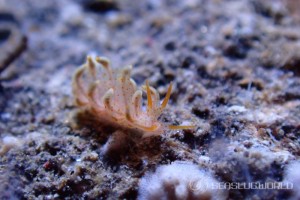
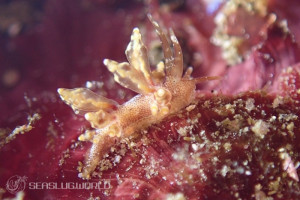
Photos of Eubranchus echizenicus
Tag:
























Same Genus Nudibranchs
Similar Colors Nudibranchs

Academic Database
Sea slug observation data is available in international marine biodiversity databases.