Eubranchus mimeticus Baba, 1975
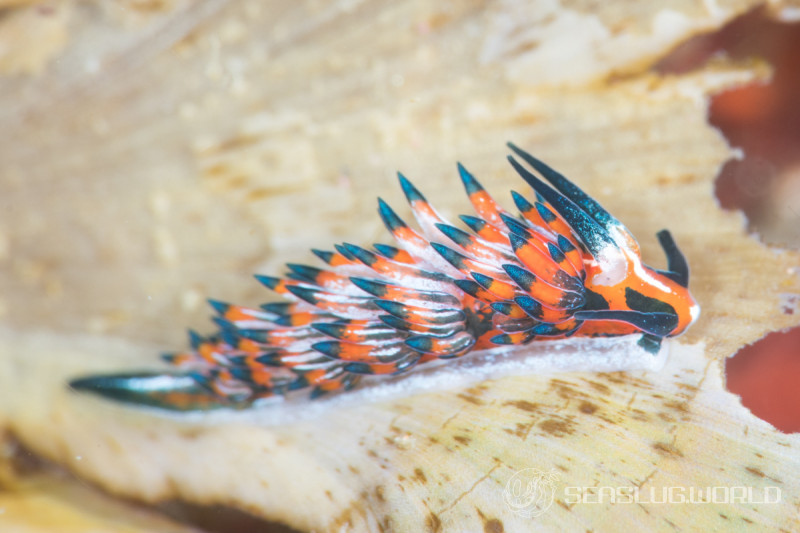
Description
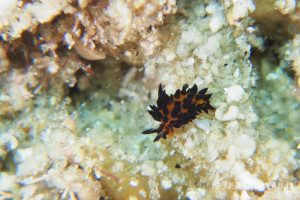
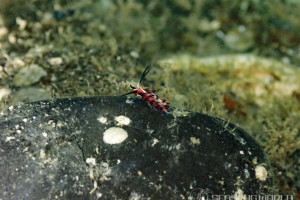
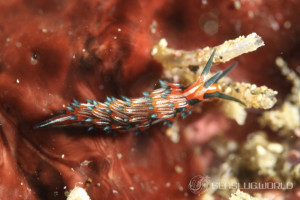
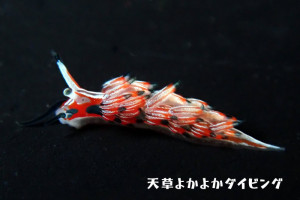
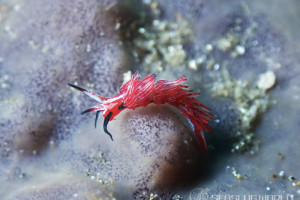
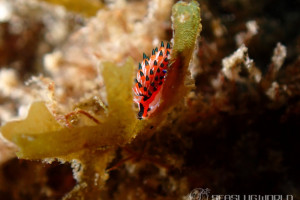
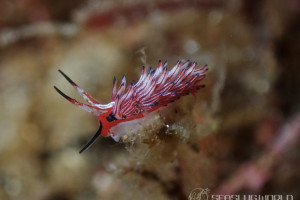
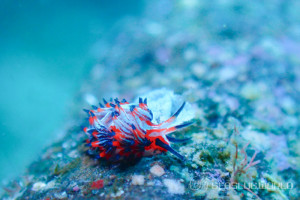
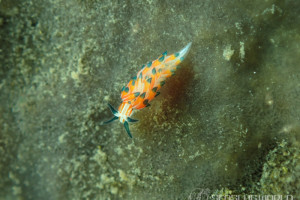
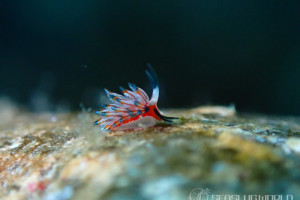
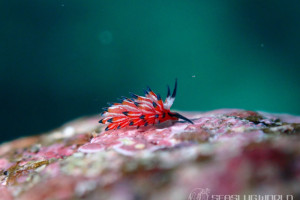
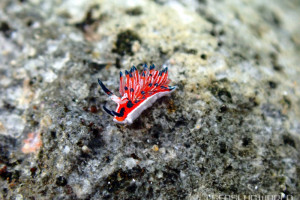
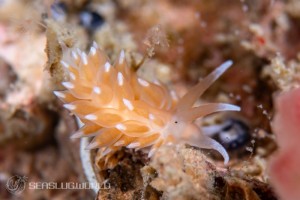
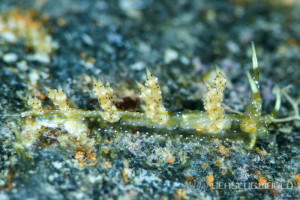
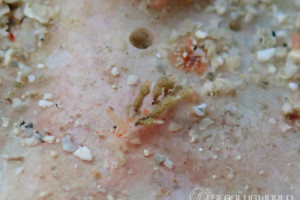
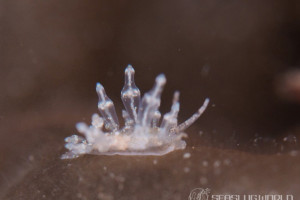
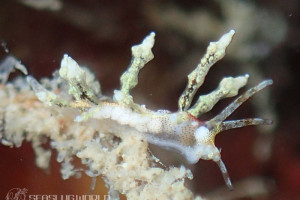
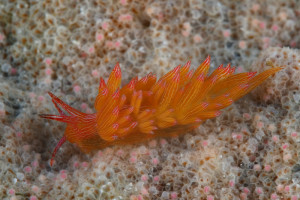
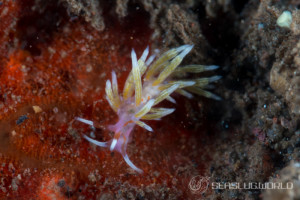
A small species, 3 mm long when alive, with rounded foot-corners and moderately spindle-shaped cerata of typical small-sized Eubranchus proportions. The cerata are arranged in five oblique rows on each side, the largest row containing four to five papillae. Their surface is smooth, lacking the tubercles seen in some congeners. The oral tentacles and rhinophores are of nearly equal length, and the rhinophores are simple (unbranched).The coloration is exceptional within the genus Eubranchus. The head, back and sides are vividly tinged orange red. A broad opaque white band runs mid-dorsally from the head to the tip of the tail, and a finer opaque white line on each flank delimits the outer margin of the orange red area. A blue black longitudinal band lies on either side of the back between the rows of cerata but is normally hidden externally. The oral tentacles are entirely blue black; the rhinophores are blue black on the upper half only. Each ceras is orange red with three opaque white streaks on its outer (upper) surface, and the apical cap is blue black. The foot edge, sole and eye-regions are colourless.
Distribution
Type locality: Ayukawa, Echizen Coast (36°10′ N, 136°3′ E), Fukui Prefecture, on the Japan Sea side of central Japan.Etymology
The specific epithet mimeticus is a Latinised adjective meaning "mimicking" or "imitative". In the original description (Baba, 1975) the colour pattern of this species is noted as strikingly similar to that of the sacoglossan Placida cremoniana, which is often collected in the same area, so that the new species looks "rather strange to be seen in the genus Eubranchus". The name therefore alludes to this colour resemblance. The Japanese name "Tsumaguro-mino-umiushi", coined together with the original description by S. Takahashi, similarly evokes a Eubranchus resembling Placida cremoniana ("Tsumaguro-mo-umiushi" in Japanese).Remarks
The jaw-edge bears about ten small denticles. The radular formula is 95×1.1.1; the central tooth has three to four denticles on each side of the median cusp, and the lateral tooth is plate-like. The male system carries a short penial stylet, the penial gland is long and tubular, and the vas deferens lacks a prostatic portion. Placida cremoniana, which the species mimics in colour, belongs to a different order (Sacoglossa) and is readily told apart by its auriculate cephalic tentacles. The original description was based on a single specimen from the type locality.References
A Kindle field guide by the site author
Kimoto N. (2026). Sea Slugs of Japan & the Indo-Pacific, 2nd Edition.
Kindle Edition
View on Amazon PR (Amazon Associates)Seasonality
Shooting Locations
Loading shooting locations...
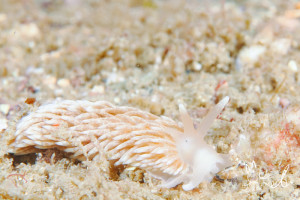
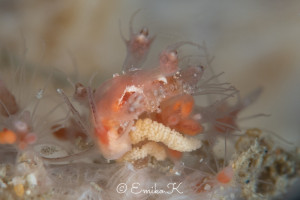
Photos of Eubranchus mimeticus


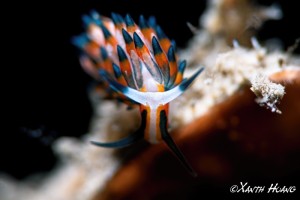

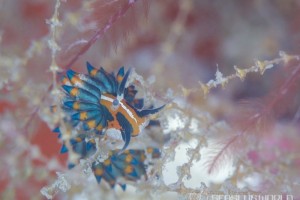
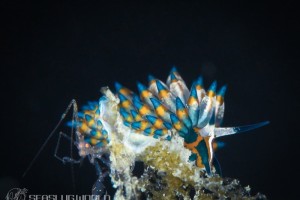
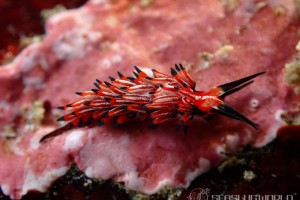

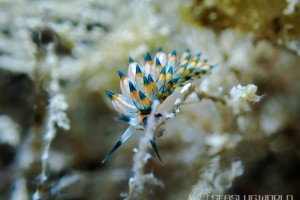
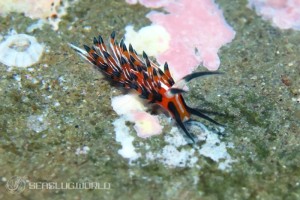

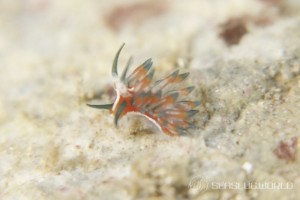

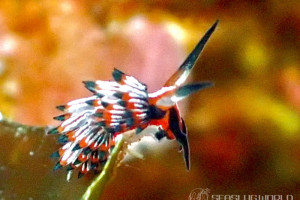







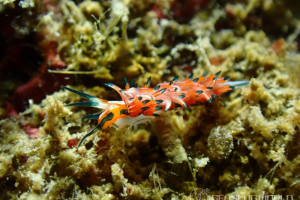

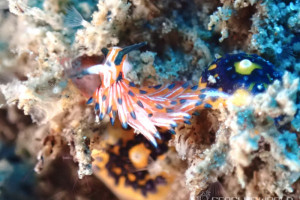

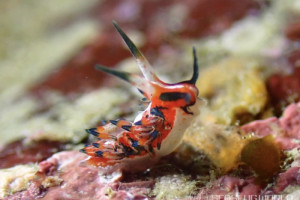

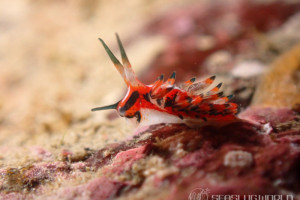

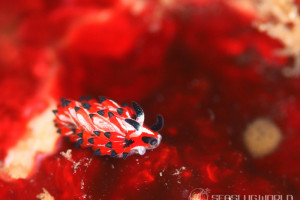

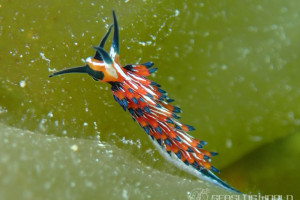

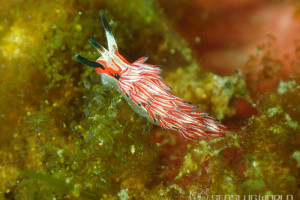

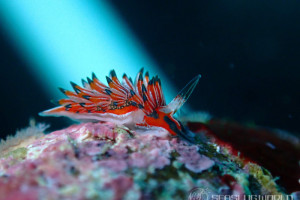



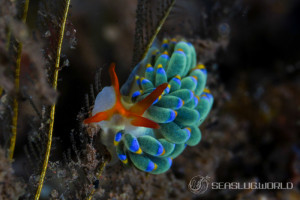
Same Genus Nudibranchs
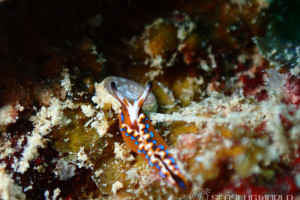
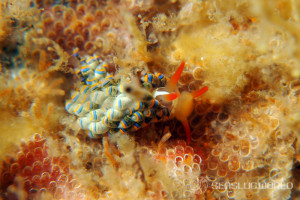
Similar Colors Nudibranchs

Academic Database
Sea slug observation data is available in international marine biodiversity databases.